Tech Vaidya WhatsApp Channel
Get AI updates, tech news, cybersecurity alerts and useful tech tips directly on WhatsApp.

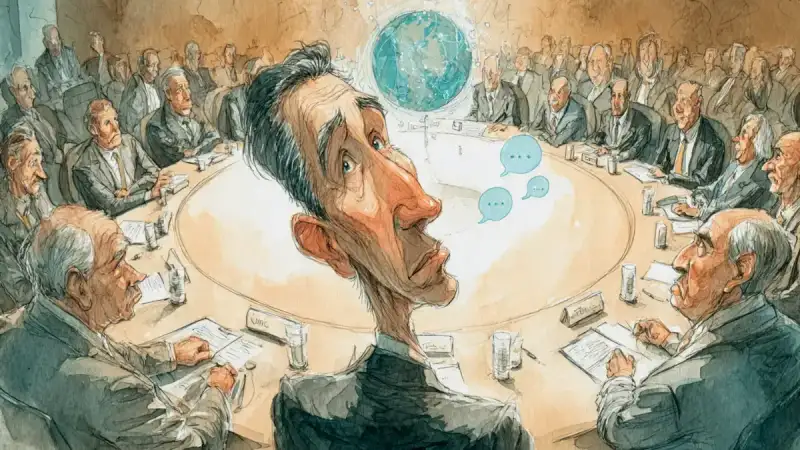
Artificial Intelligence has become part of everyday life far more quickly than most people expected. It answers questions, writes reports, generates images, translates languages, assists doctors, helps students learn and even writes software code. But while AI continues to grow smarter every month, one fundamental question remains unanswered: Who should decide the rules that govern Artificial Intelligence? Should it be the United States? China? Technology giants? Or should every nation have a voice? That question has now brought the world together in Geneva for one of the most important AI discussions in history.
This is not another technology conference where companies unveil new smartphones, processors or software updates. Instead, governments, scientists, policymakers, international organizations and leading AI companies are discussing something far more significant—the future relationship between humanity and Artificial Intelligence. Under the leadership of the United Nations, representatives from around the world have gathered to explore how AI can continue to innovate without compromising safety, fairness and human rights.
The urgency of this discussion is easy to understand. Over the past two years, AI has advanced at an extraordinary pace. Tools like ChatGPT, Gemini and other generative AI systems are transforming education, healthcare, business, media and scientific research. At the same time, concerns surrounding deepfakes, misinformation, privacy, copyright, cybersecurity and job displacement have grown just as rapidly. Technology is evolving faster than regulations, creating a gap that governments can no longer afford to ignore.
That is precisely why the Global Dialogue on AI Governance has attracted worldwide attention. The discussions taking place in Geneva are not simply about technology. They are about defining how AI should serve humanity in the years ahead and ensuring that innovation remains aligned with public trust and global responsibility.
Why the Geneva Meeting Matters
Held on July 6 and 7, the Global Dialogue on AI Governance marks one of the first major international efforts to bring governments, international agencies and technology leaders together under a common platform dedicated entirely to AI governance. Unlike previous discussions dominated by a handful of powerful economies, this initiative gives a much broader range of nations an opportunity to participate in shaping future AI policies.
Running alongside the dialogue is the AI for Good Global Summit, where researchers, startups, governments and industry leaders are demonstrating how Artificial Intelligence can improve healthcare, agriculture, disaster management, education, environmental protection and food security. The event highlights an important reality: AI is no longer viewed solely as a commercial technology. It is increasingly becoming critical infrastructure that will influence nearly every aspect of modern society.
Perhaps the most significant aspect of the Geneva discussions is that they attempt to move beyond competition. For years, conversations about AI were largely centered around technological leadership between major powers. Today, however, there is growing recognition that the consequences of AI extend far beyond national borders. A deepfake created in one country can influence elections in another. An AI model trained in one region may affect millions of users worldwide. That interconnected reality demands international cooperation.
 Why OpenAI, Microsoft, Meta, and NVIDIA Are Speaking With One Voice on Open-Weight AI
 The Dawn of a New AI Era: Questions Rising from the Shadows of Progress
 The Governance Gap: Why America Lacks a Unified AI Law
 The Eastern Shift: How Australia, China, and South Korea are Rewriting AI Rules
 X Is Cutting Off the Money Behind AI War Videos. Here’s Why That Matters
The Geneva dialogue therefore represents a shift in thinking. Rather than asking who builds the most powerful AI, the world is beginning to ask how powerful AI should be governed responsibly.
The Four Questions That Could Shape AI's Future
The discussions in Geneva extend far beyond technical standards. Delegates are examining AI from social, economic, ethical, cultural and legal perspectives. One major focus is ensuring that developing nations are not left behind as Artificial Intelligence becomes an essential part of global development. Building digital infrastructure, improving access to AI technologies and reducing the growing AI divide have become key priorities.
Another major topic is AI safety and trust. Governments are exploring how transparency, accountability and human oversight can become fundamental principles of future AI systems. As AI begins making increasingly complex decisions, people naturally want to know who remains responsible when those decisions cause harm or produce inaccurate results. Building public confidence in AI may prove just as important as advancing the technology itself.
Human rights also occupy a central place in the discussions. Delegates are examining how AI should protect privacy, reduce bias, respect freedom of expression and ensure that humans remain in control of critical decisions. Rather than slowing innovation, the objective is to create safeguards that allow innovation to continue without creating new risks for society.
Environmental sustainability has also entered the conversation. Modern AI models require enormous computing resources, consuming significant amounts of electricity and water. As AI expands, governments and industry leaders are exploring ways to develop future AI systems using cleaner energy and more sustainable computing infrastructure.
Why Every AI User Should Pay Attention
Many people assume international policy discussions have little impact on everyday life. In reality, the decisions emerging from Geneva could eventually influence how billions of people interact with AI. Questions surrounding privacy, transparency, misinformation and user protection are no longer abstract policy debates—they directly affect every individual who relies on AI tools.
Imagine receiving information generated by an AI assistant that turns out to be completely incorrect. Who should be accountable? What happens if someone creates a convincing AI-generated video using your identity? How should personal data be used when training future AI systems? These are no longer theoretical questions. They are becoming practical issues that governments must address.
Language equality is another important topic, particularly for countries like India. For AI to truly become a global technology, it cannot serve only a handful of dominant languages. Smaller regional languages must receive equal attention so that billions of people can benefit from AI without facing linguistic barriers. As global governance evolves, language inclusion is expected to become an increasingly important objective.
Healthcare, education, agriculture and public services could also benefit from internationally accepted AI standards. Developing nations, in particular, have an opportunity to use AI to improve essential services while avoiding many of the risks associated with uncontrolled technological expansion.
The Biggest Challenge Is Not Technology—It's Cooperation
Creating AI regulations may sound straightforward, but implementing them globally is extraordinarily complex. Today, much of the world's most advanced AI technology is concentrated within a relatively small number of companies. Meanwhile, governments around the world have different political systems, economic priorities and legal frameworks. Reaching common ground will require compromise from both policymakers and technology companies.
A regulation introduced by one country can often be bypassed by moving operations elsewhere. However, if a large number of nations agree on common principles, those standards could carry significant international influence. That is why many experts believe the Geneva dialogue represents the beginning of a new era of AI diplomacy rather than a single conference.
For India, these discussions are especially important. As one of the world's fastest-growing AI markets, India has an opportunity not only to adopt AI technologies but also to help shape the global policies that govern them. If countries like India actively participate in writing the rules, future AI regulations are more likely to reflect the needs of diverse societies rather than the priorities of only a few technological superpowers.
This Is More Than a Summit—It May Be the Beginning of AI's Global Constitution
No single meeting can solve every challenge surrounding Artificial Intelligence. Yet the conversations taking place in Geneva may represent one of the most important starting points for global AI governance. For the first time, a broad coalition of nations is attempting to answer a question that will influence technology, business, education and society for decades to come: How can humanity guide Artificial Intelligence without slowing innovation?
Artificial Intelligence will continue transforming the way people work, learn, communicate and create. As its influence expands, international cooperation will become just as important as technological breakthroughs. The future of AI will depend not only on better algorithms but also on better governance.
The discussions in Geneva may ultimately shape how future versions of ChatGPT, Gemini and other AI systems are developed, regulated and trusted across the world. In many ways, this is not simply another international conference—it is the first serious attempt to write the guiding principles for the AI era.

No Comment Yet.
Stay informed with breaking news, trending stories, and in-depth analysis.