Tech Vaidya WhatsApp Channel
Get AI updates, tech news, cybersecurity alerts and useful tech tips directly on WhatsApp.

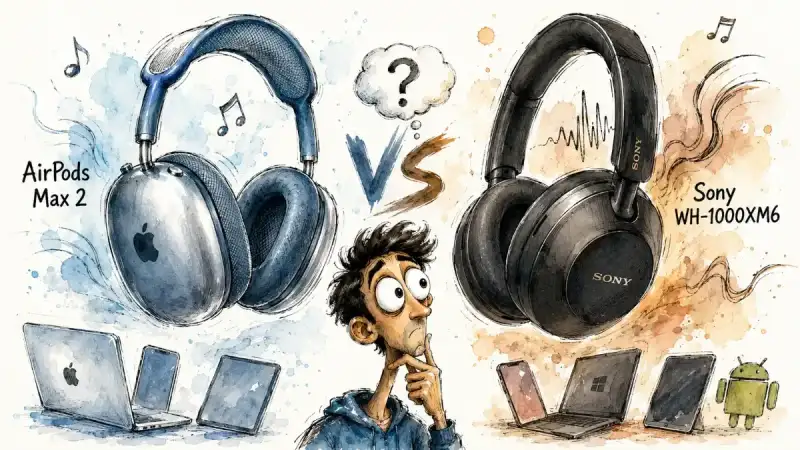
Buying a pair of premium headphones has become a far more complicated decision than it was just a few years ago. Consumers are no longer choosing between products that simply play music better than others. Today's flagship headphones are expected to deliver immersive sound, intelligent noise cancellation, crystal-clear voice calls, seamless device switching, long battery life, spatial audio, AI-powered enhancements, and enough comfort to survive an international flight. That is exactly why Apple's AirPods Max 2 and Sony's WH-1000XM6 have become two of the most talked-about headphones of the year. They sit at the top of the market, promise the best listening experience their respective companies can build, and target buyers willing to invest serious money in personal audio.
On paper, both products look remarkably impressive. Apple has refreshed the AirPods Max with its H2 chip, bringing better active noise cancellation, smarter computational audio, lower latency, and a tighter connection to the Apple ecosystem. Sony, meanwhile, has refined nearly everything that made the WH-1000 series successful over the past decade. The WH-1000XM6 isn't a radical redesign—it is a carefully engineered evolution that improves sound quality, comfort, microphone performance, and adaptive noise cancellation without abandoning the strengths that made its predecessors global bestsellers.
Buy Here: AirPods Max Sony's WH-1000XM6
Comparing these headphones isn't simply a matter of checking specification sheets. They represent two very different philosophies. Apple believes hardware and software should function as one tightly integrated experience, rewarding customers who already own an iPhone, iPad, Mac, Apple Watch, and Apple TV. Sony takes a broader approach, building headphones designed to perform exceptionally well regardless of whether you're using Android, Windows, macOS, or multiple platforms throughout the day. That philosophical difference shapes almost every part of the ownership experience.
Price also changes expectations. Products at this level are expected to remain useful for several years. Buyers aren't simply purchasing speakers inside ear cups—they're investing in a daily companion for commuting, work, travel, entertainment, gaming, and increasingly, AI-powered digital assistants. That makes long-term usability just as important as impressive first impressions. The better question is no longer which headphone sounds better during a five-minute demo, but which one continues to impress after hundreds of hours of real-world use.
Premium Audio Is No Longer Just About Sound
Audio quality remains the heart of any premium headphone, but modern listening is driven as much by software as hardware. Apple's H2 chip continuously analyzes sound in real time, adjusting processing based on environmental conditions and playback characteristics. Combined with Personalized Spatial Audio and Dolby Atmos support within Apple Music, the AirPods Max 2 create an unusually expansive soundstage that feels immersive without becoming artificial. Vocals remain clean, instruments occupy convincing positions, and movie soundtracks gain an impressive cinematic quality.
Sony approaches audio differently. Rather than emphasizing ecosystem-specific processing, it focuses on giving listeners flexibility. The WH-1000XM6 delivers a balanced sound signature that works across genres, while Sony's companion app allows users to fine-tune equalization to suit personal preferences. Bass lovers can add more impact, podcast listeners can improve vocal clarity, and audiophiles can create their own listening profiles. Instead of deciding how music should sound, Sony gives users greater control over the experience.
 Apple MacBook Pro M5 After 30 Days: The Good, the Bad and the Reality
 Here Comes the Truke TruClips 2 with AI Translation in 165 Languages: Sasta Mein Mast Earbuds!
 OnePlus N6 Launch: What Does an 8000mAh Battery Phone Offer Under ₹20,000?
 What Does "Free to Chat" on WhatsApp Mean? The Secret Behind the New Update
 India's First AI Mouse: Superb Build Quality, But How is the AI?
Codec support also deserves attention. Apple continues prioritizing its own ecosystem, while Sony maintains broader compatibility with high-quality wireless audio technologies that benefit many Android users. For someone already committed to Apple's hardware ecosystem, that limitation may never matter. For buyers switching regularly between devices from different manufacturers, Sony's flexibility becomes a noticeable advantage.
Ultimately, neither headphone disappoints in raw audio performance. The difference lies in presentation. Apple delivers an emotionally engaging, polished listening experience that feels carefully curated. Sony provides a more customizable, technically versatile platform that adapts to a wider range of listening styles. Choosing between them depends less on absolute quality than on how—and where—you actually listen to music.
Noise Cancellation Has Become the Real Battleground
A decade ago, premium headphones competed primarily on sound quality. Today, active noise cancellation has become just as important. Whether you're working from a crowded café, flying across continents, or joining virtual meetings from home, blocking unwanted noise is no longer a luxury—it's part of the productivity experience. Both Apple and Sony understand this shift, which is why they have invested heavily in making their latest flagship headphones smarter rather than simply quieter.
Buy Here: AirPods Max Sony's WH-1000XM6
The AirPods Max 2 uses Apple's H2 chip to analyze environmental noise thousands of times every second, allowing the headphones to adjust cancellation dynamically as surroundings change. Walking from a quiet office into a busy street, boarding a train, or sitting near an airplane engine all produce different sound profiles, and Apple's adaptive processing reacts almost instantly. Transparency Mode also remains among the best in the industry, allowing conversations and surrounding sounds to feel surprisingly natural instead of artificially amplified. For users deeply invested in Apple's ecosystem, these transitions happen almost invisibly, making the technology fade into the background.
Sony's WH-1000XM6 takes a different but equally impressive route. Instead of relying primarily on ecosystem integration, Sony combines multiple microphones with advanced processing algorithms that continuously evaluate external noise. The result is excellent isolation across a wide range of frequencies, particularly during air travel, public transportation, and open-office environments. Sony's adaptive sound control also learns from user behavior, automatically adjusting noise cancellation depending on location and activity. Rather than forcing users to constantly change settings, the headphones gradually become more personalized over time.
In everyday use, the differences are subtle rather than dramatic. Apple's implementation feels exceptionally polished for iPhone users, while Sony's solution offers greater flexibility across different devices and operating systems. Neither product leaves buyers disappointed. Instead, they demonstrate how mature active noise cancellation technology has become, with both companies competing through refinement rather than revolutionary breakthroughs.
Comfort Often Matters More Than Specifications
Specifications dominate marketing materials, but comfort determines whether premium headphones actually become part of daily life. A headphone that sounds incredible for thirty minutes but becomes uncomfortable after two hours ultimately fails its purpose. This is especially important as remote work, long-haul travel, and extended gaming sessions continue to increase average daily headphone usage.
Apple has always prioritized premium industrial design, and the AirPods Max 2 continues that philosophy. The aluminum ear cups, stainless steel frame, and signature mesh headband create an unmistakably premium product that feels luxurious from the moment it is picked up. Build quality is among the finest available in consumer electronics. However, those premium materials also contribute to additional weight. During shorter listening sessions, the difference is barely noticeable. During four- or five-hour sessions, some users may begin to feel the added pressure.
Sony approaches comfort from a more practical perspective. The WH-1000XM6 remains significantly lighter, with softer padding and reduced clamping force that makes long listening sessions easier on the head and ears. Frequent travelers and professionals who wear headphones throughout the workday are likely to appreciate this design philosophy. Rather than trying to impress with luxury materials, Sony focuses on making users forget they are wearing headphones at all—a goal that many would argue is the true definition of comfort.
The control systems also reflect these different priorities. Apple's physical Digital Crown provides precise volume adjustments and playback control that many users already recognize from other Apple products. Sony continues to refine its intuitive touch controls, allowing users to pause music, answer calls, adjust volume, or activate voice assistants through natural gestures. Both approaches work well, but they cater to different preferences: Apple favors tactile precision, while Sony emphasizes minimal interaction and fluid gestures.
Comfort, like sound quality, ultimately becomes personal. Buyers should remember that these headphones are likely to remain on their heads for thousands of hours over several years. At this level of investment, ergonomics deserve just as much attention as audio performance.
Buy Here: AirPods Max Sony's WH-1000XM6
Battery Life, Smart Features, and Everyday Practicality
Battery life remains one of the biggest differences between these two premium headphones. Apple has improved many aspects of the AirPods Max 2, but battery endurance is still rated at around 20 hours with active noise cancellation enabled. For many users, that is sufficient for several days of regular listening, but it also means more frequent charging during long trips or busy workweeks. Considering the premium price, some buyers may have expected Apple to push battery performance further.
Sony continues to hold a significant advantage in this category. The WH-1000XM6 offers up to 30 hours of playback with active noise cancellation turned on, giving travelers and professionals noticeably greater freedom between charges. Fast charging also works in Sony's favor. Even a short charging session can provide several hours of listening, reducing the anxiety of discovering a nearly empty battery before boarding a flight or joining an important meeting.
Smart features extend well beyond battery specifications. Apple's ecosystem integration remains one of its strongest selling points. Automatic device switching between an iPhone, iPad, Mac, and Apple TV happens almost effortlessly. Spatial Audio with dynamic head tracking creates a cinematic experience for movies and supported music, while Siri integration feels deeply woven into everyday use. For users who already live inside Apple's ecosystem, these conveniences quickly become habits rather than features.
Sony answers with flexibility instead of exclusivity. The WH-1000XM6 supports multipoint connectivity, allowing simultaneous connections to multiple devices regardless of operating system. Whether switching between a Windows laptop, an Android phone, or a MacBook, the experience remains smooth and predictable. Sony's Headphones Connect app also offers one of the most comprehensive customization suites available, giving users detailed control over equalization, adaptive sound behavior, ambient modes, and firmware updates. Buyers who value personalization may find Sony's approach considerably more empowering.
Which One Delivers Better Value?
The answer depends less on specifications and more on the ecosystem surrounding the headphones. If someone already owns an iPhone, MacBook, Apple Watch, and other Apple devices, the AirPods Max 2 becomes far more compelling than its price tag alone might suggest. Features such as seamless pairing, automatic device switching, Spatial Audio, and deep operating system integration create a unified experience that competing products simply cannot replicate. In that environment, Apple is selling an ecosystem as much as a headphone.
Sony, however, wins on versatility. Buyers who move between Android phones, Windows PCs, gaming consoles, tablets, and multiple streaming platforms receive consistently excellent performance without feeling locked into a single ecosystem. Combined with stronger battery life, extensive customization options, outstanding comfort, and excellent noise cancellation, the WH-1000XM6 presents an impressive overall value proposition for a broader audience. It feels designed for the realities of today's multi-device lifestyle rather than one specific ecosystem.
Another important consideration is longevity. Premium headphones are no longer disposable gadgets that people replace every year. They are long-term investments expected to remain relevant through multiple smartphone upgrades. Software support, firmware updates, battery durability, replacement accessories, and overall reliability become increasingly important after the excitement of a new purchase fades. Both Apple and Sony have established strong reputations in this area, making either choice relatively safe for long-term ownership.
Two Outstanding Headphones, One Slightly Stronger Recommendation
This comparison does not produce a dramatic winner because both products represent the very best their manufacturers currently offer. Apple has created a beautifully engineered premium headphone that integrates seamlessly into its ecosystem while delivering refined sound, outstanding transparency mode, and one of the most polished user experiences available today. For loyal Apple users, the AirPods Max 2 remains an exceptional choice that feels almost effortless to use.
Sony's WH-1000XM6, however, edges ahead as the more complete package for most buyers. Longer battery life, lighter construction, broader device compatibility, excellent sound quality, highly effective active noise cancellation, and extensive customization make it easier to recommend without qualifications. It delivers premium performance without requiring users to commit to a particular ecosystem, which significantly expands its appeal.
The bigger story extends beyond these two products. Premium headphones are rapidly evolving into intelligent personal computing devices. Artificial intelligence is beginning to improve call quality, personalize sound profiles, optimize battery usage, enhance voice assistants, and adapt listening experiences in real time. Future flagship headphones will likely become even more context-aware, acting as AI companions rather than simple audio accessories.
Buy Here: AirPods Max Sony's WH-1000XM6
For buyers spending hundreds of dollars on premium headphones, the smartest purchase is not necessarily the one with the most recognizable logo. It is the one that best matches daily habits, existing devices, travel routines, work patterns, and long-term expectations. Right now, Apple offers the strongest ecosystem experience, while Sony delivers the strongest all-around value. For most people, that balance makes the Sony WH-1000XM6 the easier recommendation—though Apple users deeply invested in the company's ecosystem may still find the AirPods Max 2 impossible to resist.

No Comment Yet.
Stay informed with breaking news, trending stories, and in-depth analysis.
