Tech Vaidya WhatsApp Channel
Get AI updates, tech news, cybersecurity alerts and useful tech tips directly on WhatsApp.

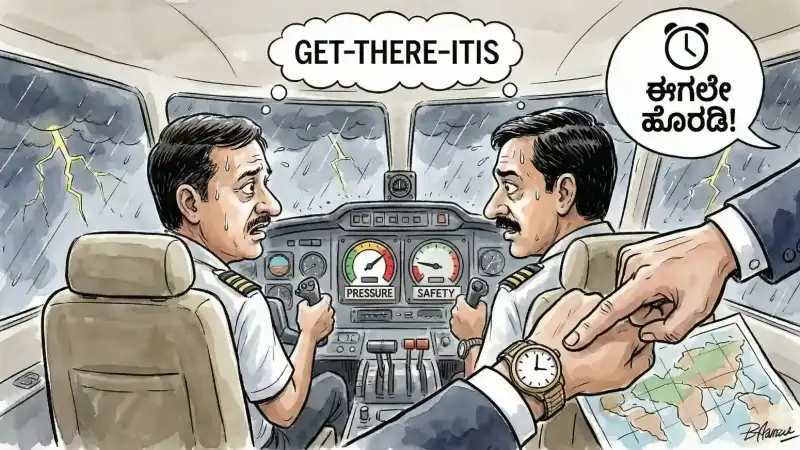
The news that broke this morning (January 28, 2026) around 8:45 AM from Baramati Airport has shaken the entire political landscape of the country. When the reports confirmed that the plane carrying Maharashtra’s Deputy CM, Ajit Pawar—often called the 'Tiger' of Maharashtra—crashed during landing, the first thought wasn't about the machine. It was about that old curse of the sky that seems to haunt our political leaders. While the black box will eventually tell us the technical truth, a quick look at history reveals a theory written in blood.
In aviation terms, they call it "Get-there-itis". It sounds like some medical disease, doesn't it? But trust me, it is far more dangerous. In simple terms, it is the stubborn mindset of "I must reach the destination at the scheduled time, no matter what."
If we look closely at today’s incident in Baramati, reports suggest the weather conditions during landing weren't exactly perfect. So why was the landing attempted? This is where the invisible drama inside the cockpit unfolds. A pilot knows the limits of his machine and the danger outside. But the person sitting in the passenger seat isn't a common man; he is the Deputy CM of a major state.
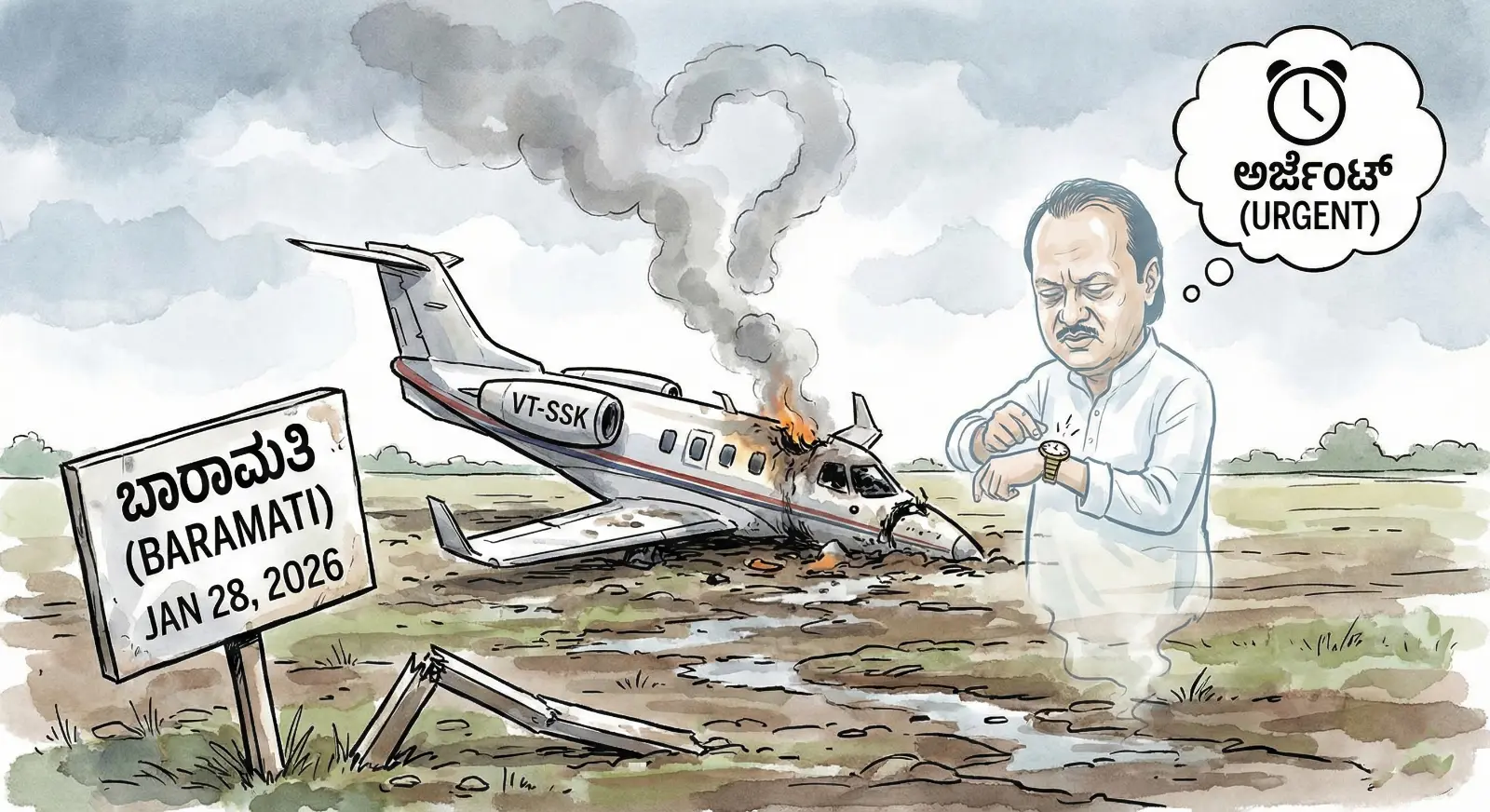
Just imagine the scene for a second. Inside the cockpit, the technical instruments are warning the pilot—"Don't do it, don't take the risk." But from the cabin behind, there is a pressure—maybe silent, maybe spoken—that screams, "It's urgent, people are waiting, just land the plane." Caught between these two pressures, the pilot often ends up ignoring the science and bowing down to the VIP's will. This is classic "Get-there-itis". Did this happen with Ajit Pawar today? Did the fear of a delayed schedule override the fear of death? These are the questions we need to ask.
History is full of such tragedies. Who can forget 2009, when the entire state of Andhra Pradesh drowned in tears after Y.S. Rajasekhara Reddy’s helicopter crash? It was raining heavily over the Nallamala forest. The pilot surely thought of turning back. But the commitment to reach the "Rachabanda" program won over caution. That tragedy was a textbook case of "Get-there-itis". But sadly, today's incident proves we haven't learned a single lesson from it.
The same story repeated in 2001 with Madhavrao Scindia near Mainpuri. A small meeting, a road inauguration, or a political speech—are these really worth more than a life? But for people high on power, "Time is Money". They count the minutes, not the cloud density. Pilots, no matter how experienced, are humans too. The hesitation to say "No" to the Boss often leads to the wrong decision.
The crashes of Arunachal CM Dorjee Khandu in 2011 and Meghalaya Minister Cyprian Sangma in 2004 were also victims of this gamble with nature. Flying helicopters in the Northeast terrain is an adventure in itself. Add the pressure of "hurry up" to it, and it becomes a suicide mission. Today, Ajit Pawar’s pilot might have faced a similar dilemma. If he doesn't land, the Saheb gets angry. If he lands, lives are at risk. He has seconds to decide. And if he loses that moment, the result becomes Breaking News.
Look at it from another angle—this is the tragic side of our VIP culture. On the road, police can clear the traffic signal for a minister. But up in the sky? There are no police to clear the clouds or fix the wind speed. Nature is the Supreme Court there. If you try to overrule its judgment, the punishment is often capital. We are in 2026, we might have AI and flying cars, but we still can't control uncertainty. Ajit Pawar’s plane might have been state-of-the-art, but it was flown by a human, carrying humans.
 When Microsoft 365 Goes Down, the World Comes to a Standstill: Is Too Much of Our Digital Life in One Company's Hands?
 Oracle’s AI Ambition Comes at a Human Cost: 7,000–10,000 Tech Jobs at Risk?
 NSE IPO Opens September 17: Share Price Set at ₹1,700–₹1,785 — Should Investors Apply?
 iOS 27 Update: What’s New, Which iPhones Are Supported, and Who Gets Siri AI?
 ₹156 Crore Technology Centre in Devanahalli: What It Could Mean for Small Businesses
Sometimes, it’s also about overconfidence. Pilots thinking, "I can land in any condition." This arrogance is just another face of "Get-there-itis". We heard similar things during the 2025 incident involving Gujarat’s ex-CM Vijay Rupani. Experience is great, but machines don't have feelings. One small gust of wind, one engine hiccup, and everything goes for a toss. That’s probably what happened in Baramati this morning. Until the last second, they think "We got this," and then suddenly, they don't.
Technically speaking, even with the best Instrument Landing System (ILS), in the last 500 feet, the pilot needs to see the runway. If he can't, he must do a 'Go-Around'. But in VIP flights, a Go-Around is often seen as a waste of time. This mindset might have cost Ajit Pawar his life. Prioritizing the schedule over safety has claimed yet another leader.
The big question is, will this stop here? The answer, unfortunately, feels like a "No". In our political system, travel is inevitable, and pressure is part of the job. Until leaders stop thinking "The plane must fly when I say so," and until pilots get the authority to say "No Sir, it's not safe" without fear, this list will keep growing. The Ajit Pawar incident isn't just an accident; it’s a system failure.
Finally, when the black box is recovered, it will record the pilot's last words. Maybe he said, "Let's try." But it won't record the mental pressure behind those words. That is something only felt, not heard. Ajit Pawar’s loss is a blow to his party and family. But for the country, it’s a siren. Don't mess with the sky. Up there, we are just guests, not owners.

No Comment Yet.
Stay informed with breaking news, trending stories, and in-depth analysis.
