Tech Vaidya WhatsApp Channel
Get AI updates, tech news, cybersecurity alerts and useful tech tips directly on WhatsApp.

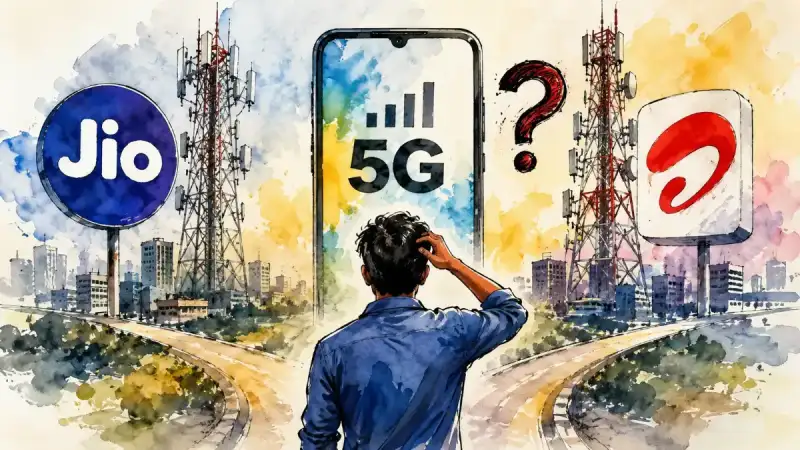
Have you replaced your home broadband with a Jio or Airtel 5G hotspot? Do you stream 4K videos, download large games, or work from home without worrying about data limits? If yes, you may want to keep an eye on what is happening in India's telecom industry. A growing discussion among analysts suggests that the current era of unlimited 5G may not continue forever. While no official announcement has been made, the conversation around future 5G pricing is becoming louder.
When 5G first arrived in India, the objective was simple. Telecom companies wanted as many users as possible to upgrade from 4G to the new network. Offering unlimited 5G with selected recharge plans proved to be one of the strongest marketing strategies. Millions of users purchased new 5G smartphones, upgraded their SIM cards, and began consuming significantly more data than ever before. Within a short period, India became one of the world's fastest-growing 5G markets.
Today, however, the industry is entering a different phase. Building nationwide 5G infrastructure required enormous investments in spectrum, network equipment, fiber connectivity, and tower expansion. Now that millions of users have already migrated to 5G, telecom companies are increasingly focused on recovering those investments. Industry experts believe the next stage could be about monetizing 5G services rather than simply expanding coverage. That shift is why discussions about future pricing models have intensified.
It is important to separate industry expectations from official announcements. Neither Jio nor Airtel has confirmed that unlimited 5G will end on a specific date. However, telecom analysts have repeatedly suggested that permanently offering unrestricted high-speed data may not be commercially sustainable. Future plans could include new pricing structures, premium data tiers, or fair usage limits. At this stage, these remain possibilities rather than confirmed policy changes.
Why Unlimited 5G Was Never Expected to Last Forever
Unlimited 5G served a clear purpose during the initial rollout. The faster users adopted the new technology, the quicker operators could expand their customer base and justify network investments. Free or bundled unlimited access encouraged people to experience the speed difference between 4G and 5G without hesitation. That strategy proved highly successful. Today, the market looks very different from where it stood during the launch phase.
Heavy data consumption has become increasingly common. Many households now rely entirely on mobile 5G instead of fixed broadband connections. High-resolution video streaming, cloud gaming, software downloads, online education, and remote work consume hundreds of gigabytes every month. While this benefits consumers, it also places enormous pressure on network capacity. Telecom operators must balance customer satisfaction with long-term business sustainability.
Across the global telecom industry, unlimited data has often evolved into more structured pricing over time. Many developed markets offer generous high-speed allowances before applying reduced speeds or premium upgrades. India has remained one of the most affordable mobile data markets in the world. That is one reason analysts believe pricing strategies may gradually evolve here as well. Every major technology eventually moves from expansion to monetization.
 When Microsoft 365 Goes Down, the World Comes to a Standstill: Is Too Much of Our Digital Life in One Company's Hands?
 Oracle’s AI Ambition Comes at a Human Cost: 7,000–10,000 Tech Jobs at Risk?
 NSE IPO Opens September 17: Share Price Set at ₹1,700–₹1,785 — Should Investors Apply?
 iOS 27 Update: What’s New, Which iPhones Are Supported, and Who Gets Siri AI?
 ₹156 Crore Technology Centre in Devanahalli: What It Could Mean for Small Businesses
For telecom companies, maintaining high-quality service is just as important as attracting new subscribers. As network traffic continues to grow, operators may need new tools to manage usage more efficiently. Pricing models, premium plans, and fair usage mechanisms are among the options frequently discussed within the industry. None of these changes have been officially announced, but they remain realistic possibilities. Users should understand why these conversations are taking place.
What Is Fair Usage Policy?
Fair Usage Policy, commonly known as FUP, is not a new concept. Under this approach, customers receive a specified amount of high-speed data within a billing cycle. After crossing that threshold, internet access generally continues, but speeds may be reduced. This model has existed in various forms across broadband and mobile services for many years. The purpose is to balance network resources among all users.
Industry observers believe similar mechanisms could eventually appear in some future 5G plans. Instead of unlimited unrestricted access, operators could introduce defined high-speed allowances followed by reduced speeds or optional data add-ons. Such models would primarily affect users with extremely high monthly consumption. Average smartphone users might notice little or no difference depending on their usage patterns. Everything would ultimately depend on the final plan structure.
It is equally possible that operators introduce multiple categories of 5G plans rather than a single unlimited offering. Basic users could choose affordable plans, while heavy users may opt for premium packages with larger data allowances. This approach is already common in several international telecom markets. Whether India follows a similar path remains uncertain. Official announcements will determine the actual direction.
Another topic receiving attention is bundled entertainment services. Some analysts believe future recharge plans could separate streaming subscriptions from standard mobile plans. Premium entertainment services may become optional add-ons rather than automatic inclusions. However, no official confirmation has been provided regarding such changes. Consumers should avoid treating speculation as confirmed policy.
Who Could Be Affected the Most?
Users who rely on 5G as a replacement for home broadband would likely experience the greatest impact if usage limits were introduced. Large software downloads, cloud backups, ultra-high-definition streaming, and online gaming consume substantial amounts of data every month. A fair usage model would naturally affect these activities more than ordinary smartphone browsing. Households with multiple connected devices could also notice changes. Heavy users generally benefit the most from unlimited plans today.
Average smartphone users may experience little disruption. People who primarily use messaging apps, social media, web browsing, navigation, music streaming, and occasional video playback often consume far less data than heavy users. Even if pricing models evolve, many consumers may continue using mobile services without significant changes to their daily experience. Individual impact depends entirely on personal usage habits. One plan rarely fits every customer equally.
Businesses relying on mobile connectivity could also pay close attention to future developments. Remote employees, digital creators, freelancers, and small companies increasingly depend on reliable high-speed mobile internet. Any changes to premium data access would influence operational costs for certain users. Businesses often adapt quickly by choosing plans that match their actual consumption. Flexibility will remain important.
For now, there is no reason for panic. Telecom pricing has always evolved as technology matures. Consumers should rely on official announcements rather than social media rumors. Making financial decisions based on speculation rarely produces good results. Staying informed is far more valuable than reacting too early.
India's telecom industry appears to be entering a new phase. The first chapter focused on expanding 5G coverage and attracting users to the next generation of mobile connectivity. The next chapter may focus on making those investments financially sustainable through revised pricing strategies and differentiated service offerings. Whether those changes involve Fair Usage Policy, premium plans, or entirely new recharge structures remains to be seen.
One fact is clear: Jio and Airtel have not officially announced the end of unlimited 5G or introduced any confirmed timeline for such a move. Current discussions are based on industry analysis, market expectations, and evolving business strategies rather than official policy. As always, the smartest approach is to follow verified updates from telecom operators instead of relying on speculation. The coming months could shape the next stage of India's 5G journey.

No Comment Yet.
Stay informed with breaking news, trending stories, and in-depth analysis.