Tech Vaidya WhatsApp Channel
Get AI updates, tech news, cybersecurity alerts and useful tech tips directly on WhatsApp.


Part 1: Ground Reality and Economic Blueprint
| Nagaraj Vaidya
If you closely analyze the geographical and economic map of Karnataka, a stark reality immediately stands out. You have two incredibly powerful regional economies—the resource-rich Malnad and the highly industrialized, entrepreneurial Coastal belt—that have suffered for decades due to a severe lack of seamless connectivity. Bridging these two geographical powerhouses with a direct, smooth railway network was never just a political demand; it has been an absolute daily necessity for the millions residing in these regions.
Now, in May 2026, the official announcement by the Union Minister of State for Railways, V. Somanna, in Mangaluru has breathed powerful new life into this decades-old dream. The 'Shivamogga-Sringeri-Mangaluru' new railway line project, which was gathering dust in government files and election manifestos, has finally taken its first definitive step toward reality.
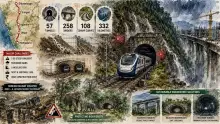
Reviewing the preliminary documents and recent reports available in the public domain reveals the staggering scale of this mega project. This is not a new proposal. During the 2018-19 period, a preliminary survey was conducted for a 228 km route. However, due to concerns over the Rate of Return (RoR) and immense geographical challenges, that report was shelved. But today, the Final Location Survey (FLS) has been completed for a revised, highly ambitious 332 km route. Requiring a massive capital injection of approximately ₹3,300 crores, the government has expressed confidence that this mega project will enter the tendering phase very soon.

When objectively analyzing any massive infrastructure project, looking merely at the budget is a flawed approach. One must first understand the fundamental economic necessity and the grim 'ground reality' of the existing transport systems. From that perspective, this railway line possesses the raw potential to permanently alter the economic destiny of six major districts.
The Daily Nightmare of Ghat Roads and a Broken Transit System
Currently, the entire transport mechanism between Malnad and the Coast relies exclusively on road networks. The Shiradi, Charmadi, Hulikal, and Agumbe Ghats serve as the primary lifelines connecting these two zones. However, the harsh reality is that these mountain passes have become an absolute daily nightmare for logistics operators and commuters alike. Even a mild onset of the monsoon exposes the extreme fragility of these roads. Frequent landslides on steep curves and massive tree falls routinely force these critical highways to shut down for weeks, sometimes even months, an all-too-familiar tragedy for the locals.
 The Konkan Railway Legacy: Unforgettable and Tragic Lessons from the 2003 Landslide
 The Ultimate Environmental Loophole: The Secret 'Green Card' for Railway Projects
 Why Is Typing Kannada on Apple Laptops Still So Difficult? Which Kannada Keyboard Is Best for Apple Computers?
 Apple Finally Folded the iPhone! Why the iPhone Duo Could Change the Smartphone Industry
 TechVaidya: One Year. Over a Thousand Articles. And a long road still ahead...
To paint a vivid picture of the daily traffic chaos: if a massive multi-axle truck or a bullet tanker breaks down on the narrow hairpin bends of Charmadi or Shiradi, it triggers a cascading traffic jam that stretches for kilometers. Passengers are stranded in the middle of dense forests for hours, and perishable agricultural produce rots in trucks unable to reach the port on time. All these factors severely choke the economic velocity of the region. Since the steep, fragile topography of the Western Ghats simply does not allow for massive road widening, economic experts and local representatives strongly argue that a railway line is the only permanent, reliable, and safe solution for commercial transit.
A Lifeline for Healthcare, Education, and the IT Workforce
The absolute necessity of this railway line extends far beyond just moving cargo. The coastal cities of Mangaluru, Manipal, and Udupi are globally recognized hubs for advanced healthcare and higher education. Thousands of students from the Malnad districts of Shivamogga, Chikkamagaluru, and Hassan study here. More importantly, transporting critically ill patients from the interiors of Malnad to the super-specialty hospitals in Mangaluru via ambulances on these treacherous Ghat roads is literally a gamble with death. There are hundreds of documented cases where patients lost their lives simply because their ambulances were stuck in Ghat traffic jams. A smooth railway network would ensure these populations get rapid, unhindered access to advanced medical care.
Similarly, thousands of IT professionals hailing from the Coast and Malnad struggle every weekend to travel back to their hometowns. Extortionate private bus fares and the sheer physical exhaustion of road travel have left the common man frustrated. Building a safe, reliable railway network will significantly elevate the overall Standard of Living for the entire region.
New Mangalore Port and a New Equation for Agricultural Exports
Analyzing the commercial angle, if this 332 km railway line becomes a reality, we will witness a monumental economic decentralization. The deep interiors of Shivamogga and Chikkamagaluru produce some of the world's finest quality areca nut, coffee, cardamom, pepper, and rubber. Currently, farmers and aggregators are forced to rely on expensive and unreliable road transport to deliver these cash crops to the New Mangalore Port Trust (NMPT).
If dedicated freight trains become fully operational, the logistics cost for these goods will drop drastically—estimates suggest a reduction of over 40%. This will open a highly lucrative, fast, and remarkably cheap direct corridor for Malnad's farmers to export their produce to international markets. Conversely, the Coast's primary imports and products—such as fertilizers, petroleum products, coal, and marine resources—will easily and cheaply penetrate the Malnad consumer markets.
The Golden Tourism Corridor and Massive Job Creation
Beyond heavy commerce, the greatest beneficiary of this project will undoubtedly be the tourism sector. Southern India's most prominent pilgrimage centers—the Sringeri Sharada Peetham, Horanadu Annapoorneshwari, Kukke Subramanya, and Dharmasthala—attract millions of devotees domestically and internationally every year. Currently, reaching these sacred sites from Bengaluru or Mangaluru mandates an exhausting, stomach-churning drive through the Ghats.
Because the new railway line is proposed to pass through Sringeri, devotees will finally experience completely safe, highly comfortable travel. But this isn't just about passenger comfort. As tourist footfalls multiply, it will trigger a massive boom for the local hospitality industry, taxi operators, homestays, and small vendors. This ecosystem will create thousands of direct and indirect jobs for the local youth.
The 'Green Transport' Argument and the Hidden Cost
The most potent argument put forth by the project's supporters and political leaders is that this is a "Green Transport" initiative. They argue that replacing thousands of diesel-belching trucks and buses with fully electrified trains will drastically reduce toxic carbon emissions and actually improve the air quality of the Western Ghats.
All these calculations regarding economic booms, social upliftment, and tourism growth look absolutely magnificent on paper and in PowerPoint presentations. There is no denying that if this railway line is built, the face of Malnad and the Coast will change forever. From a strictly developmental perspective, this project deserves a perfect score.
However, every leap in development exacts a price. The ultimate success of this mega project depends entirely on how massive a price we are about to pay.
Laying 332 kilometers of heavy iron tracks on flat, barren plains is one thing. Slicing open the chest of the Western Ghats—one of the world's most sensitive, irreplaceable biodiversity hotspots—is an entirely different beast. Amidst the constant threat of deadly landslides, running heavy trains through deep forest gorges is not a casual undertaking. Are we, blinded by the promise of economic wealth, stepping into a massive, unwinnable war against nature?
Coming up tomorrow in Part 2: How difficult is it technically and geographically to slice through the deep gorges, massive mountains, and dense forests of the Western Ghats to lay 332 km of tracks? A complete technical analysis of the real "engineering nightmares" and landslide risks that the railways will face. Read the in-depth technical breakdown only on Tech Vaidya.

No Comment Yet.
Stay informed with breaking news, trending stories, and in-depth analysis.