Tech Vaidya WhatsApp Channel
Get AI updates, tech news, cybersecurity alerts and useful tech tips directly on WhatsApp.

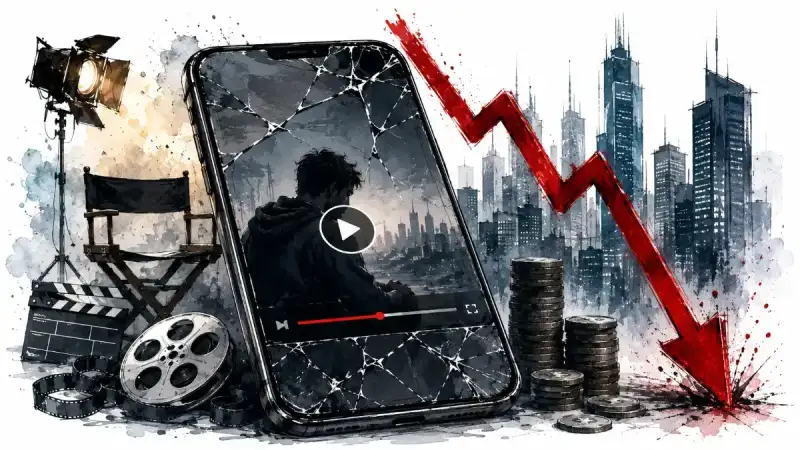
A palpable silence has settled over Bengaluru’s startup corridors. A digital entertainment experiment that launched with massive capital and immense hype has abruptly crashed into harsh market realities. Pocket FM, a highly successful audio storytelling platform, has pulled the plug on 'Pocket TV,' its highly anticipated microdrama video division. Viewing this development merely as the failure of a single product would be a deeply flawed analysis. Instead, it serves as a mirror reflecting a severe structural shift in the Indian digital entertainment market and changing consumer payment psychology. While it may be premature to declare the microdrama model completely dead, this shutdown irrevocably proves that monetizing bite-sized video content is far more difficult than investors initially projected.
There is no denying that social media has fundamentally rewired daily viewing habits. A generation that once consumed ten-minute YouTube videos has now seamlessly adapted to the sixty-second rhythm of Reels and Shorts. Capitalizing on this behavioral shift, several companies rushed into the market to introduce one-minute episodic dramas. However, these platforms fundamentally misunderstood a crucial distinction: creating a viral Reel and sustaining a serialized narrative are two entirely different arts. Hooking a viewer's attention for thirty free seconds is easy. Convincing that same viewer to stay invested for thirty episodes, pulling out their wallet to unlock each subsequent minute, is a monumental challenge. The assumption that high free viewership would seamlessly translate into a profitable subscription business was ultimately shattered.
The most glaring flaw in this experiment lies in the brutal unit economics of video production compared to audio. Pocket FM witnessed stellar success in the audio segment, leading to the assumption that the same formula could be replicated in video. But the economics are entirely different. Creating a hit audio series requires a compelling writer, a talented voice actor, and a high-quality microphone. Whether that story is streamed by a hundred people or a million, the distribution and server costs remain remarkably efficient. Video production, however, demands an entirely different scale of investment. It requires a massive crew, actors, location rentals, expensive camera gear, lighting, post-production editing, color grading, background scoring, and exponentially higher server bandwidth. When the revenue generated from users fails to match the immense daily cash burn required to produce these videos, the economic foundation of the business collapses. In that context, shutting down Pocket TV immediately to arrest the financial bleed was actually a highly pragmatic business decision.
The narrative that "Indian consumers do not pay for digital content" is a myth that needs to be dismantled. Indians absolutely pay for content, provided they see undeniable value in the transaction. This is precisely why platforms like Netflix, Spotify, YouTube Premium, and JioHotstar boast tens of millions of paying subscribers across the country. The core question was never whether Indians would pay; the real question was whether the one-minute episodic experience offered by Pocket TV justified the price tag. The modern consumer is incredibly value-conscious. If a user feels they are not getting adequate entertainment for every rupee spent, they will uninstall the application without a second thought.
Another massive startup delusion exposed by this failure is the belief that a model successful in China can be blindly replicated in India. The microdrama format is a multi-billion-dollar industry in China, but the consumer behavior, digital payment friction, linguistic diversity, and entertainment alternatives in the two countries are worlds apart. In China, mini-dramas are deeply integrated into the WeChat super-app ecosystem, making discovery and payment frictionless. In India, asking a user to download a standalone app, navigate a login screen, and authorize micro-transactions just to watch a one-minute drama creates massive user drop-offs. Copy-pasting a foreign success story without deeply understanding the local market's pulse is a guaranteed recipe for failure.
Furthermore, expanding into video acted as a massive distraction for Pocket FM. The company had already established a dominant, highly scalable business in audio streaming, a sector that still holds massive untapped potential. Venturing into the highly competitive, capital-intensive video space naturally fragmented the company's time, financial resources, and executive focus. This is the heavy price companies often pay for forced expansion. In recent times, venture capitalists have aggressively shifted their stance. Just a few years ago, the mandate was "growth at all costs." Today, the only question that matters in boardrooms is "where is the profit?" Startups are aggressively cutting the fat, shutting down vanity projects that do not show a clear path to profitability.
This abrupt strategic pivot brings significant collateral damage to the workforce. Amidst the rising tides of artificial intelligence, automation, and global tech layoffs, the media and technology sectors are already fraught with anxiety. When experimental divisions are shut down, the heaviest blow falls on the mid-level employees and creative teams who executed the vision. While management can pivot strategies overnight, the workforce pays the human cost. This also serves as a stark warning to content creators: blindly chasing every new platform or format without assessing its financial stability and long-term viability can render months of hard work useless in a single day.
The closure of Pocket TV is not just the end of an app; it is the strongest indicator of a maturing Indian startup ecosystem. The era of building castles on endless venture capital funding is drawing to a close. Growth and innovation remain critical, but they are now inextricably tied to the demand for sustainable revenue. The ultimate message hidden in this shutdown is clear: the startups that will rule the next decade will not be the ones burning investor cash to acquire free users, but the ones building real, value-driven products that consumers are genuinely willing to pay for.
 Why Is Typing Kannada on Apple Laptops Still So Difficult? Which Kannada Keyboard Is Best for Apple Computers?
 Apple Finally Folded the iPhone! Why the iPhone Duo Could Change the Smartphone Industry
 TechVaidya: One Year. Over a Thousand Articles. And a long road still ahead...
 NASA Invites ISRO to Join the Moon Base Mission: Why This Could Be a Turning Point for India
 Toxic Review: Yash Owns the Screen, But Does the Film Own the Story?

No Comment Yet.
Stay informed with breaking news, trending stories, and in-depth analysis.