Tech Vaidya WhatsApp Channel
Get AI updates, tech news, cybersecurity alerts and useful tech tips directly on WhatsApp.

Combatting Cyber Fraud: The Strategy Behind India's SIM-link Mandate
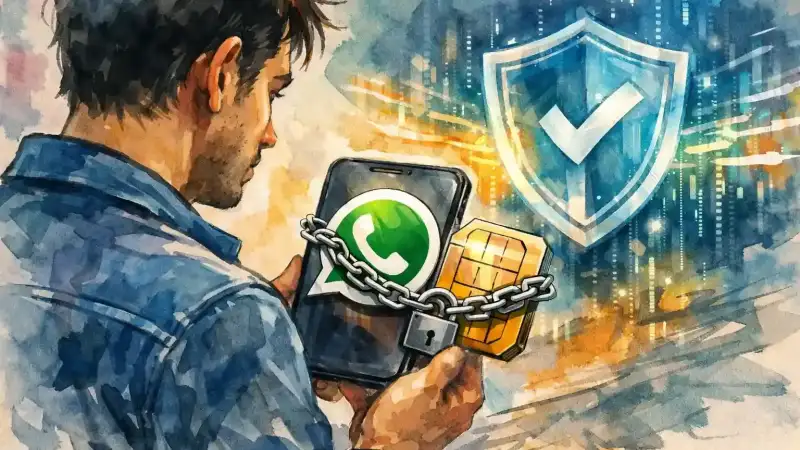
March 1, 2026, marks a pivotal shift in India's digital landscape as the Department of Telecommunications (DoT) officially implements the mandatory SIM-binding rules for messaging platforms. This regulation fundamentally transforms how applications like WhatsApp, Telegram, and Signal operate within the country. Moving away from the traditional one-time password (OTP) verification model, the new mandate requires a continuous, physical link between the SIM card and the messaging account. This transition aims to fortify the nation’s digital defenses against a rising tide of sophisticated cybercrimes, including SIM-swap fraud and digital impersonation.
The core of this new framework is the concept of a "digital handshake." SIM-binding ensures that a messaging account remains active only if the registered SIM card is physically present in the device. Historically, users could activate an account via OTP and subsequently remove the SIM or use the app on a different device via Wi-Fi indefinitely. Under the 2026 guidelines, the application periodically verifies the presence of the SIM. If the SIM is removed or a different card is inserted, the messaging service is instantly suspended, effectively ending the era of "SIM-less" messaging.
The Strategic War Against Cybercrime
The primary catalyst for this stringent measure is the alarming surge in organized cyber fraud. In recent years, criminals have exploited the lack of physical SIM verification to conduct "Digital Arrest" scams and financial thefts. By hijacking an account through a single OTP, fraudsters could operate for months without being traced to a physical location or a specific SIM. SIM-binding closes this loophole by creating a persistent link between the digital identity and the physical hardware, making it significantly easier for law enforcement to track the origin of fraudulent communications.
This regulation covers a broad spectrum of messaging and social media platforms. Beyond global giants like WhatsApp, Telegram, and Signal, the mandate extends to domestic players and specialized communication apps including JioChat, ShareChat, Snapchat, and Arattai. Any platform that utilizes a mobile number as the primary identifier must now implement real-time SIM verification. This creates a unified security standard across the Indian internet ecosystem, ensuring that no platform becomes a safe haven for anonymous perpetrators.
The 6-Hour Desktop Logout Rule
One of the most significant changes for professional users is the new protocol for web and desktop clients. To prevent unauthorized access to sensitive conversations on shared or office computers, the law now mandates an automatic logout for WhatsApp Web and Telegram Desktop every 6 hours. Users will no longer be able to keep their sessions active for days or weeks. Every 6 hours, a fresh authentication from the primary smartphone—containing the physical SIM—is required to resume the session, adding a critical layer of security to desktop-based communication.
 Oracle’s AI Ambition Comes at a Human Cost: 7,000–10,000 Tech Jobs at Risk?
 NSE IPO Opens September 17: Share Price Set at ₹1,700–₹1,785 — Should Investors Apply?
 iOS 27 Update: What’s New, Which iPhones Are Supported, and Who Gets Siri AI?
 ₹156 Crore Technology Centre in Devanahalli: What It Could Mean for Small Businesses
 Terrier Cyber Quest 2026: Indian Army Opens a New Front in the Cybersecurity Battle
Furthermore, the architecture of "Linked Devices" has been completely overhauled. While users can still link multiple devices, the primary device hosting the SIM card must remain active and connected. If the primary phone goes offline or the SIM is detached, all secondary sessions on tablets or other phones will be deactivated. This ensures that a hijacked secondary device cannot be used to monitor a user’s activity once the primary device is secured, effectively neutralizing long-term unauthorized access.
Challenges for Enterprise and Business Workflows
While the security benefits are substantial, the transition poses significant operational challenges for businesses. Many customer support teams and small enterprises rely on constant, uninterrupted access to messaging platforms across multiple terminals. The 6-hour re-authentication requirement introduces friction into these workflows. Companies may now need to reconsider their communication strategies, potentially moving toward more formal enterprise APIs that operate under different regulatory tiers, rather than relying on standard consumer-grade messaging apps.
The impact on user experience extends to travelers and those using dual-SIM or e-SIM configurations. Frequent international travelers who switch between local and Indian SIM cards will face constant re-verification cycles. While the technology is designed to handle e-SIMs seamlessly, the requirement for the specific registered number to be "active and present" means that users cannot simply park their Indian number while using a foreign data SIM for messaging. This necessitates a shift in how Indian users manage their digital connectivity while abroad.
Privacy Debates and Legal Oversight
The implementation of SIM-binding has sparked a robust debate regarding digital privacy and government overreach. Industry bodies and privacy advocates have raised concerns that this level of traceability could potentially be misused for mass surveillance. The ability to link every message to a specific physical SIM and, by extension, a specific geolocation, changes the nature of digital anonymity. However, the government maintains that these measures are proportional to the threat posed by cyber-terrorism and financial fraud, emphasizing that the focus is on identity verification rather than content monitoring.
Technically, SIM-binding brings messaging platforms closer to the security standards of the banking sector. Financial institutions have used similar binding for years to ensure that UPI and mobile banking apps are only accessible from the registered device. By applying this "Bank-Grade" security to communication, India is attempting to create a "Trust-First" digital environment. As the system matures, it is expected that the frequency of identity-related crimes will drop, as the cost and complexity of maintaining a fraudulent account will become prohibitively high for low-level scammers.
Adapting to the New Digital Normal
As we navigate this new era of Digital India, users must become more protective of their physical SIM cards. The SIM is no longer just a gateway to a network; it is the master key to one’s entire digital social life. Losing a phone now means an immediate and total blackout of all messaging services, which, while a temporary inconvenience, ensures that the finder or a thief cannot impersonate the user. The psychological shift from "account-focus" to "SIM-focus" is perhaps the most profound change of this 2026 regulation.
In conclusion, while the SIM-binding rules introduced on March 1, 2026, introduce certain logistical hurdles, they represent a necessary evolution in the fight against digital crime. By tethering the virtual world to the physical reality of a SIM card, the government is building a more accountable and secure internet. Users are encouraged to update their apps to the latest versions and ensure their primary SIM is properly seated to avoid service disruptions.
What is your experience with the new SIM-binding re-verification today? Does the 6-hour logout feel like a necessary shield or a daily hurdle? Share your thoughts with us as we continue to track the impact of these regulations on the Indian tech ecosystem.
Also Read
❤️ The Invisible Puppet Strings: How 'Dark Patterns' Are Secretly Controlling Your Digital Life
❤️ Apps Are Asking for Permissions – Why Are You Handing Over Your Privacy on a Silver Platter?
❤️ The Boss-less Office: Who Truly Rules Bengaluru’s 2 Lakh Delivery Partners?
❤️ Inter-Agency Conflict Stalls Trade Progress: Why Chinese Tech Giants Are Hesitating to Order
🟢 Follow our WhatsApp Channel for continuous updates JOIN ➤
🛒 Shop Online

No Comment Yet.
Stay informed with breaking news, trending stories, and in-depth analysis.