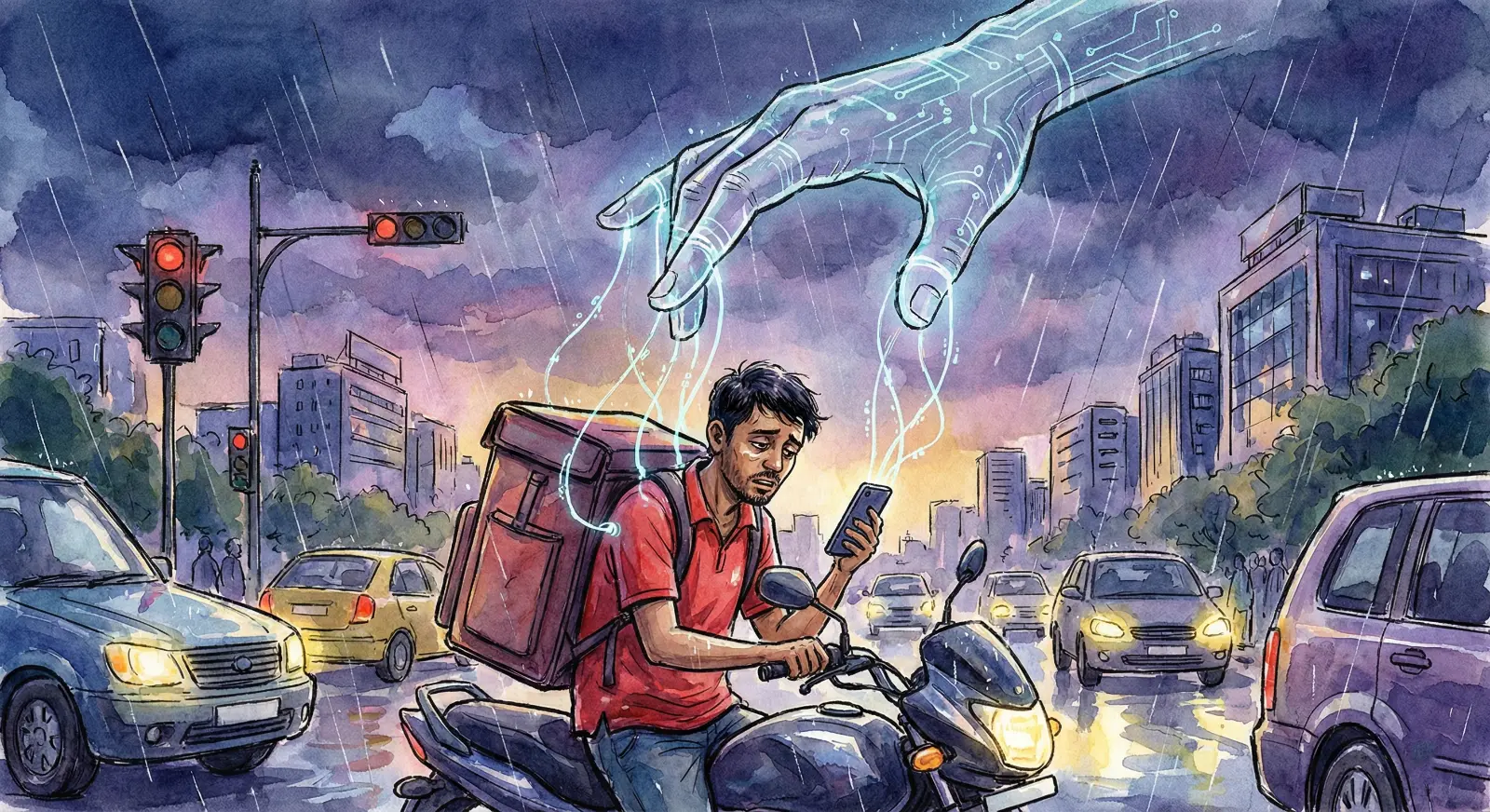
Imagine you are waiting at a traffic signal in Bengaluru. It is pouring rain. You are sitting comfortably inside your car with the windows rolled up. But right next to you, a young man on a bike, wearing a red or orange t-shirt, is anxiously checking his phone. The rain is soaking him, but his worry is not the weather. His worry is the timer ticking down on his mobile screen. He does not fear the traffic police or the red light as much as he fears the little digital boss in his pocket—the Algorithm. Before the steaming hot biryani we ordered reaches our doorstep, the journey it traverses is not just through traffic-clogged roads, but through a complex digital labyrinth.
Today, in Bengaluru alone, there are over two lakh gig workers or delivery partners. There is no office to control their daily routine, no chair to sit on, and most importantly, no shouting human manager. Their boss is an invisible software code. This is called 'Algorithmic Management'. From the moment they log in until they log off late at night, where they go, which route they take, how fast they ride, and how much they earn—everything is decided by this Artificial Intelligence. You might plead with a human boss, "Sir, it is raining heavily, I will drive a bit slow today." But the algorithm has no empathy; it only craves data and efficiency.
When these app companies recruit delivery boys, the pitch is incredibly seductive: "Be your own boss, work when you want, log off when you want." It sounds like freedom. But in reality, it is not freedom; it is a digital shackle. Once the app is switched on, the reins are handed over to the algorithm. If a partner logs off during 'peak hours' or rejects an assigned order, their 'ID Rating' drops. A lower rating means they won't get high-value orders the next time. Essentially, the technology indirectly creates a compulsion where they have no choice but to work.
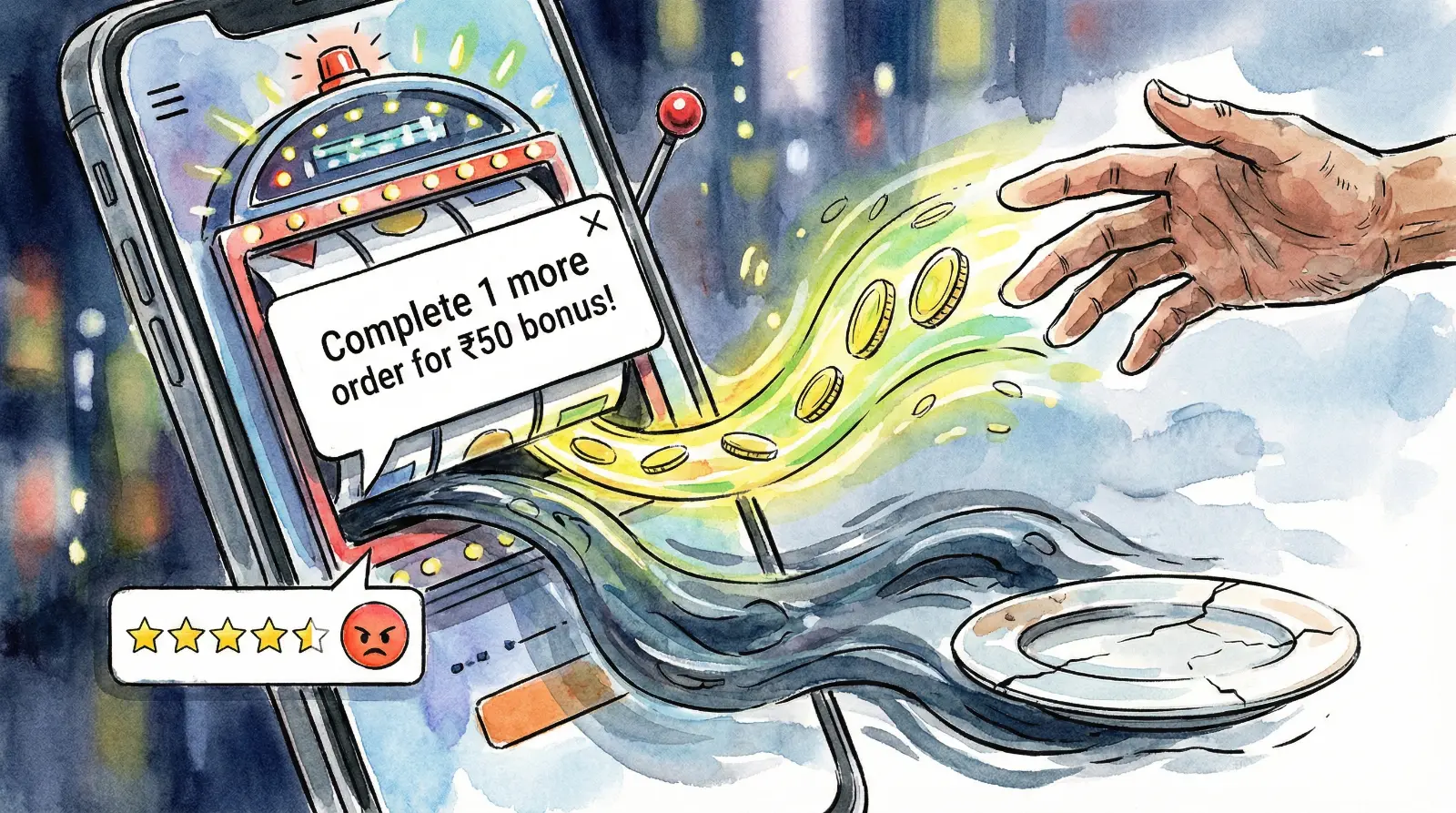
Another major psychological game played here is 'Gamification'. Just like earning points for crossing a level in a video game, here they are offered "Incentives". The app flashes a notification: "Complete 3 more orders to earn ₹200 extra." The boy, blinded by the lure of that ₹200, ignores his exhaustion and hunger, kicks starts his bike, and races towards the next order. This works exactly like the mindset of a gambler in a casino. In the rush to hit the target, basic needs like food, sleep, and health are forgotten. This 'incentive' is the carrot on the stick that keeps them running like a hamster on a wheel.
The punishment meted out by this Algorithmic Boss is equally strange. in a traditional job, a boss might scold you or issue a memo. Here, the punishment is silent and invisible. If a customer gets angry and gives a 1-star rating, or complains the food is cold, the delivery boy often never gets to know the specific reason. Suddenly, his ID might get blocked, or the frequency of orders might drop. There is no human to ask "What was my mistake?"; only a 'Customer Care' bot. A single message saying "Your ID has been deactivated" can push their lives onto the street. Often, these innocent boys pay the price for traffic jams or delays caused by the restaurant.
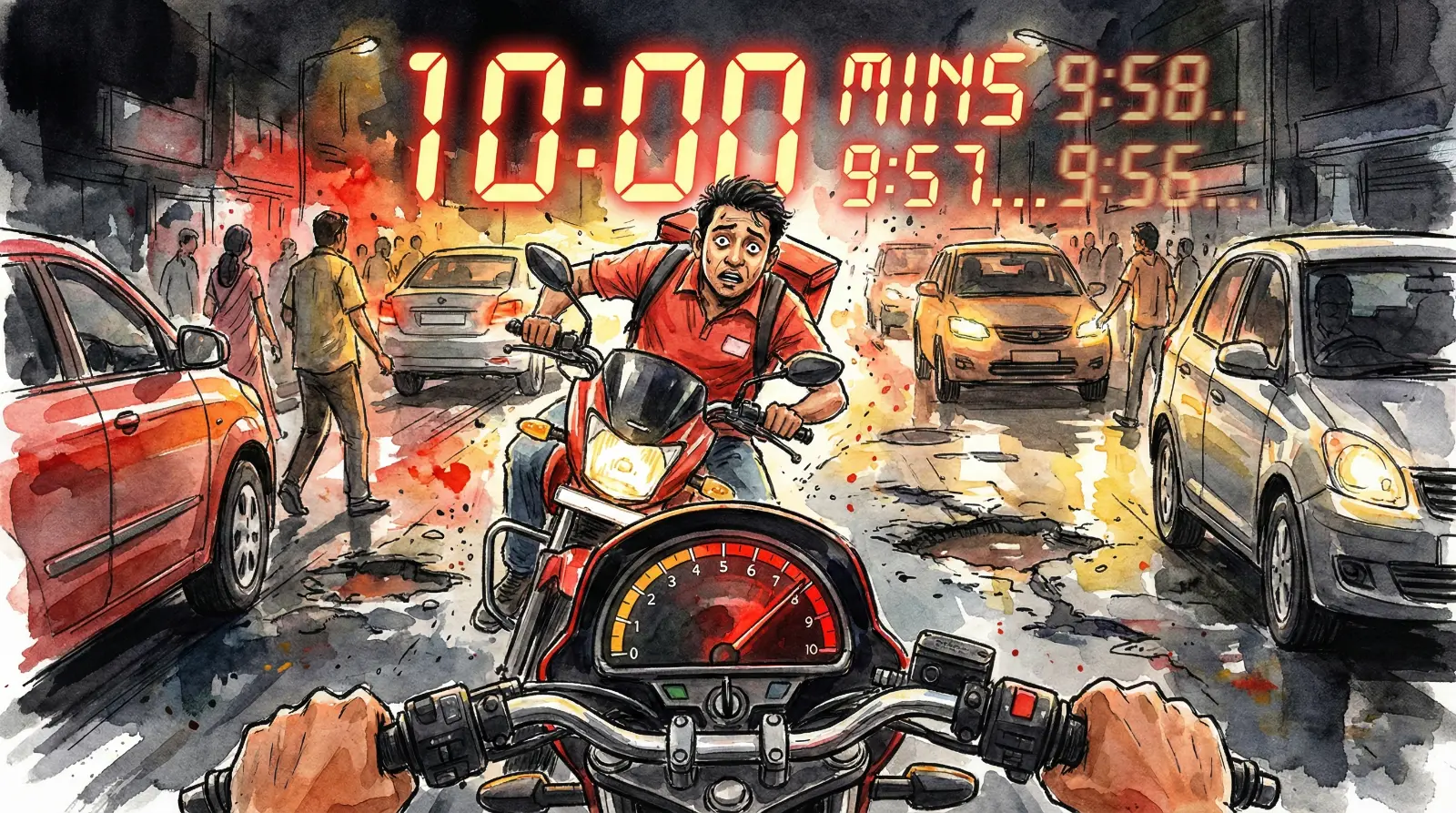
The recently popularized concept of '10-minute delivery' or 'Quick Commerce' has exacerbated this issue. The pressure to deliver groceries or food within ten minutes forces these boys to ride with a disregard for their own lives. Companies may claim, "We don't ask them to speed," but the fear of losing incentives if they miss the algorithm's deadline turns them into racers. On Bengaluru’s pothole-ridden roads, amidst chaotic traffic, many young men have met with accidents trying to meet this deadline. Hot-blooded youth are gambling their precious lives for a mere packet of milk.
Economically speaking, fuel prices are rising, bike service charges are increasing, and the cost of living is skyrocketing. Yet, the per-order earning of delivery boys has largely remained stagnant or decreased over the last five years. The algorithm is smart enough to calculate the exact minimum amount required to get a human to do the job at that specific moment. While companies charge customers 'Surge Pricing' during rains, they keep the lion's share, passing only a fraction to the delivery partner. By labeling them "Partners" instead of employees, companies cleverly escape the responsibility of providing PF, ESI, and insurance.
Another cruel aspect of this system is loneliness. Factory or office workers have colleagues; they have friends to share their burdens with. But the delivery boy on the bike has no one but his machine and his phone. Even another delivery boy at a signal is a competitor, not a friend. Despite being in the middle of crowds all day, knocking on hundreds of doors, the isolation and mental stress they endure is profound. Society, too, needs to change its perspective. Signboards reading "Delivery boys use service lift" or "Do not enter" strip them of their dignity.
From a technological standpoint, these boys are not just delivering food; they are generating data. Which road in Bengaluru has traffic? Who orders the most in which area? At what time do people get hungry? These boys are providing this valuable data to companies for free. In the future, when drones or robots start delivering using this very data, companies might discard this massive human workforce without a second thought. It is a glaring example of a "Use and Throw" culture.
What can we do as customers? At the very least, we can treat them as humans. Not yelling if an order is late during the rain, not calling incessantly during traffic, and importantly, being generous with ratings. Because that 5-star rating is not just a number to them; it is their meal for the next day. Let technology grow, let algorithms thrive, but humanity must not die in the process. We must remember that behind the back of the person carrying the delivery bag, sits an invisible boss. "Bridging Silicon and Soul" means exactly this—not forgetting the human soul behind the technology we enjoy.
No Comment Yet.
Stay informed with breaking news, trending stories, and in-depth analysis.