Tech Vaidya WhatsApp Channel
Get AI updates, tech news, cybersecurity alerts and useful tech tips directly on WhatsApp.

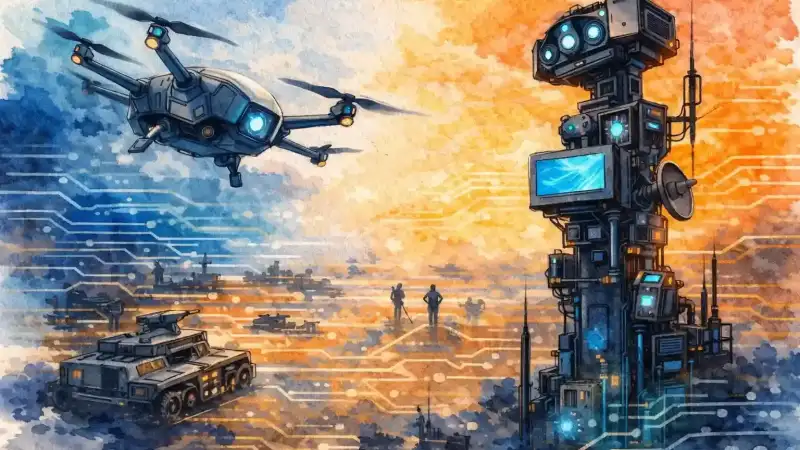
The defense technology sector is witnessing a historic moment as Anduril Industries, the startup founded by Palmer Luckey, moves to secure a massive $4 billion funding round. This significant capital raise is not just about the money; it represents a fundamental shift in how the United States approaches military innovation. By potentially doubling its valuation from previous rounds, Anduril is proving that Silicon Valley’s software-first approach is no longer a peripheral experiment but a central pillar of future national defense. Investors are clearly betting that the next generation of warfare will be defined by code, sensors, and autonomous systems rather than just heavy machinery.
High-profile venture capital firms, including Thrive Capital and Andreessen Horowitz (a16z), are reportedly at the center of these funding discussions. Their involvement highlights a growing appetite among private investors for "dual-use" technologies that have massive government applications. For years, the venture capital world was hesitant to touch defense due to long procurement cycles and ethical complexities. However, the success of companies like SpaceX and the pressing need for rapid technological upgrades in global conflict zones have completely changed the narrative, making Anduril one of the most sought-after names in the market today.
Anduril’s core strength lies in its ability to build what traditional defense contractors often struggle with: highly integrated, AI-powered software platforms. Their flagship operating system, Lattice, acts as a digital brain that can coordinate thousands of autonomous sensors, drones, and interceptors into a single, cohesive network. This capability is exactly what modern military commanders are looking for—a way to achieve total battlefield awareness without overwhelming human operators with data. By automating the "detect and track" process, Anduril is effectively shortening the kill chain and increasing operational efficiency.
The company’s portfolio has expanded rapidly beyond simple surveillance towers to include sophisticated hardware like the Roadrunner interceptor and various underwater autonomous vehicles. This hardware is designed to be "attritable," meaning it is cheap enough to be lost in combat but smart enough to be effective. This philosophy directly challenges the traditional model of building multi-billion dollar platforms like aircraft carriers or stealth jets that are too expensive to lose. In a world where low-cost drones can disable high-value assets, Anduril’s focus on scalable, autonomous tech is proving to be a visionary move.
Palmer Luckey’s personal brand and outspoken vision have played a crucial role in Anduril’s rapid ascent. Transitioning from the creator of Oculus VR to a major player in the defense industry, Luckey has consistently argued that the U.S. and its allies are falling behind in the AI arms race. His ability to recruit top-tier engineering talent from Silicon Valley—talent that might otherwise go to Big Tech firms—has given Anduril a significant edge. This influx of creative energy into the defense space is disrupting the established "Beltway" culture of slow, cost-plus contracts that have dominated the industry for decades.
The surge in valuation also reflects the geopolitical realities of 2026. Conflict zones around the world have demonstrated that traditional military doctrines are being upended by electronic warfare, drones, and AI-driven intelligence. Governments are now scrambling to integrate these technologies at a pace that legacy contractors simply cannot match. Anduril’s ability to move from prototype to field-ready product in months rather than years has made it an indispensable partner for the Pentagon and international allies who are looking for immediate solutions to evolving threats.
Furthermore, this $4 billion round signifies that the "Defense Tech" category is no longer a niche investment. It is becoming a mainstream asset class. As the U.S. government shifts its budget toward software and autonomy, companies that can bridge the gap between Silicon Valley innovation and military requirements will reap massive rewards. Anduril is at the very top of that list, serving as a blueprint for other startups aiming to tackle national security challenges. The sheer scale of this funding suggests that we are entering an era of "sovereign tech" where private capital plays a decisive role in national power.
However, such a high valuation brings with it immense pressure to deliver. Anduril will need to show that it can scale its manufacturing capabilities to meet large-scale government orders. While software scales easily, building thousands of physical drones and sensors requires a different set of expertise. This new capital will likely be used to build out massive production facilities and expand its international footprint, ensuring that it can compete with the likes of Lockheed Martin and Raytheon on a global scale. The transition from a disruptive startup to a reliable "prime" contractor is the next big hurdle for the company.
 Oracle’s AI Ambition Comes at a Human Cost: 7,000–10,000 Tech Jobs at Risk?
 NSE IPO Opens September 17: Share Price Set at ₹1,700–₹1,785 — Should Investors Apply?
 iOS 27 Update: What’s New, Which iPhones Are Supported, and Who Gets Siri AI?
 ₹156 Crore Technology Centre in Devanahalli: What It Could Mean for Small Businesses
 Terrier Cyber Quest 2026: Indian Army Opens a New Front in the Cybersecurity Battle
Ethical and regulatory considerations also loom over the rise of AI-enabled military tech. As Anduril pushes the boundaries of autonomy, it will face increasing scrutiny over how its systems make decisions on the battlefield. The company has been proactive in stating that its systems are designed to keep humans in the loop, but the speed of AI warfare often blurs those lines. Navigating the regulatory landscape while maintaining a lead in innovation will be a delicate balancing act for the leadership team as they deploy this new capital.
The competitive landscape is also heating up, with other well-funded startups like Palantir and Shield AI vying for the same government contracts. This competition is healthy for the industry, as it forces all players to innovate faster and keep costs down. But with a $4 billion war chest, Anduril is now in a position to potentially acquire smaller competitors or move into entirely new verticals, such as space-based surveillance or cyber defense. Their goal is clearly to become the "OS for Defense," a platform that everyone else has to build upon.
Market analysts are closely watching how this round impacts the broader IPO market. A company with a valuation this high is a prime candidate for a public listing, though the sensitive nature of defense work often complicates that path. For now, staying private allows Anduril to move fast and take risks without the quarterly scrutiny of public shareholders. The $4 billion in private funding gives them the runway they need to achieve their long-term goals without the immediate pressure of a public debut, allowing them to focus entirely on their mission.
In the long run, Anduril’s success or failure will be a litmus test for the future of the American industrial base. If a startup can successfully disrupt the defense establishment and become a major player, it will encourage a wave of new innovation across other critical sectors like energy and space. If it struggles, it may signal that the barriers to entry in government work remain too high for even the most well-funded startups. For now, the momentum is undeniably on Anduril’s side, and the world is watching to see how they spend their new billions to reshape the future of conflict.
As the lines between technology and national security continue to blur, what do you think is the most critical role AI will play in the defense of the future? Share your thoughts with us as we track this rapidly evolving industry.
Disclaimer: This article has been written by collecting information from various reliable news and industrial sources to provide a comprehensive analysis of the current situation.
❤️ Also Read
❤️Wings of 6G for India's Digital Ambitions
❤️Vanishing Springs: The Hidden ‘Thirst’ Behind the Agumbe Tunnel
❤️The Battle for Global Supremacy The American AI Stack Meets International Pushback
❤️The Governance Gap: Why America Lacks a Unified AI Law
❤️The Dawn of SIM-binding: India Redefines Digital Messaging Security
❤️Talos of Greek Mythology: Was This the World’s First Robot Concept?
❤️The $450 Billion AI Bet: Why Tech Giants Are Spending Like Never Before
🟢 Follow our WhatsApp Channel JOIN ➤
🛒 ಆನ್ಲೈನ್ ಶಾಪಿಂಗ್ ಮಾಡುವಾಗ ಈ ಕೆಳಗಿನ ಲಿಂಕ್ ಬಳಸಿ

No Comment Yet.
Stay informed with breaking news, trending stories, and in-depth analysis.
