Tech Vaidya WhatsApp Channel
Get AI updates, tech news, cybersecurity alerts and useful tech tips directly on WhatsApp.

By Nagaraja Vaidya
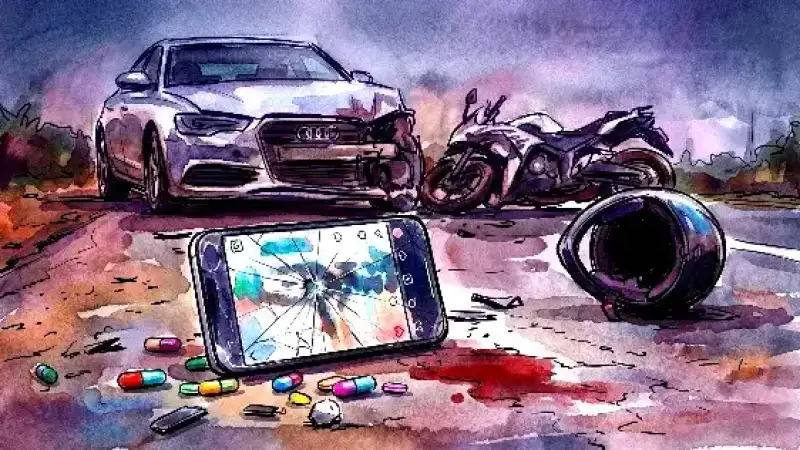
The echoes of Ugadi festivities should still be filling the air in Hubballi, but instead, a chilling silence has settled over one home. What was meant to be a joyful holiday break for 15-year-old Nameesh, visiting from Mysuru, ended in absolute tragedy. Driven by the dangerous obsession to create a fleeting 15-second 'Reel' for social media, Nameesh put his life on the line and lost it forever. The fleeting thrill of a collision captured on camera between a luxury Audi car and a high-speed motorcycle, intended to make him a social media 'hero,' culminated in a horrifying disaster. The violent force of the impact threw the boy 30 feet, and the resulting fatal head injury is not just a statistic of another road accident; it is a brutal, undeniable symbol of the ‘Digital Addiction’ consuming today’s youth.
We cannot afford to dismiss this tragedy as a simple traffic accident. It is a symptom of a systemic psychological trap designed to ensnare children, hidden right inside our smartphones. The moment the camera app opens, young people often lose touch with reality, enveloped in a dangerous illusion of invincibility. The number of lives lost attempting to replicate fake, adrenaline-pumping stunts seen on screens is climbing at an alarming rate. It is imperative that we understand the real culprit behind this deadly game from a psychological standpoint.
The Science of the Dopamine High: Digital Drug Abuse
Every 'like,' 'share,' and 'comment' received on social media triggers the release of 'Dopamine' in the brain. According to psychologists, Dopamine is a neurotransmitter associated with pleasure and reward. The rush it provides is psychologically comparable to the highs experienced from drug use or gambling; a viral Reel delivers that same intoxicating effect.
Reinforcing this concern, Dr. Dinesh Singh Rathore, Director of the Agra Mental Health Institute, states: "Social media notifications cause a continuous release of Dopamine in the brain. This digital addiction erodes a child’s grip on reality and their power of judgment."
Furthermore, in adolescents, the 'Prefrontal Cortex'—the part of the brain responsible for complex decision-making and impulse control—is still developing. Consequently, they often struggle to differentiate between right and wrong, or to grasp the immediate, life-threatening danger of certain actions. They become focused solely on the immediate gratification, or the fleeting 'reward' of online validation. The desperate desire for fake applause on platforms like Instagram and Facebook drives them to discard their personal safety in pursuit of creating dangerous viral content.
When Algorithms Fuel Dangerous Trends: The Silent Killers
 Why Is Typing Kannada on Apple Laptops Still So Difficult? Which Kannada Keyboard Is Best for Apple Computers?
 Apple Finally Folded the iPhone! Why the iPhone Duo Could Change the Smartphone Industry
 TechVaidya: One Year. Over a Thousand Articles. And a long road still ahead...
 NASA Invites ISRO to Join the Moon Base Mission: Why This Could Be a Turning Point for India
 Toxic Review: Yash Owns the Screen, But Does the Film Own the Story?
Social media algorithms often exacerbate this problem. Content that is shock-inducing or high-risk tends to receive significantly more engagement than responsible or educational content. A simple, positive video rarely goes viral, whereas dangerous stunts, reckless behavior, or bizarre antics can rack up millions of views in a short time. This creates a dangerous feedback loop: a teenager might start by filming themselves riding a bicycle hands-free, but as they seek more validation, they escalate to performing stunts on motorcycles, or standing on top of moving cars, always chasing the next high-view count.
This is far from an isolated incident in Hubballi. Globally, the rise of dangerous social media challenges has been linked to numerous fatalities. According to alarming statistics, more than 100 deaths worldwide have been attributed to social media challenges in recent years. In India alone, there are an average of 1.8 lakh road accidents annually, with a significant percentage of victims being youth and teenagers. Recent examples include a 15-year-old boy in Odisha who died while filming a Reel on train tracks in 2025, and a 23-year-old man in Delhi’s Dwarka who lost his life in early 2026 after driving an SUV recklessly for the camera. Additionally, a woman in Uttar Pradesh accidentally died while attempting a mock 'hanging' Reel.
A Message to Parents: Love Does Not Mean Turning a Blind Eye
We cannot lay the blame solely on the children or the technology; parental responsibility is a significant factor. It is crucial to ask: who gave the keys to a luxury Audi car and a high-speed motorcycle to a 15-year-old minor who lacked both a license and the necessary maturity to operate them?
Hubballi-Dharwad Police Commissioner N. Shasikumar has issued a stern warning regarding this issue. "Uncompromising legal action will be initiated against parents who allow minors to operate vehicles. Parents must think seriously before handing over vehicle keys to their children," he stated. Providing children with anything they desire, especially high-risk items like powerful vehicles, out of love or a misplaced sense of social status, can be a fatal mistake. It is akin to handing them a death warrant rather than a gift. A video that has since gone viral shows the surviving minor involved in the accident rationalizing, "It wasn’t my fault; he crashed into me." The complete lack of remorse or empathy on his face, despite having just caused a death, is a chilling reflection of how desensitized some youth are becoming in this digital age.
Protecting Your Child: Urgent Steps to Address Digital Addiction
There is an urgent need to help the younger generation redefine their priorities and understand the true value of life beyond a screen. It is essential to show them that a beautiful world exists outside the phone screen, and that there are countless other ways to achieve meaningful success. Before the situation escalates further, these practical measures are imperative:
Implement Screen Time Limits: Establish and enforce strict daily limits on smartphone usage, particularly for social media.
Create Parent-Child Agreements: Before giving your child a smartphone or vehicle access, establish a clear agreement outlining rules for responsible use, understanding of potential dangers, and consequences for violation.
Integrate School Awareness Programs: Educational institutions must continuously educate students about digital safety, the psychological traps of social media, and responsible online behavior.
Breaking free from digital addiction is possible. A report by the 'Indian Express' detailed the success story of 16-year-old Aarav, who was previously spending 9 hours a day mindlessly scrolling through Reels. After committing to a 30-day 'digital detox' (Blackout), he successfully turned his life around in a positive way. This example provides hope and a clear path forward.
'Likes' and 'shares' are not accurate measures of the worth or meaning of a life. When the camera is off, and a tragedy occurs, the virtual friends who applauded the dangerous stunt will not be the ones offering support. The harsh reality that follows an accident is filled with the tears of grieving parents and mountains of hospital bills. Stunts performed for Reels are not acts of bravery; they are reckless, foolish, and often criminal. It is critical that this societal perspective shifts. Let the blood spilled on the road in Hubballi be a final wake-up call, and a definitive end to this deadly cycle of chasing likes at the cost of young lives.
Resources for Addressing Digital Addiction in Children:
If you or someone you know is struggling with digital addiction, help is available.
Child Helpline: 1098
NIMHANS Helpline: 080-26995000
For severe cases of phone addiction, please seek professional counseling from a qualified psychiatrist.
❤️ Also Read
❤️AI Revolution 2026: Is the era of free services over?
❤️Intel Under the Lens: Lawmakers Target Chinese Supply Chain Links
❤️National Security Shift: Why the US is Protecting Crypto Networks?
❤️The Dawn of SIM-binding: India Redefines Digital Messaging Security
❤️Elon Musk Just Recruited a Robotics Genius to xAI and It Changes Everything
❤️The $450 Billion AI Bet: Why Tech Giants Are Spending Like Never Before
❤️Optimus Humanoid Robots Teslas Leap Beyond Automotive Manufacturing
🟢 Follow our WhatsApp Channel JOIN ➤
🛒 ಆನ್ಲೈನ್ ಶಾಪಿಂಗ್ ಮಾಡುವಾಗ ಈ ಕೆಳಗಿನ ಲಿಂಕ್ ಬಳಸಿ

No Comment Yet.
Stay informed with breaking news, trending stories, and in-depth analysis.
