| EnVee
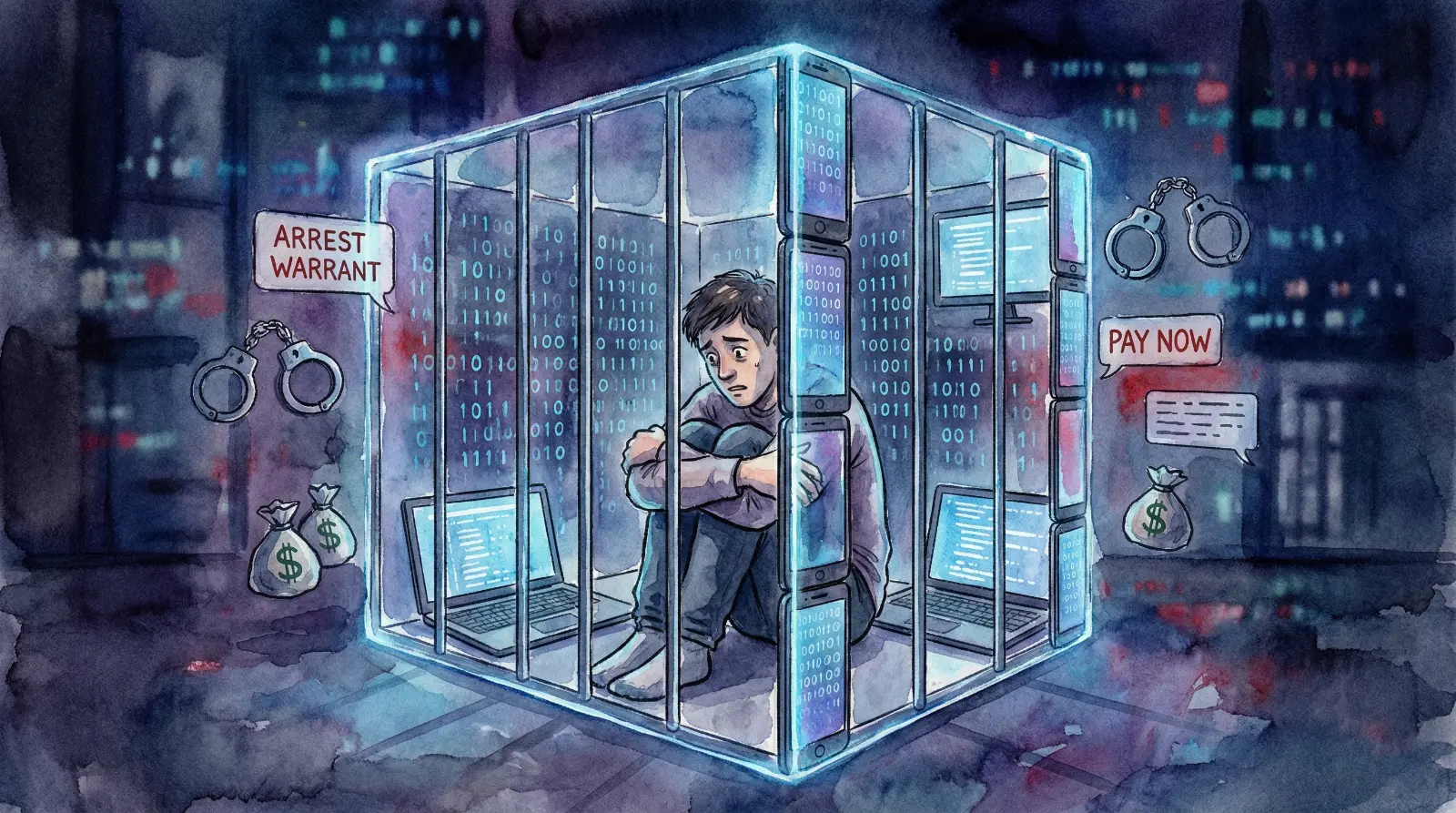
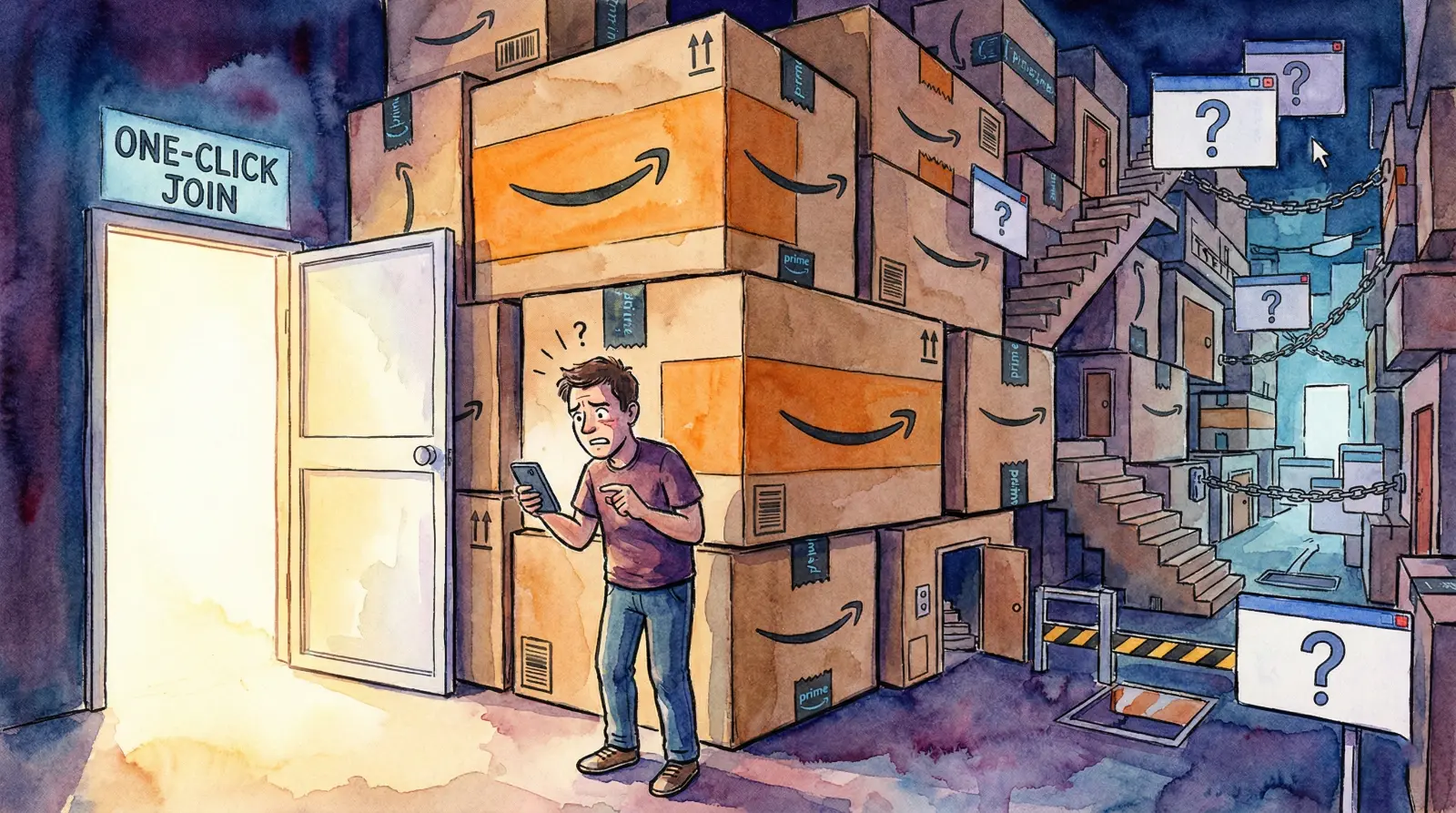
We have all been there. You are checking out a cart full of items, and you see that tempting blue button: "Get Free One-Day Delivery." It takes exactly one click to sign up for Amazon Prime. The doors open wide, the red carpet is rolled out, and suddenly you are a VIP member. But have you ever tried to leave? If joining Prime is like walking through an automatic door, cancelling it feels like trying to escape a high-security prison using a spoon. This drastic difference in difficulty isn't an accident or a design flaw; it is a carefully engineered psychological trap known in the tech industry as a "Roach Motel." And it is precisely why the U.S. Federal Trade Commission (FTC) dragged Amazon to court, resulting in a massive discussion about a $2.5 billion liability.
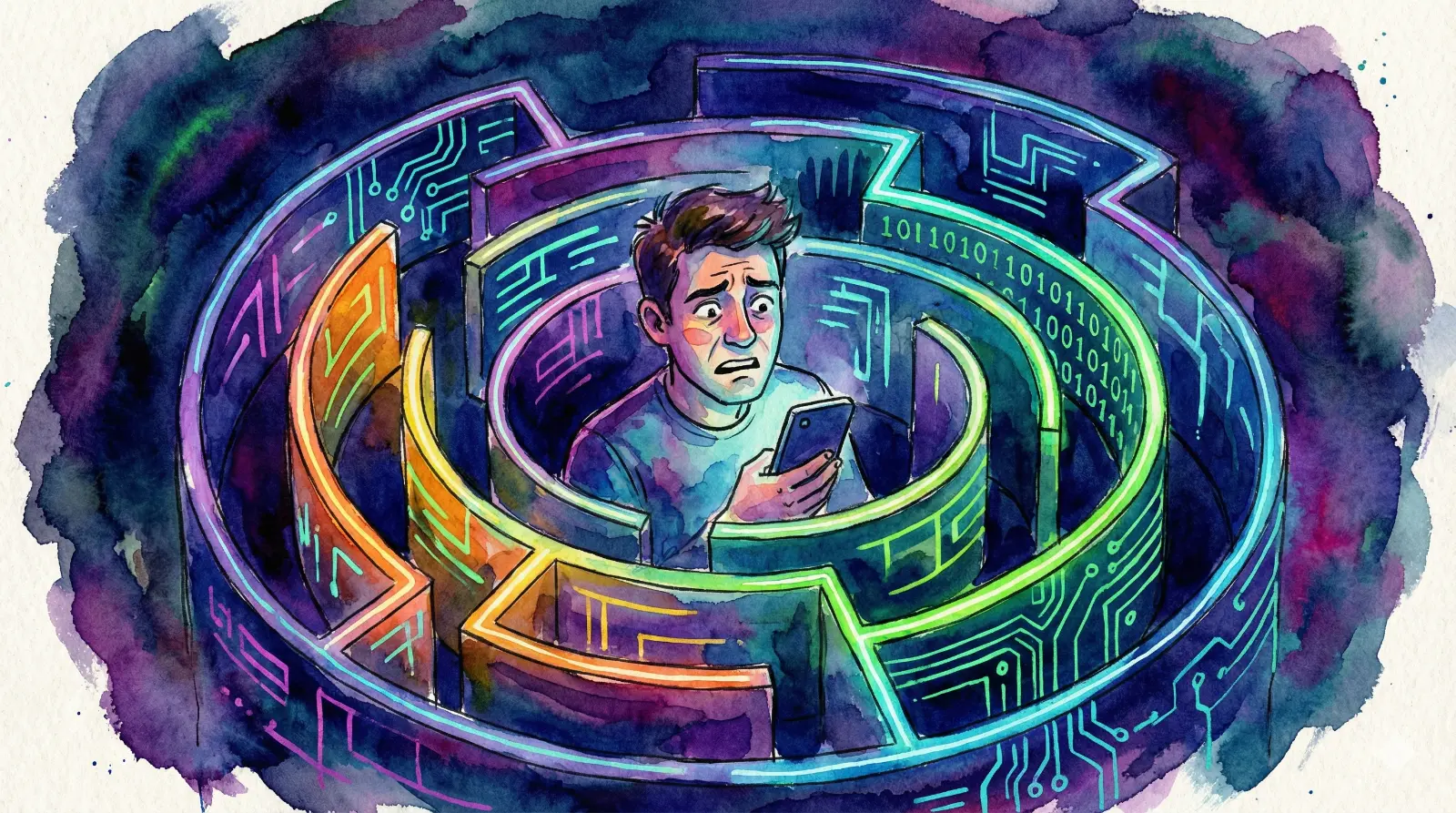
For years, Amazon used a cancellation process internally codenamed "Iliad." If you know your Greek mythology, the Iliad is an epic poem about a long, grueling war and a difficult siege. That is exactly what Amazon wanted its users to face when they tried to stop paying. Instead of a simple "Cancel" button, users were thrown into a labyrinth. First, you would have to find the option, which was often buried deep in the settings menu, hidden under layers of confusing tabs. Once you clicked it, the system wouldnt just let you go. It would present you with a page showing you how much money you "saved" on shipping, trying to trigger your loss aversion. If you persisted, it would offer you a deal—maybe a discount for the next month, or a pause instead of a cancellation.
The genius—and the evil—of the Roach Motel pattern lies in friction. Tech companies know that human willpower is a limited resource. By adding just enough frustration, extra clicks, and guilt-tripping questions like "Are you sure you want to give up your benefits?", they can wear you down. A study from the University of Chicago found that these aggressive tactics can increase subscription retention by over 400%. That is not customer loyalty; that is customer entrapment. In Amazon's case, the FTC alleged that millions of users were tricked into renewing simply because the process to stop was too exhausting to figure out.
While the US and European regulators have cracked down hard on this—forcing Amazon to finally introduce a clearer two-click cancellation flow in those regions—the problem persists globally. In many developing markets, including parts of Asia and South America, the "Iliad" flow is arguably still alive in various forms across different apps. It’s not just Amazon; look at your gym membership, your newspaper subscription, or that random PDF editor app you downloaded once. They all rely on the same principle: Make the entry frictionless and the exit painful.
So, how do you protect your wallet in 2026? The first step is to recognize the trap. If a service asks for your credit card details for a "Free Trial" but doesnt send you an email reminder before the charge hits, that is a red flag. Always set a calendar alert for one day before the trial ends. Furthermore, use virtual payment cards or subscriptions managers that allow you to block charges from your end. The tech giants are banking on your forgetfulness and your frustration. Dont give them that satisfaction. If you find yourself stuck in a Roach Motel, remember: it’s not you being stupid; it’s the design being manipulative.

No Comment Yet.
Stay informed with breaking news, trending stories, and in-depth analysis.