
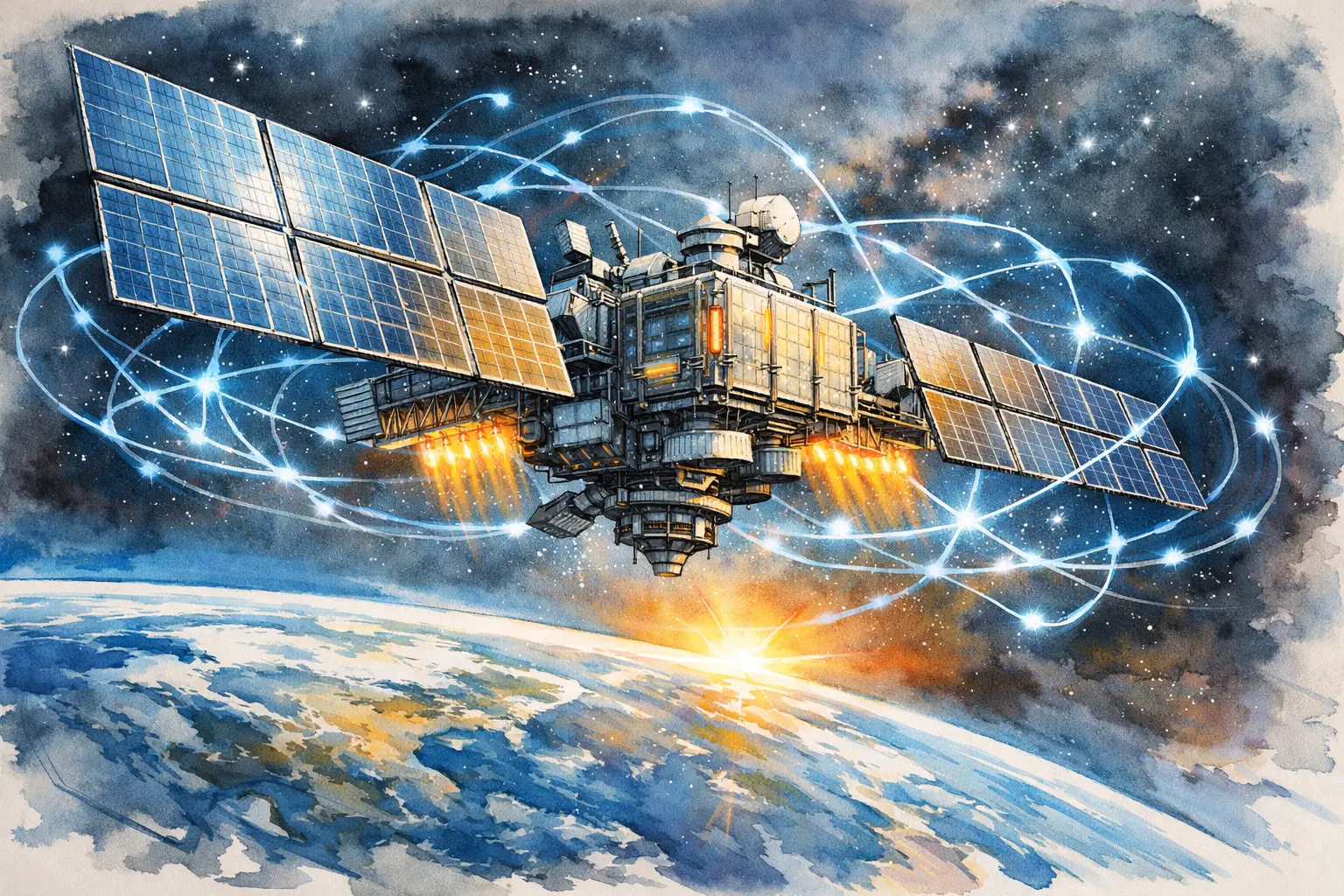
China is embarking on one of the most ambitious technological ventures in modern history by bridging the gap between artificial intelligence and space exploration. The nation has officially announced plans to construct gigawatt scale AI data centers in space over the next five years. This initiative is designed to tackle the escalating energy and cooling demands of massive AI models which are increasingly straining terrestrial power grids. By moving the infrastructure of intelligence beyond the atmosphere China aims to create a sustainable and highly efficient foundation for the next era of digital development.
The shift toward space is not merely a scientific experiment but a calculated response to the physical limitations of our planet. On Earth data centers consume immense amounts of electricity and require sophisticated cooling systems to prevent hardware failure. As AI models grow in complexity these requirements are becoming unsustainable for even the most advanced industrial nations. Space offers an environment that can naturally mitigate these issues while providing a strategic advantage in the global race for technological supremacy.
One of the primary drivers of this project is the availability of perpetual solar energy in orbit. Unlike terrestrial solar farms which are limited by the day night cycle and atmospheric conditions a data center in space can harvest sunlight twenty four hours a day without interruption. By capturing solar energy at a gigawatt scale these orbiting facilities can power the massive computational clusters required for training and running advanced generative AI. This continuous energy supply ensures that AI operations remain uninterrupted by the fluctuating costs or shortages of Earth based energy markets.
Cooling is another critical factor where space provides a significant natural advantage. On Earth data centers require billions of gallons of water and enormous air conditioning units to dissipate the heat generated by thousands of processing units. In the near absolute zero temperatures of space the vacuum itself can act as a natural heat sink. While heat dissipation in a vacuum requires specialized radiator technology the lack of a surrounding atmosphere simplifies the process of maintaining optimal temperatures for high performance hardware.
This move puts China in direct competition with American giants like SpaceX Google and Microsoft. While US companies have focused on satellite internet constellations like Starlink China is looking to leapfrog this by building the actual processing hubs in space. This would allow for a decentralized global network where data is not just transmitted but processed in orbit. By establishing this infrastructure China seeks to reduce its reliance on foreign controlled terrestrial networks and create a sovereign space based digital ecosystem.
From a strategic perspective space based data centers offer a way to bypass geographical and geopolitical restrictions. Land based data centers are vulnerable to physical attacks environmental disasters and regional political instability. In contrast assets in orbit are harder to reach and can provide services to any part of the globe regardless of national boundaries. This could lead to a new form of digital sovereignty where the nation that controls the space based servers controls the flow and processing of global intelligence.
However the technical challenges of such an endeavor are profound. Launching thousands of tons of hardware into orbit is prohibitively expensive even with the advent of reusable rocket technology. China will need to significantly reduce launch costs to make gigawatt scale facilities economically viable. Furthermore the hardware must be hardened against the intense radiation of space which can cause bit flips and damage sensitive electronic components. Developing chips that are both high performance and radiation resistant is a core requirement for the success of this mission.
Latency is another hurdle that must be addressed for real time AI applications. The distance between Earth and orbiting servers can create delays in data transmission that might be unacceptable for time sensitive tasks like autonomous driving or high frequency trading. China is betting on advancements in optical laser communication and edge computing to bridge this gap. By processing data at the source in space and using high speed lasers for transmission they hope to achieve speeds comparable to traditional fiber optic networks.
The environmental implications of this plan are a subject of intense debate. Proponents argue that moving energy intensive industries into space is the ultimate form of green computing. By shifting the carbon footprint of AI away from the biosphere we can protect Earths ecosystems. Critics point out that the massive increase in rocket launches required to build and maintain these facilities could have its own negative impact on the upper atmosphere. Balancing these environmental costs will be a key challenge for policymakers in the coming decade.
Economically the project could trigger a new industrial revolution in space. The need for specialized hardware maintenance and energy management in orbit will create a demand for new technologies and services. This could lead to the development of autonomous robotic systems capable of repairing and upgrading data centers without human intervention. Such innovations would have far reaching applications in other areas of space exploration and industrialization.
Geopolitically the launch of these data centers signals an escalation in the tech cold war. The United States has already implemented strict export controls on AI chips to slow Chinas progress. By building its own infrastructure in space China can potentially circumvent these restrictions and develop its AI capabilities independently. This creates a dual track global AI landscape where two competing systems operate on entirely different physical and regulatory foundations.
The concept of space computing also raises complex questions regarding international law and space debris. As more assets are placed in orbit the risk of collisions increases creating a potential cascade effect known as the Kessler Syndrome. International agreements will need to be updated to manage the deployment of large scale industrial facilities in space. China will have to lead or participate in global efforts to ensure that the orbital environment remains sustainable for all nations.
Looking ahead the next five years will be a period of intense development and testing. China is expected to launch several pilot modules to demonstrate the feasibility of power generation and data processing in orbit. These early experiments will pave the way for the full scale gigawatt facilities planned for the end of the decade. Success in these missions would fundamentally alter the global technological hierarchy and cement Chinas role as a leader in the space age.
Ultimately the transition to space based AI is a testament to the fact that the future of intelligence is no longer bound to the Earth. As we reach the limits of what our planet can support we must look to the stars for the next stage of our evolution. Chinas space based AI data center project is a bold step in that direction promising to redefine how we generate process and utilize the power of artificial intelligence on a global scale.
Read this too..
❤Union Budget 2026 Will it Power Up India's Tech Sector Dreams of AI and Semiconductors
❤What is Matter? The Future of Smart Home Compatibility
❤One Reel, One Life: The Macabre Tale of Trading Breath for Likes
❤Toluene: The Cosmetic World's Silent killer!
❤Anthropic Appoints Irina Ghose as India MD; Bengaluru Office to Open Early 2026

No Comment Yet.
Stay informed with breaking news, trending stories, and in-depth analysis.