By Nagaraj Vaidya
What’s the first thing you did this morning? Before you even brushed your teeth, there’s a good chance you grabbed your phone to check notifications. That reflex—that digital itch—was largely engineered by one company that just celebrated a massive milestone.
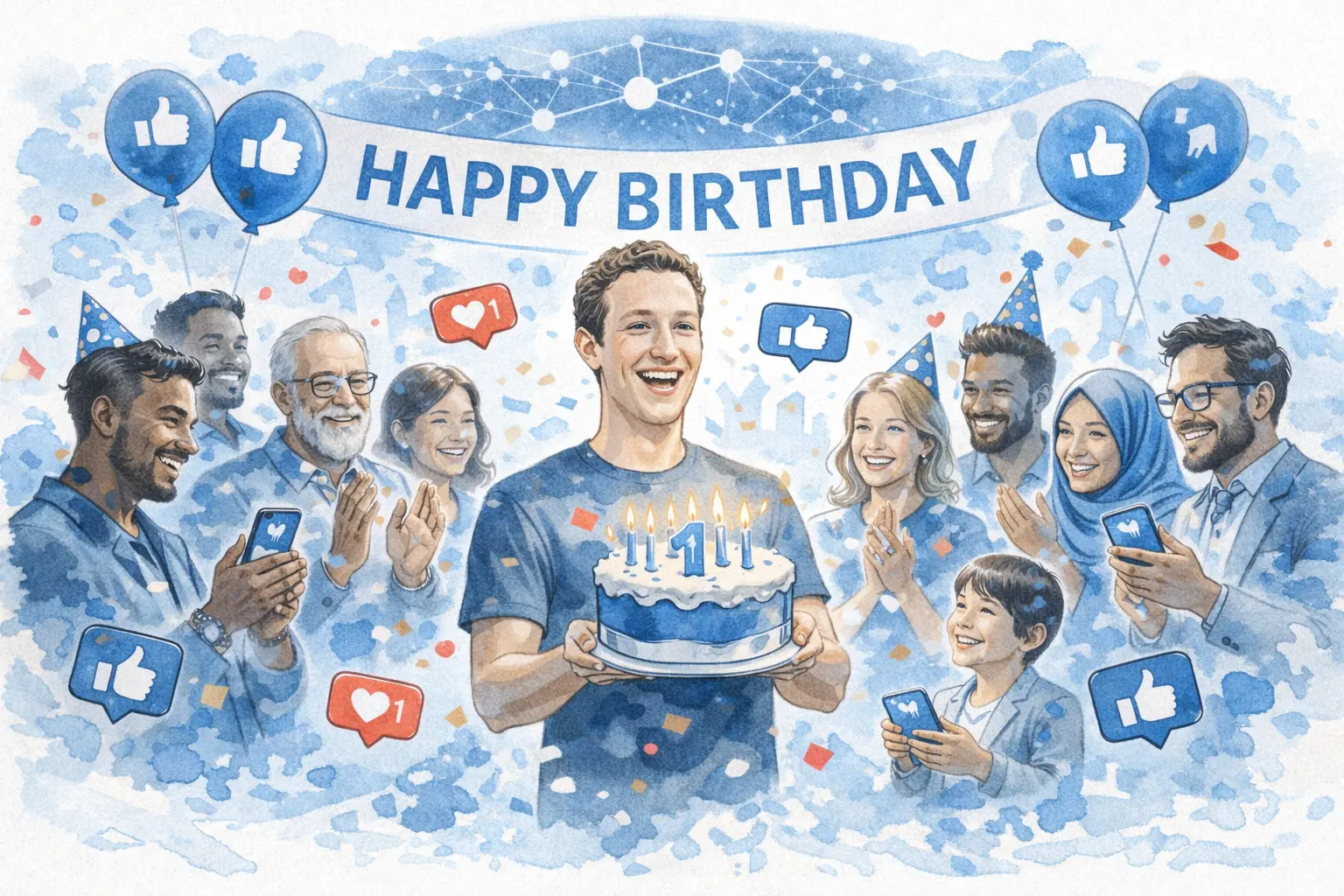
On February 4, 2026, Facebook turned 22.
It’s hard to believe that the global behemoth that now dictates how billions of people communicate started in a cramped Harvard dorm room in 2004. Mark Zuckerberg’s recent birthday post wasn't just a celebration; it was a flex regarding the sheer longevity of a platform that many thought would be a passing fad. From a sophomoric "hot or not" style site called FaceMash to a trillion-dollar empire now obsessed with Artificial General Intelligence (AGI), the journey of the "blue app" is the definitive history of the modern internet.
Here is a deep dive into the 22-year evolution of the company that changed everything.
'TheFacebook' and the exclusivity factor
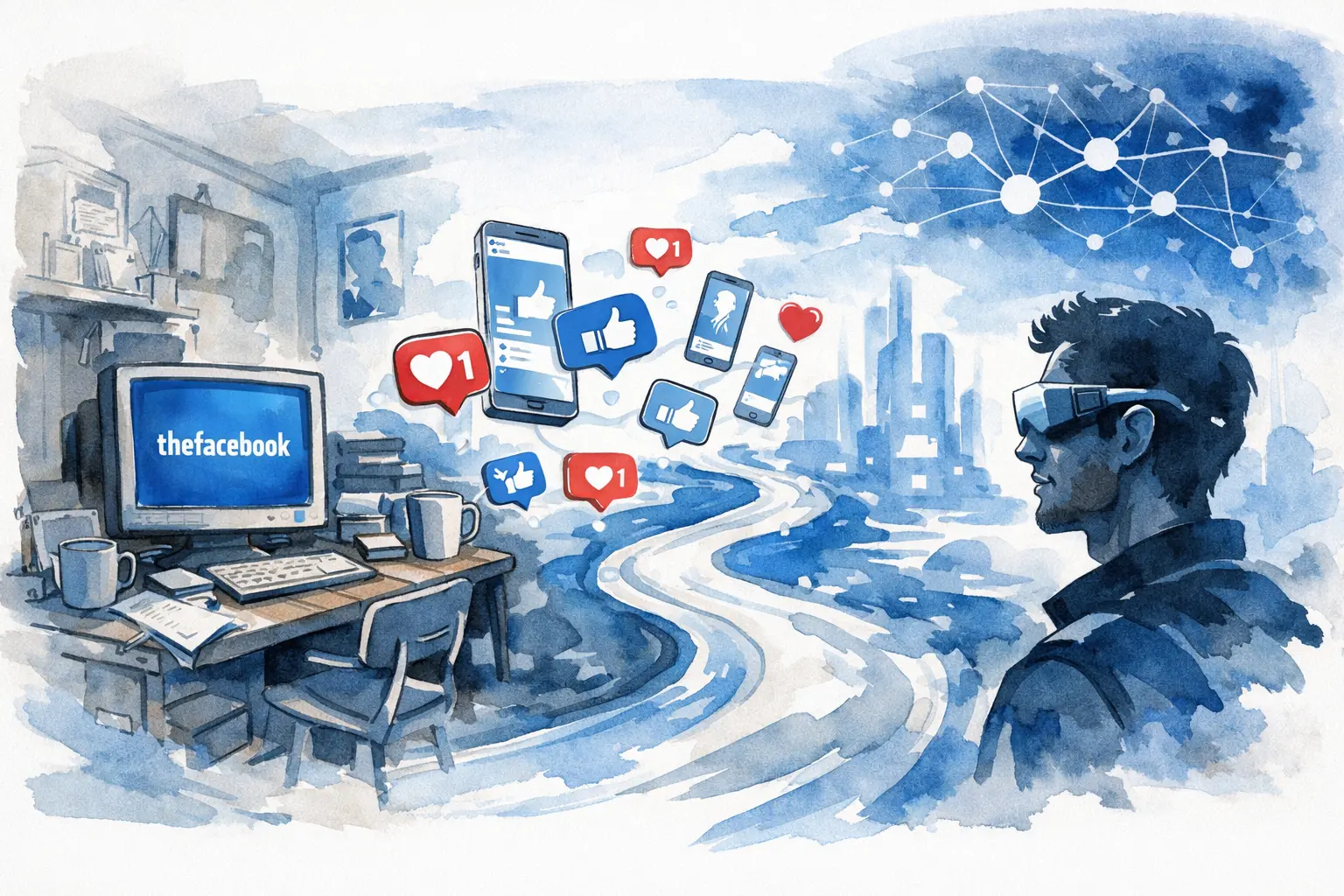
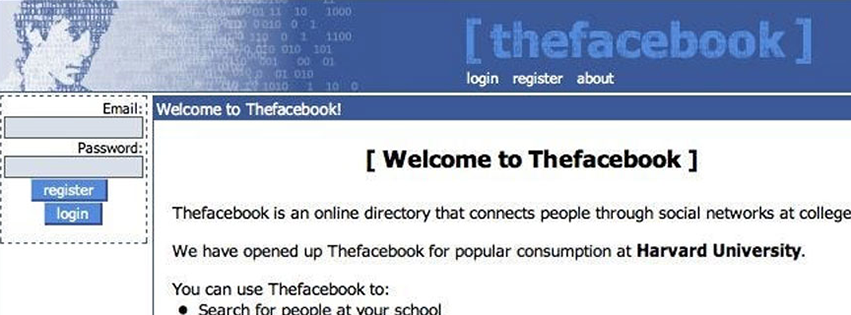
It didn't start as a global town square. Initially, it was "TheFacebook," a closed directory specifically for Harvard students to connect. Zuckerberg’s core insight wasn't about content; it was about real identity and connection. The ability to set your "Relationship Status"—Single, In a Relationship, or the infamous "It's Complicated"—was revolutionary for college social dynamics.
The platform’s exclusivity was its initial fuel. It spread like wildfire through the Ivy League before slowly opening up to other colleges, then high schools, and finally, in 2006, to everyone aged 13 and older. Until then, the internet was mostly about anonymous information; Facebook made the internet about real people.
The News Feed: The invention of the doomscroll
The most defining moment in Facebook’s history—and perhaps the history of the attention economy—came in 2006 with the introduction of News Feed.
Before News Feed, you had to actively visit a friend's profile to see what they were up to. It was manual. The News Feed changed the game by aggregating all your friends' activities into a single, never-ending stream on your homepage. Users initially hated it, calling it a massive invasion of privacy. But Zuckerberg knew better. He understood our inherent voyeurism.
This introduced "The Algorithm"—the invisible hand deciding what you see based on engagement. It birthed the "Like" button economy and laid the groundwork for the addictive scrolling habits we all battle today.
The Billion-Dollar Refusal and the Mobile Pivot
A pivotal moment in Silicon Valley lore occurred in 2006 when tech giant Yahoo tried to buy Facebook for $1 billion. Zuckerberg, then just 22, famously turned it down. Investors thought he was arrogant or crazy. But Zuck had a longer view; he didn't want to cash out, he wanted to wire the world.
The company faced an existential threat around 2012 with the rise of smartphones. Facebook was built for desktops and was slow to adapt to mobile. Recognizing the danger, Zuckerberg mandated a massive internal shift to a "mobile-first" strategy. If they hadn't successfully made that jump, Facebook would likely be a footnote in tech history today, right next to MySpace.
The Monopoly Game: Instagram and WhatsApp
Zuckerberg’s strategy for dealing with competition has always been clear: beat them, or buy them.
When photo-sharing apps started gaining traction, Facebook bought Instagram in 2012 for $1 billion. At the time, Instagram had 13 employees and zero revenue. Critics called it a desperate, overpriced panic buy. Today, it’s arguably one of the best tech acquisitions ever made, as younger demographics shifted almost entirely to Insta.
In 2014, they cemented their dominance over global communication by acquiring WhatsApp for a staggering $19 billion. By owning the world's social feed, photo feed, and messaging utility, Facebook built an inescapable ecosystem.
The "Dark Ages": Scandals and Trust Issues
The journey wasn't a smooth upward trajectory. The company has faced intense scrutiny, most notably during the 2018 Cambridge Analytica scandal. The revelation that millions of user data profiles were harvested for political purposes shattered public trust.
Zuckerberg was hauled before Congress. The #DeleteFacebook movement trended globally. The platform became synonymous with issues regarding data privacy, election interference, and the spread of misinformation and hate speech. While the user base kept growing, the brand's reputation took a severe beating that it is still recovering from today.
The Meta Pivot and the Llama Rescue
By 2021, the Facebook brand felt toxic and, worse, it felt "old." Recognizing that the future wasn't just about scrolling feeds on phones, the company rebranded to Meta.
Zuckerberg bet the farm on the "Metaverse"—a future dominated by virtual and augmented reality. The company poured billions into Reality Labs, burning cash at an alarming rate while the stock price tanked. Critics declared the Zuckerberg era over.
But then came the AI revolution of 2023.
As ChatGPT took the world by storm, Meta pivoted again with astonishing speed. They shifted focus from the immediate Metaverse dream to the AI arms race. Instead of keeping their tech closed like Google or OpenAI, Meta open-sourced their powerful Llama AI models. This was a strategic masterstroke that endeared them to the developer community.
2026: The Era of Personal Superintelligence
Looking at Meta today in 2026, AI is central to everything. The content you see on Facebook and Instagram reels is almost entirely dictated by sophisticated AI recommendation engines.
Zuckerberg’s current vision is "personal superintelligence." The goal is for every user to have an integrated AI agent that knows them, helps them, and navigates the digital world for them.
Furthermore, the hardware dream isn't dead; it just changed form. The Ray-Ban Meta smart glasses have become surprisingly popular, bridging the gap between the physical world and AI assistance without needing to stare down at a phone screen.
The takeaway after 22 years
If there is one lesson from Facebook’s 22-year history, it is that paranoia is a survival skill in tech. Giants like Yahoo, AOL, and MySpace died because they didn't adapt.
Facebook has survived by being ruthlessly willing to kill its own darlings. It shifted from desktop to mobile, from text to visual (Insta), from feeds to Stories (copying Snapchat), and now from social graphs to AI-driven recommendations.
At 22, Facebook isn't just that website your parents use to argue politics. It’s a shapeshifting digital empire that has managed to remain relevant—for better or worse—by constantly reinventing itself just before it becomes obsolete.

No Comment Yet.
Stay informed with breaking news, trending stories, and in-depth analysis.