
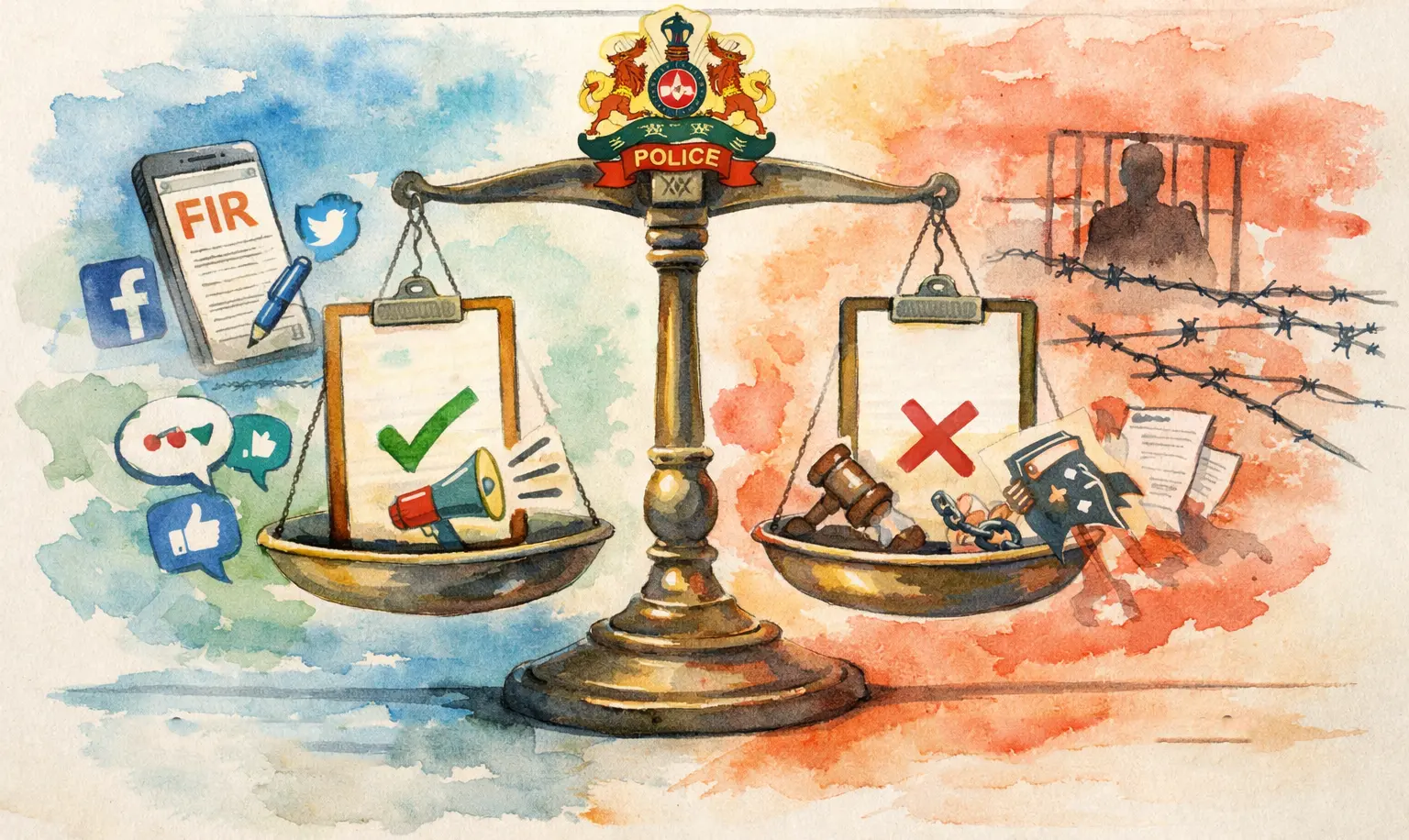
Digital Freedom Gets a Shield with New Karnataka Police Guidelines End of Mechanical FIRs for Social Media Posts in Karnataka Strict Thresholds and Legal Scrutiny Now Mandatory for Digital Cases Protecting Political Speech as a Constitutional Right in the Digital Era Police Reform in 2026 Focuses on Due Process for Online Content
The Karnataka State Police Department has introduced a significant shift in how criminal cases related to social media posts are handled within the state. Under the leadership of Director General and Inspector General of Police Dr. M.A. Saleem, a new circular has been issued to curb the mechanical registration of First Information Reports. This move is a direct response to the evolving digital landscape where the line between free expression and criminal conduct often becomes blurred. By emphasizing a more analytical and legally sound approach, the department aims to protect individual liberties while maintaining public order.
For years, the legal system has witnessed a trend where police officers would register cases based on social media complaints without conducting a thorough initial assessment. This mechanical approach often led to unnecessary arrests and legal harassment, causing a strain on both the judiciary and the citizens. The new guidelines strictly instruct officers to deviate from this practice, ensuring that the power of the law is not used as a tool for suppression. This change is deeply rooted in the principles of justice and the necessity of upholding constitutional rights in the age of information.
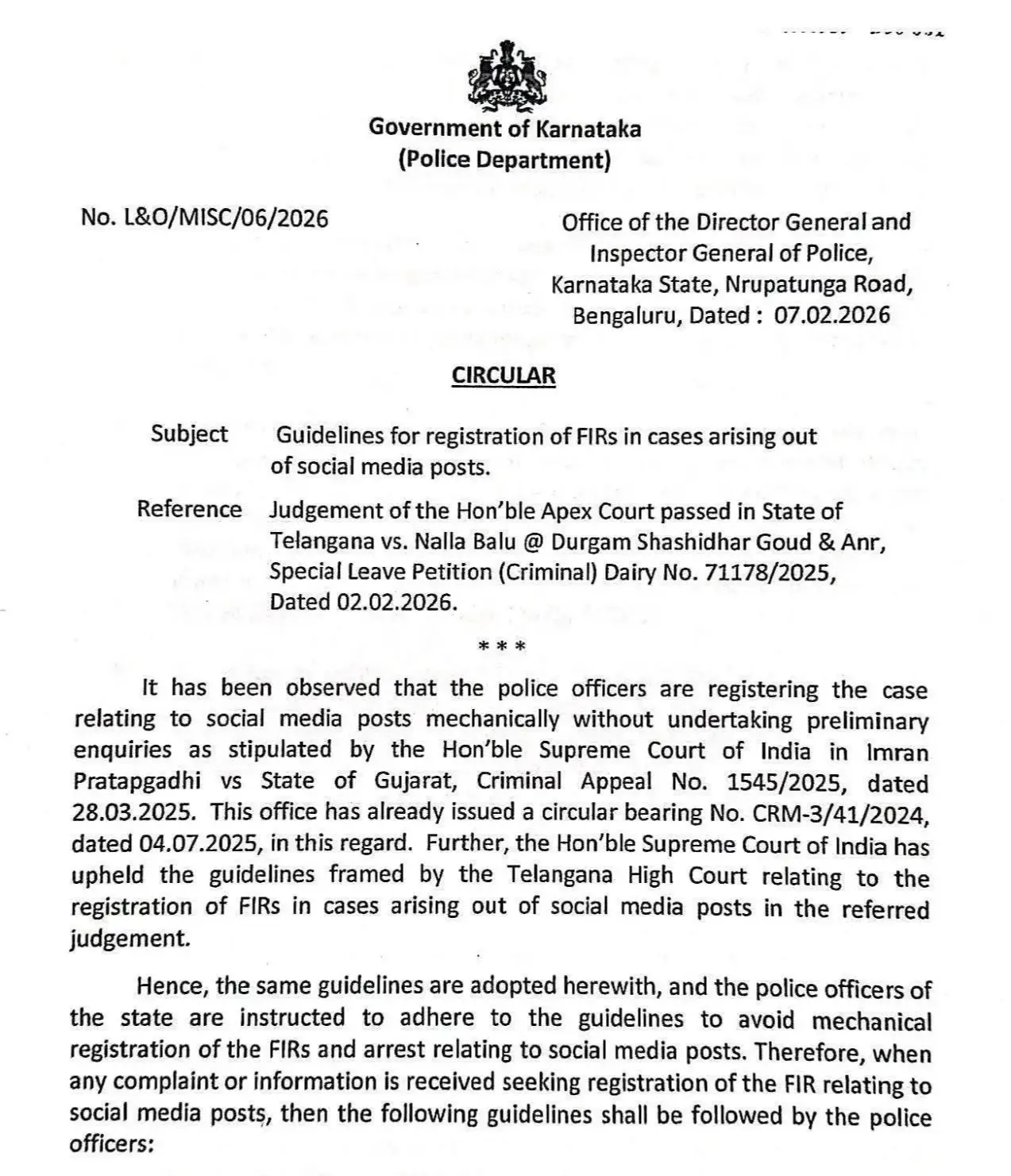
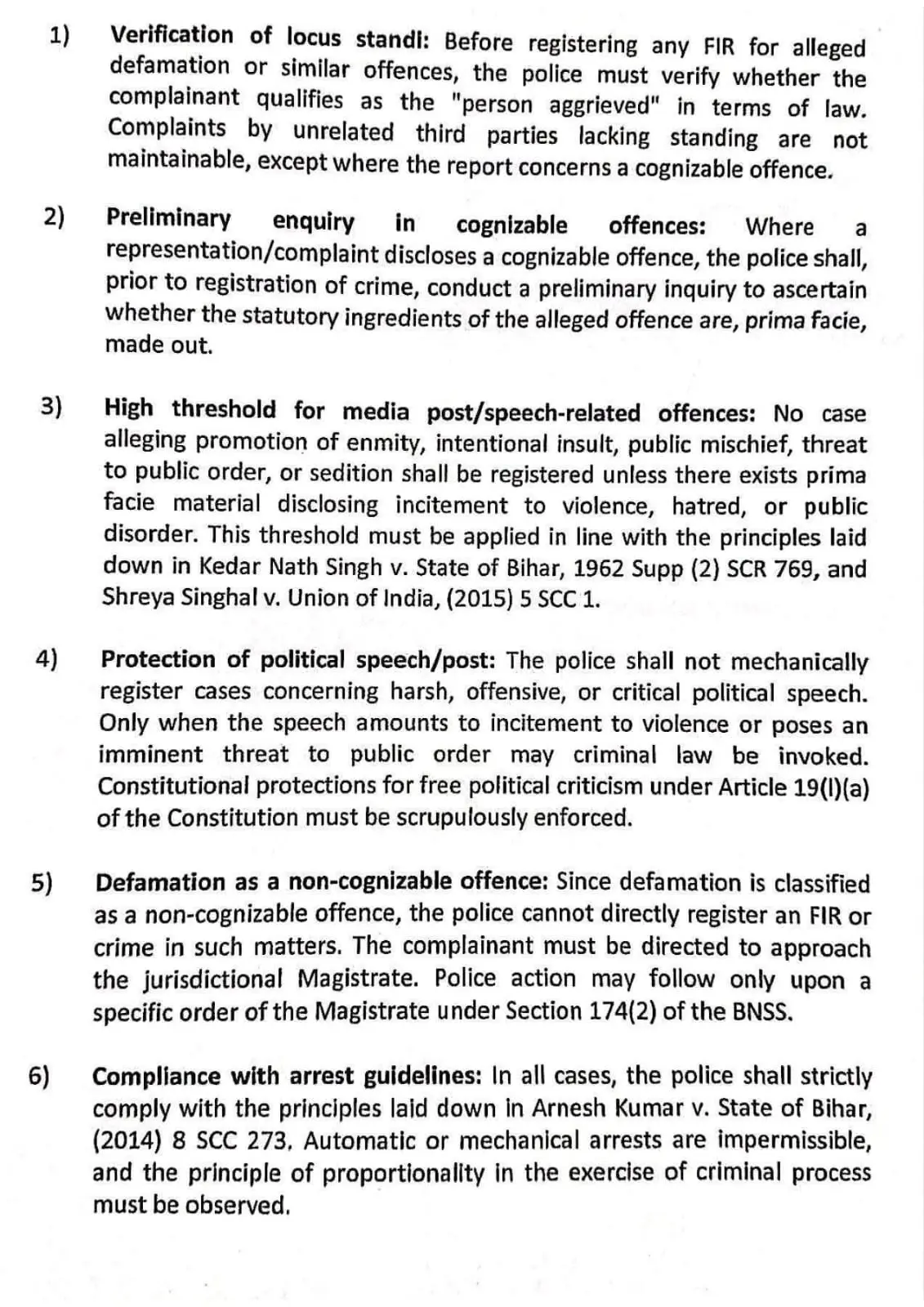
A cornerstone of these guidelines is the mandatory verification of locus standi, which refers to the right or capacity of a person to bring an action to court. In cases involving defamation or similar offenses, the police must now verify if the complainant is indeed the person aggrieved as defined by law. This prevents unrelated third parties or political activists from filing complaints on behalf of others to settle personal or ideological scores. By restricting complaints to those directly affected, the department is effectively filtering out frivolous or motivated litigation that often clogs the investigative process.
The requirement for a preliminary enquiry in cognizable offenses is another critical safeguard introduced in this directive. Before a crime is officially registered, officers are now obligated to ascertain whether the statutory ingredients of the alleged offense are prima facie present. This step ensures that an FIR is not launched based on vague or exaggerated claims. A preliminary enquiry provides the police with the necessary time to evaluate the context of a social media post, thereby preventing the premature criminalization of digital discourse.
Furthermore, the guidelines set a high threshold for offenses related to media posts and speech, particularly those involving allegations of sedition or public mischief. No case can be registered unless there is prima facie material disclosing a direct incitement to violence or a serious threat to public order. This aligns with the landmark judgments of the Supreme Court in cases like Shreya Singhal and Kedar Nath Singh. By focusing on the actual impact of the speech rather than just the content, the police are encouraged to tolerate dissent and criticism that does not lead to physical harm.
Political speech receives a special layer of protection under these new rules. The police are explicitly instructed not to register cases mechanically concerning harsh, offensive, or critical political expressions. In a vibrant democracy, the right to criticize the government or political figures is protected under Article 19(1)(a) of the Constitution. The guidelines emphasize that criminal law should only be invoked when political rhetoric crosses the line into an imminent threat to public safety. This protection is vital for ensuring that the digital space remains a platform for healthy political debate and accountability.
The classification of defamation as a non-cognizable offense is also clarified to prevent immediate police intervention. Since defamation does not allow for direct FIR registration, complainants must be directed to approach a jurisdictional Magistrate. Police action can only follow a specific judicial order under the relevant sections of the Bharatiya Nagarik Suraksha Sanhita. This procedural safeguard ensures that private disputes over reputation are handled through the proper judicial channels rather than through the use of state police power for immediate intimidation.
Adherence to established arrest guidelines is a mandatory requirement for all officers under the new framework. Referring to the Arnesh Kumar case, the department has reiterated that automatic or mechanical arrests are impermissible. The principle of proportionality must be observed in every criminal process, ensuring that the deprivation of liberty is the last resort. This focus on the necessity of arrest prevents the misuse of police power and protects citizens from the trauma of unwarranted detention for mere social media interactions.
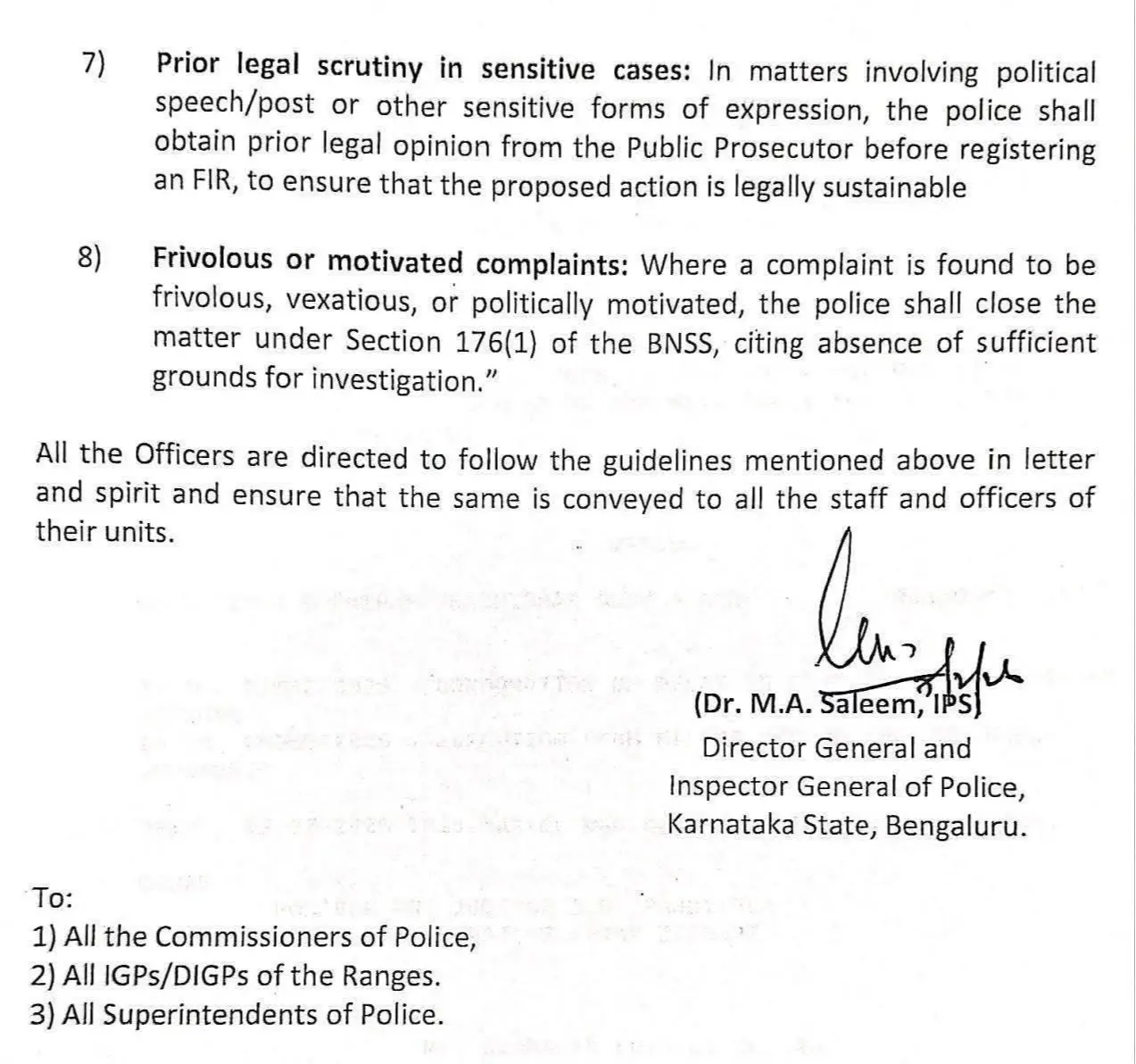
Sensitive cases involving political posts now require a prior legal opinion from a Public Prosecutor before an FIR can be registered. This layer of legal scrutiny ensures that the proposed police action is sustainable in a court of law. By involving legal experts at the pre-registration stage, the department aims to reduce the number of weak cases that eventually lead to acquittals and waste public resources. This collaborative approach between the police and the prosecution adds a layer of professional accountability to the investigative process.
Frivolous and politically motivated complaints are to be dealt with sternly by closing them at the outset. If a complaint is found to lack sufficient grounds for investigation, officers are empowered to close the matter citing the absence of prima facie evidence. This provision acts as a deterrent against the culture of filing multiple complaints to harass individuals with dissenting views. It allows the police to prioritize genuine crimes and ensures that the machinery of justice is not manipulated for personal or political vendettas.
The implementation of these guidelines reflects a modern understanding of the relationship between law enforcement and digital communication. As more citizens move their interactions online, the role of the police must adapt from being mere enforcers to being guardians of constitutional rights. The shift from a reactive to an evaluative model of policing in social media cases is a progressive step that enhances the credibility of the Karnataka Police. It signals a commitment to due process and the rule of law over administrative convenience.
Ultimately, these changes are expected to foster a more responsible digital environment in the state. When citizens know that their right to expression is protected from arbitrary police action, they are more likely to engage in meaningful public discourse. At the same time, the clarity provided by these guidelines helps police officers navigate the complex legalities of cyber expressions with greater confidence. The 2026 circular is not just a set of instructions but a manifesto for a more just and balanced approach to digital law enforcement.

Read also..
❤Hitachi India's Massive Expansion Plan: 5,000 New Jobs and the Reshaping of India's Tech Landscape
❤UPDATES Feb 05, 2026 From Harvard Dorm to AI Superpower: The Wild 22-Year Ride of Facebook
❤Mac vs. PC: The Ultimate Laptop Guide for College Students in 2026
❤Toluene: The Cosmetic World's Silent killer!
❤5G Sub-6 vs. mmWave: Understanding the Real Speed Differences in 2026

No Comment Yet.
Stay informed with breaking news, trending stories, and in-depth analysis.