
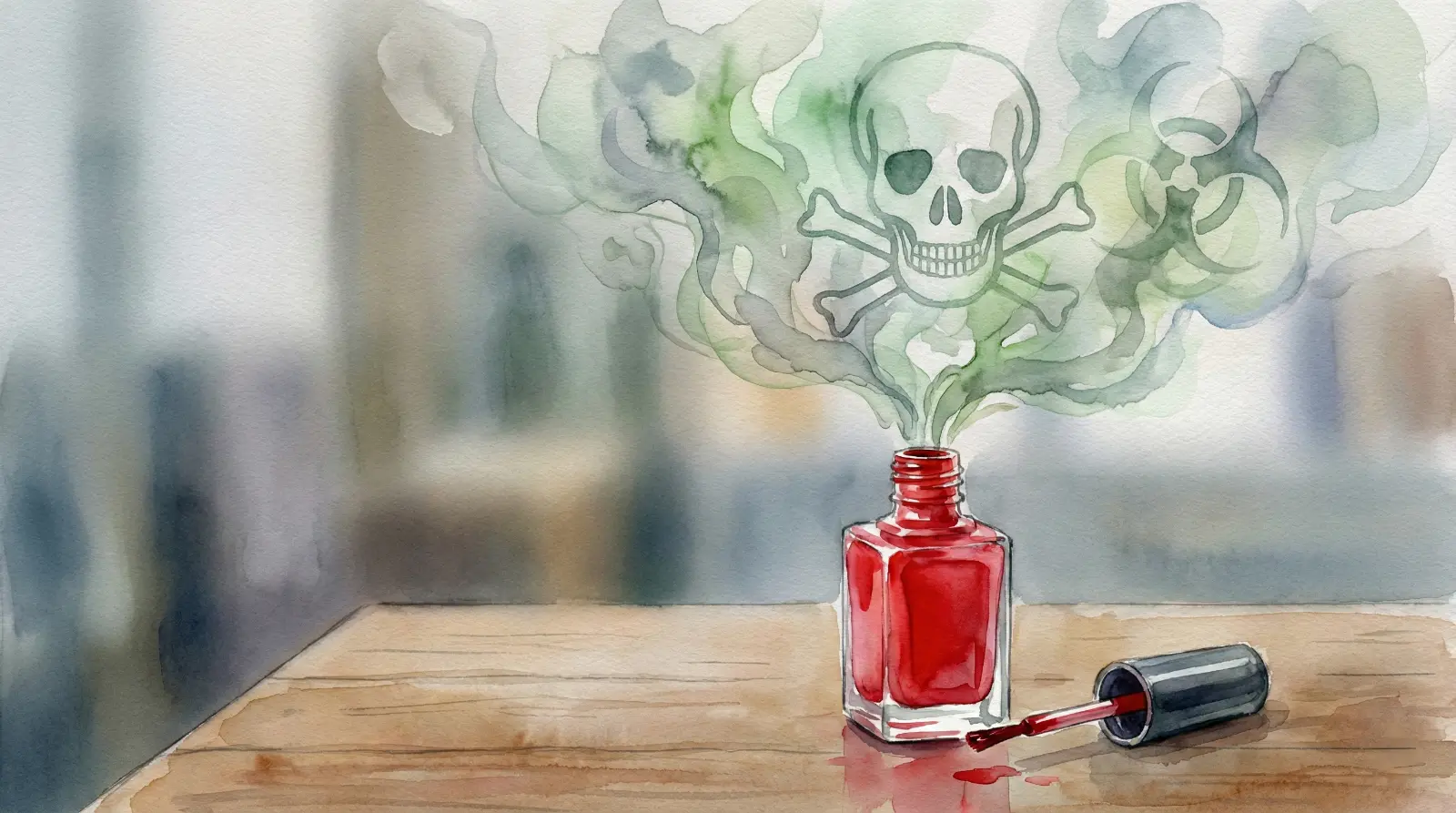
Whether it is a grand wedding celebration or a regular workday, nail polish remains one of the most popular tools for women to enhance their aesthetic appeal. The moment a bottle of nail polish is uncorked, a distinct, sharp, and chemical aroma fills the air. While some may find this scent appealing, for others, it triggers an instant headache. However, hidden behind this seductive and potent smell is Toluene, a dangerous chemical agent. It is not merely a scent but an invisible weapon capable of launching a silent attack on the body’s vital organs, a fact that remains unknown to the vast majority of consumers.
Toluene is a colorless, water-insoluble liquid that is industrially used as a solvent in paint thinners, glues, and most notably, nail polishes. Its primary function in cosmetics is to keep the polish in a smooth liquid state within the bottle and to facilitate rapid drying once applied to the nail. While it serves as an essential raw material for cosmetic manufacturers to ensure product performance, from a medical perspective, it acts like a spy infiltrating the cosmetic world. It enters our system undetected through the respiratory tract and subsequently spreads throughout the body via the bloodstream.
This chemical possesses a volatile nature, meaning it evaporates rapidly at room temperature. When you apply nail polish, you inadvertently inhale these fumes, which travel directly into the lungs. From the lungs, the chemical is absorbed into the bloodstream. Toluene possesses a specific and dangerous characteristic known as lipophilicity, which means it dissolves easily in fats. Since the human brain is largely composed of fatty tissue, it becomes a prime target. The brain is guarded by the Blood-Brain Barrier, a fortress that typically stops toxins and bacteria. However, due to its fat-soluble nature, Toluene easily breaches this defense and penetrates deep into the brain.
Once it infiltrates the brain, Toluene launches an attack on the central nervous system (CNS). It acts as a depressant, slowing down the speed at which the brain transmits messages. This is the reason why some individuals experience a feeling of lightheadedness, a strange euphoria, or a sense of detachment from the world immediately after inhaling nail polish or paint fumes. While medically termed euphoria, this is essentially a distress signal from brain cells struggling with oxygen deprivation or chemical toxicity. This phenomenon is categorized as inhalant intoxication.
This state of intoxication is very short-lived. This brevity often drives people, especially teenagers or those prone to substance abuse, to seek out the smell repeatedly. The number of people addicted to the smell of acetone and Toluene is surprisingly large. What might begin as a harmless curiosity or a reaction to a beauty product can gradually evolve into a serious addiction. Repeated exposure to such chemicals delivers consistent blows to the brain, paving the way for permanent neurological damage.
Long-term exposure to this chemical or excessive usage guarantees a decline in memory power. Beyond cognitive issues, it causes significant nerve damage. The nerves in our body are encased in a protective layer called myelin, which functions much like the plastic insulation around an electric wire. This myelin sheath ensures that messages from the brain reach other parts of the body at lightning speed. Solvents like Toluene have the capacity to dissolve or degrade this critical protective layer.
When the myelin sheath is damaged, the communication between the brain and the limbs is disrupted or delayed. This manifests in the individual as tremors, difficulty in walking, slurred speech, and a severe lack of concentration. While these symptoms are typically associated with old age or degenerative diseases, they can appear in younger individuals due to chemical exposure. This condition is medically referred to as Toluene-induced neuropathy.
Even more alarming is the potential impact on the heart. Certain inhalants and solvents can disrupt the heart's natural rhythm. Toluene sensitizes the heart muscles to adrenaline. Consequently, if a person becomes suddenly startled or engages in physical exertion while intoxicated by these fumes, their heart rate can become dangerously irregular, leading to a phenomenon known as Sudden Sniffing Death. This potential for lethal outcome is why Toluene is often labeled a "silent killer."
Regarding pregnancy, medical professionals strictly advise expectant mothers to stay away from products containing Toluene. The toxic fumes inhaled by the mother can travel through the blood and cross the placenta to reach the fetus. This can interfere with the development of the fetal brain, significantly increasing the risk of the baby being born with neurological issues, developmental delays, or physical birth defects.
In the world of cosmetics, the combination of Dibutyl Phthalate (DBP), Formaldehyde, and Toluene is infamous as the "Toxic Trio." The cumulative damage caused when these three are present together is substantial. While Formaldehyde is a known carcinogen and DBP disrupts hormonal balance, Toluene directly targets the brain. This triad represents a significant chemical hazard in everyday beauty products.
Fortunately, consumer awareness is on the rise. People are no longer just looking at the shade of the polish; they are beginning to read the labels on the back of the bottle. responding to this shift, many reputable companies are now manufacturing and marketing "3-Free" or "5-Free" nail polishes. These labels indicate that the product is free from Toluene and other major toxins. This is a welcome and necessary evolution in the beauty industry.
As consumers, the responsibility lies with us to make informed choices. When purchasing nail polish, it is wiser to choose a Toluene-free brand, even if it costs slightly more. It is also crucial to ensure proper ventilation by opening windows while applying polish, preventing harmful fumes from lingering in the room. Habits like nail biting must be stopped immediately, as ingesting dried nail polish introduces these toxins directly into the digestive system.
The concept of beauty should never come at the cost of health. If a small bottle of nail polish has the power to dull our cognitive abilities and damage our nerves, we must reconsider how carefully we select our products. Regardless of advancements in technology and chemistry, there is no substitute for natural health. The next time that sharp, attractive scent hits your nose, remember that it is not a fragrance, but a warning bell.

No Comment Yet.
Stay informed with breaking news, trending stories, and in-depth analysis.