Las Vegas is known for its neon lights, casinos, and the sheer noise of entertainment. But every January, the city transforms into the global capital of the future. The Consumer Electronics Show (CES) 2026, which officially wrapped up yesterday, will be remembered for a very specific reason. Usually, the headlines are dominated by tech giants like Samsung, Sony, or LG showing off their massive screens and futuristic cars. But this year, standing tall amidst these titans were young entrepreneurs from India. The message was loud and clear: India is no longer just a back-office for IT services; it is becoming a powerhouse of deep tech product innovation.
According to reports released on January 12, CES 2026 has been a watershed moment for Indian startups. A delegation of about fifteen top-tier AI startups, primarily hailing from Bengaluru and Hyderabad, has signed investment and trade deals worth over $200 million. In Indian currency, that’s a whopping 1600 Crore rupees. What makes this significant is where the money is going. Investors aren't pouring cash into another food delivery app or e-commerce site. Instead, they are betting on serious technology that solves real-world problems in healthcare and agriculture.
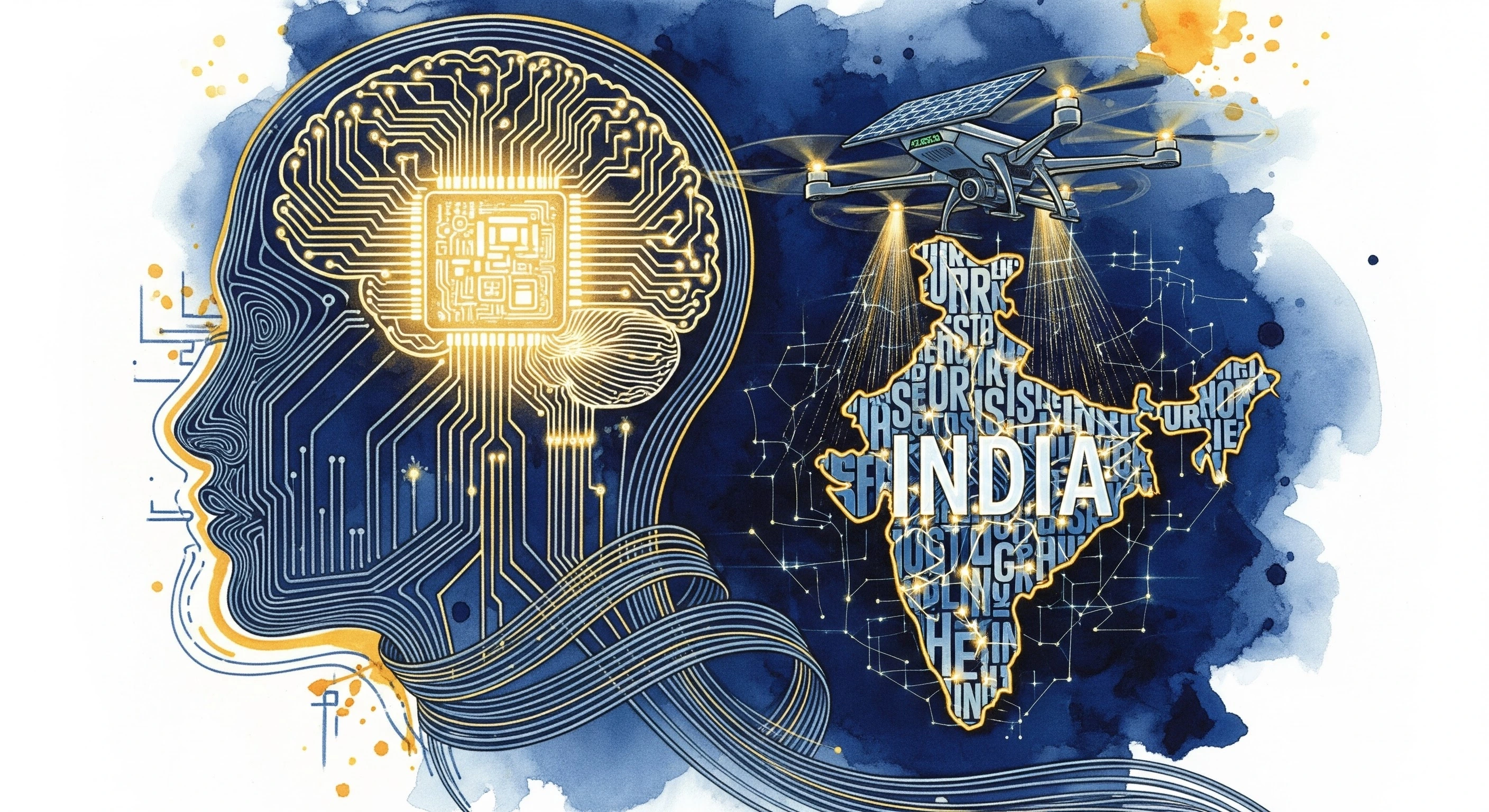
The crown jewel of this success was a Neural Tech startup of Indian origin that showcased a revolutionary Brain-Computer Interface (BCI) chip. This invention rightly bagged the prestigious 'Best Innovation Award' at the event. In the medical world, this is nothing short of a miracle. For patients suffering from paralysis, who cannot move their limbs, this chip offers a new lease on life. Once implanted, it allows users to control smart devices—like turning on a light, adjusting a fan, or moving a wheelchair—simply by thinking about it. The tech translates brain waves into digital signals. The team recieved a standing ovation from American scientists who were visibly impressed by the accuracy of the device. A major US healthcare provider has already inked a massive deal to bring this technology to the global market.
On the other hand, India’s prowess in Agritech was on full display at the India Pavilion. A solar-powered autonomous drone system grabbed eyeballs for its sustainable design. The biggest challenge with drones has always been battery life. But Indian engineers have cracked this by creating a model that charges via solar panels while hovering. In an era of climate change, this drone provides farmers with critical data on soil moisture and crop health at a fraction of the usual cost. Experts believe this affordable model is exactly what agricultural nations in Africa and Asia need right now.
The NASSCOM delegation is viewing these developments with great optimism. The year 2026 is shaping up to be the year Indian B2B startups truly go global. We have consistantly proven our software capabilites, but now the demand for Indian hardware is rising in US and European markets. The 'Make in India' initiative is finally showing its true potential in the complex electronics hardware sector.
In conclusion, CES 2026 has given a new direction to India’s tech narrative. It wasn't just about participation; it was about domination in niche sectors.

No Comment Yet.
Stay informed with breaking news, trending stories, and in-depth analysis.