The Red Silicon Valley: Decoding China's Techno-Nationalist Surge
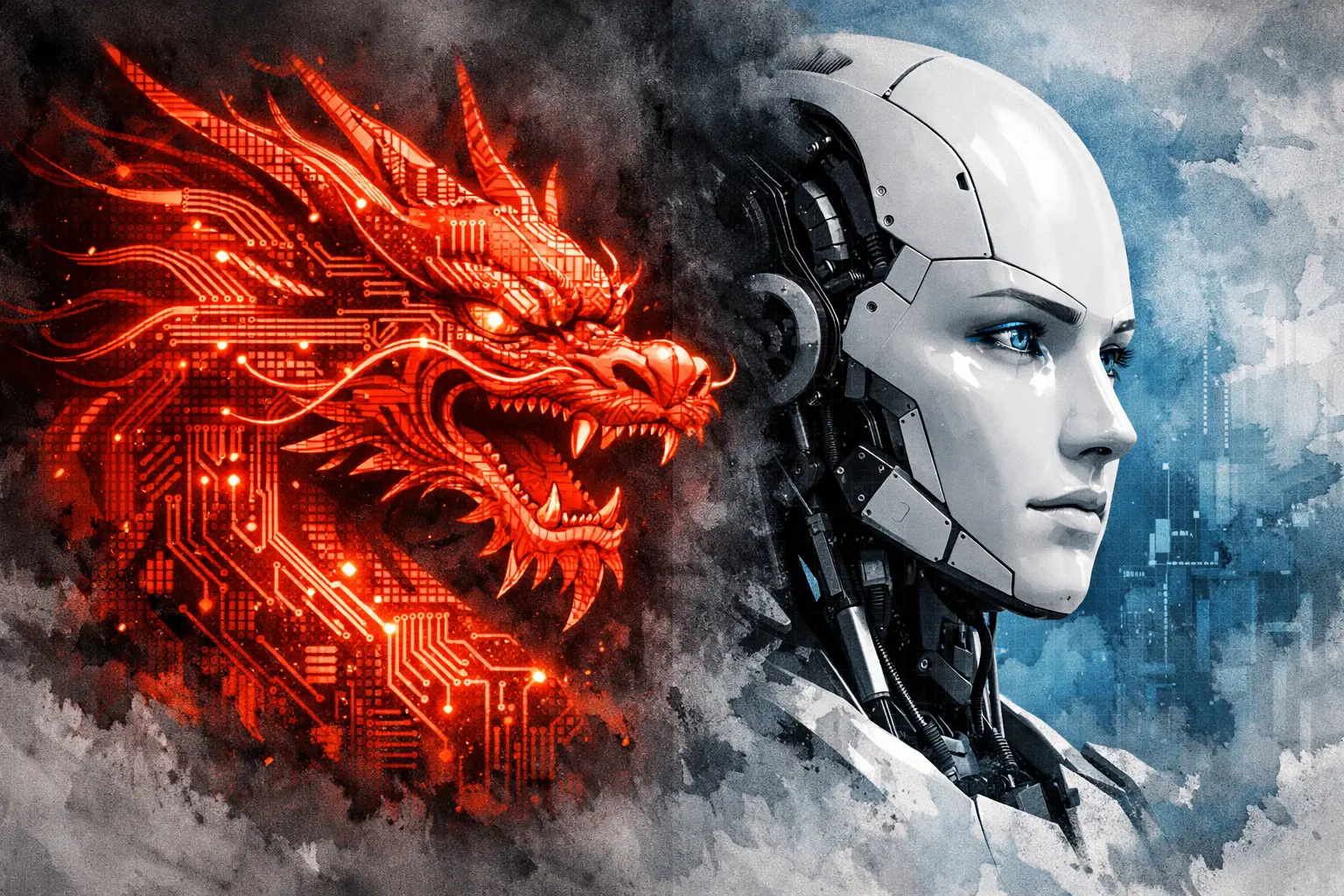
When we think of technological innovation, our minds instinctively drift toward the sun-drenched campuses of California, where Silicon Valley giants dictate the digital pulse of the planet. However, a tectonic shift is occurring on the other side of the Pacific, one that is less about consumer gadgets and more about industrial supremacy. China, once known as the world's factory floor, is aggressively rebranding itself as the world's research lab. This transformation is not accidental; it is the calculated result of the 'Made in China 2025' initiative, a state-led blueprint designed to transition the nation from low-end manufacturing to high-tech dominance. The recent unveiling of advanced humanoid robots during major cultural events is merely the public face of a much deeper, more systemic strategy that encompasses artificial intelligence, biotechnology, and quantum computing.
The spectacle of Chinese humanoid robots performing complex tasks is not just a display of engineering prowess; it is a signal of demographic adaptation. As China faces a shrinking workforce and an aging population, automation is not a luxury but a necessity for survival. These robots, powered by sophisticated AI, are being groomed to take over roles in healthcare, elderly care, and precision manufacturing. Unlike the western approach, which often focuses on the commercial viability of such robots for consumer use, China views robotics as critical infrastructure. The integration of these machines into daily life is being accelerated by a government that can mobilize resources and clear regulatory hurdles with a speed that western democracies simply cannot match.
Underpinning this robotic revolution is a voracious appetite for Artificial Intelligence. The Chinese AI ecosystem has evolved rapidly from copying western models to generating indigenous innovation. With tech giants like Baidu, Alibaba, and Tencent pivoting heavily toward generative AI, the country is creating a self-sustaining loop of data and algorithms. The advantage China holds here is structural; the sheer volume of data generated by its billion-plus population provides a training ground for AI models that is unmatched in scale. While privacy concerns often throttle data collection in Europe and the US, China's digital landscape allows for the rapid deployment and refinement of AI tools across smart cities, surveillance networks, and financial systems.
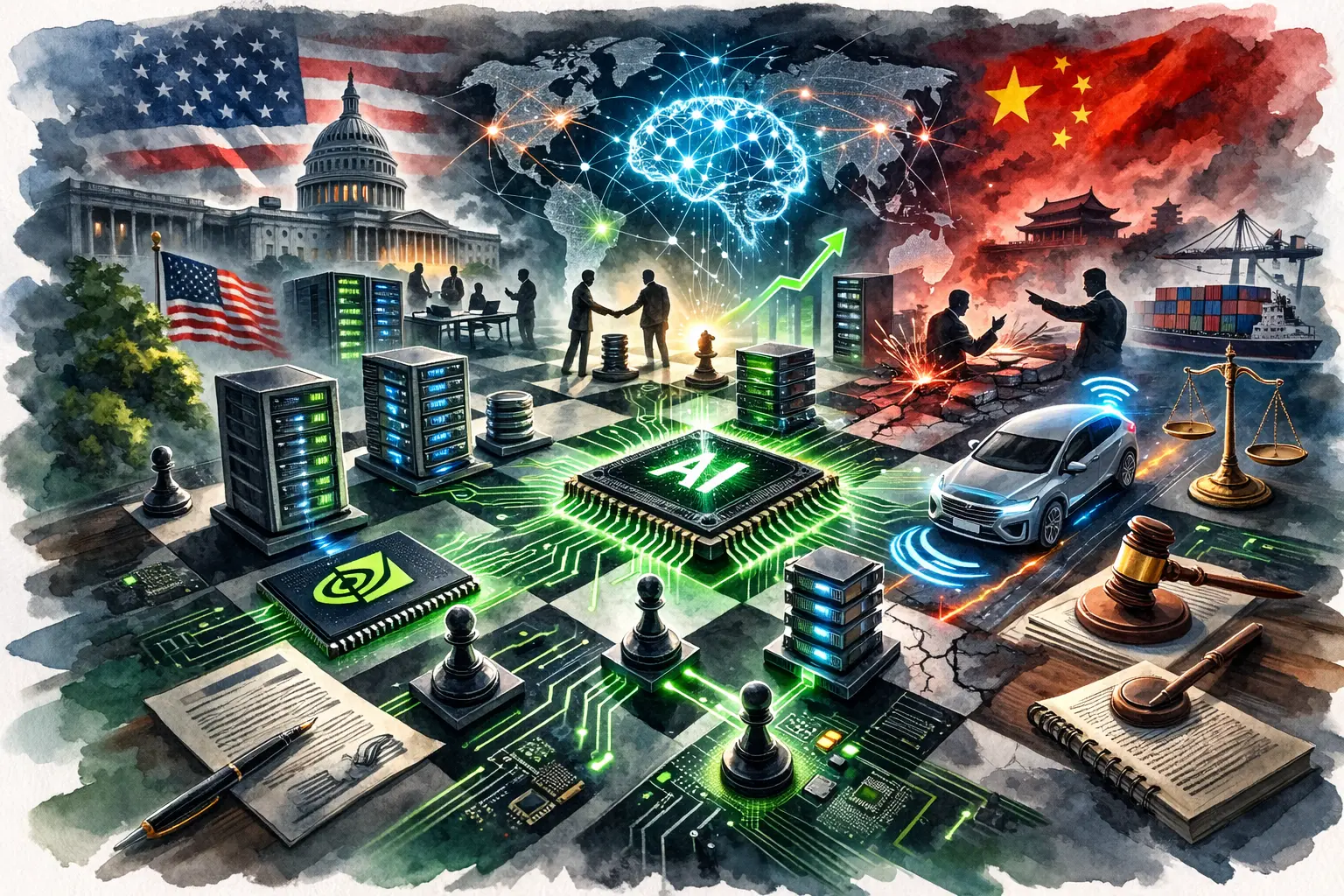
However, the path to dominance is paved with silicon, and this remains the critical choke point in China's ambitions. The global semiconductor war has forced Beijing to pour immense capital into its domestic chip industry. While they still lag behind Taiwan and the US in producing the most cutting-edge nanometer chips, their progress in legacy chips—the kind used in electric vehicles and military equipment—is formidable. The strategy here is clear: achieve self-sufficiency in the mid-range market while aggressively funding research to break the 'lithography barrier' for advanced chips. It is a high-stakes gamble, but one that the Chinese state views as a matter of national security rather than just market economics.
In the realm of high-performance computing, China has long been a quiet titan. Supercomputers are the engines of modern scientific discovery, used for everything from modeling climate change to simulating nuclear weapons. China consistently ranks near the top of the global lists for supercomputing power. These machines are the unsung heroes behind their rapid advancements in aerospace and biotech. By maintaining a strong presence in this sector, China ensures that its researchers have the computational muscle required to crunch the massive datasets needed for breakthroughs in genomics and material science.
The biotech sector is another frontier where the 'Made in China 2025' plan is making waves. The convergence of AI and biology is allowing Chinese firms to accelerate drug discovery and genetic engineering. Discussions in global tech communities, including platforms like Reddit, often highlight a mixture of awe and apprehension regarding China's speed in this arena. While ethical debates slow down certain areas of research in the West, China's regulatory environment is often perceived as more permissive, allowing for rapid experimentation. This has led to fears that the next major breakthrough in longevity or gene editing could emerge from a lab in Shanghai rather than Boston.
The geopolitical implications of this technological rise are profound. We are witnessing a bifurcation of the global technology stack. For decades, the internet and technology standards were largely universal and western-led. Now, we are moving toward a 'Splinternet,' where China exports its own standards, hardware, and digital infrastructure to the Global South. Countries in Africa and Southeast Asia are increasingly adopting Chinese 5G networks, smart city solutions, and AI surveillance tools. This is effectively creating a technological sphere of influence that rivals the American hegemony, forcing smaller nations to choose sides in a digital cold war.
Yet, this rapid ascent is not without its internal frictions. The aggressive crackdown on domestic tech giants by the Chinese government in recent years showed that the state will always prioritize political control over corporate profits. This creates a unique paradox: the government wants innovation, but it also demands absolute loyalty. This tension can stifle the kind of free-thinking, disruptive entrepreneurship that fueled Silicon Valley. Investors and founders in China must navigate a minefield where a single regulatory change can wipe out billions of dollars in value overnight, a reality that adds a layer of fragility to the ecosystem.
Another significant hurdle is the 'talent war.' While China produces a staggering number of STEM graduates, it has historically struggled to retain top-tier talent who often migrated to the US. However, this dynamic is shifting. Through aggressive recruitment programs and substantial research grants, China is luring scientists back home. The 'sea turtles'—a term for Chinese students who study abroad and return—are bringing back expertise and networks that are accelerating domestic progress. The US restrictions on Chinese researchers are inadvertently aiding this reverse brain drain, pushing brilliant minds back into Beijing's embrace.
As we look at the trajectory of autonomous vehicles, China is turning its cities into massive testing grounds. Unlike the cautious, city-by-city rollout seen in the US, Chinese planners are designating entire zones for autonomous driving, retrofitting infrastructure with sensors to communicate with cars. This 'vehicle-to-everything' (V2X) approach differs from the vehicle-centric approach of companies like Tesla. By making the road itself smart, China hopes to leapfrog the complex computational challenges of self-driving cars. If successful, this could set the global standard for how future cities are designed.
The narrative of China as a mere copycat is outdated and dangerous. The country has moved into a phase of 'combinatorial innovation,' where it excels at combining existing technologies to create new applications at scale. Whether it is in fintech, where mobile payments have effectively replaced cash, or in e-commerce, where livestream shopping has revolutionized retail, China is often ahead of the curve in application. The West innovates in the lab; China innovates in the market. This distinction is crucial for understanding why their tech sector remains resilient despite external sanctions.
Ultimately, the rise of China's deep tech sector serves as a wake-up call for the rest of the world. It challenges the assumption that liberal democracy is a prerequisite for technological advancement. The 'China Model' demonstrates that state-directed capitalism, when focused on strategic technologies, can achieve startling results. For observers and competitors alike, ignoring this reality is no longer an option. The contest for the 21st century will not be fought with tanks and missiles, but with algorithms, semiconductors, and genetic code.
In this unfolding saga, the role of international collaboration hangs in the balance. Science has historically been a bridge between nations, a common language of discovery. However, as technology becomes increasingly securitized, those bridges are burning. We are entering an era of techno-nationalism where scientific breakthroughs are guarded as state secrets. The decoupling of US and Chinese supply chains is just the beginning of a broader unraveling of the globalization that defined the last thirty years.
To dismiss China's ambitions as mere propaganda would be a strategic error. The sheer scale of investment, the alignment of national will, and the hunger for supremacy create a momentum that is hard to arrest. While challenges in demographics and global trust remain, the trajectory is clear: China intends to be the primary architect of the next industrial revolution. Whether it succeeds will depend not just on its own efforts, but on how the rest of the world responds to this new center of gravity.
China's technological landscape is undergoing a profound transformation driven by the 'Made in China 2025' initiative, shifting the nation from a manufacturing hub to a global leader in deep tech. From the deployment of advanced humanoid robots and a booming domestic AI ecosystem to maintaining a stronghold in supercomputing, China is aggressively pursuing self-reliance and global dominance. Despite facing challenges such as semiconductor restrictions and a shrinking workforce, the state-led approach allows for rapid scaling of technologies like autonomous vehicles and biotech. This surge represents a significant geopolitical shift, challenging Western technological hegemony and signaling the rise of a new, bipolar digital world order.
Read this too..
❤eSIM Explained: Why You Should Ditch Physical SIMs for International Travel in 2026
❤ Inter-Agency Conflict Stalls AI Trade Progress: Why Chinese Tech Giants Are Hesitating to Order
❤ ByteDance and the Great Silicon Pivot: Why SeedChip Matters for Global AI
❤No License Required: The Best Low-Speed Electric Scooters for Seniors in the USA

No Comment Yet.
Stay informed with breaking news, trending stories, and in-depth analysis.