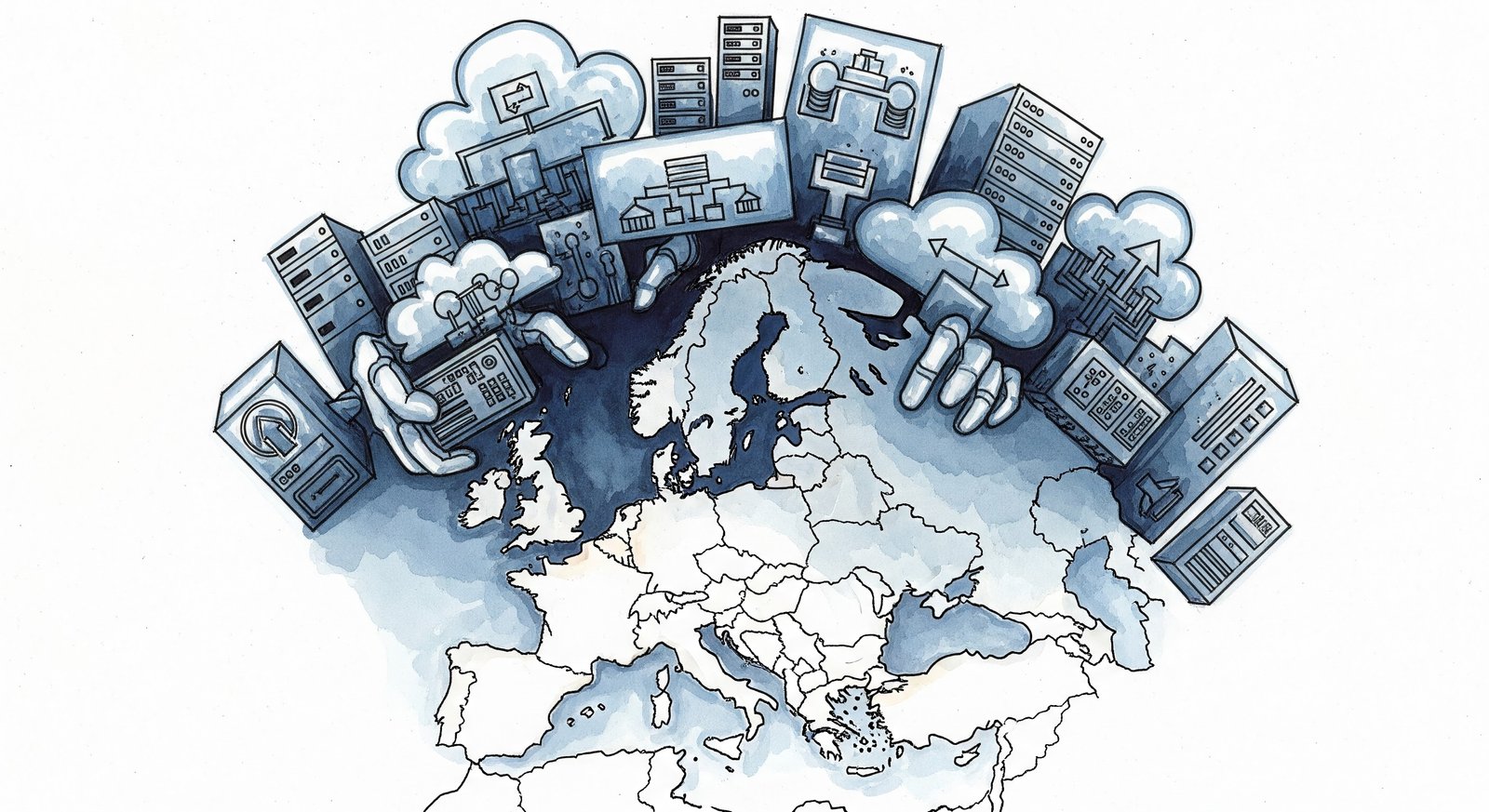
In a stark warning that has reverberated across European capitals Miguel De Bruycker Director of the Centre for Cybersecurity Belgium has declared that Europe has effectively lost the internet due to its overwhelming dependence on American technology companies. Speaking to the Financial Times De Bruycker who has led Belgium's cybersecurity agency since its inception a decade ago highlighted that U.S. dominance in cloud computing artificial intelligence and other critical digital systems makes it currently impossible to store data entirely within the European Union.
This candid assessment underscores a growing crisis in Europe's digital sovereignty. The continent's critical infrastructure from law enforcement tools to cyber defenses relies heavily on providers like Amazon Web Services Microsoft Azure and Google Cloud. While these platforms offer advanced capabilities they expose the EU to potential extraterritorial legal pressures such as the U.S. CLOUD Act and geopolitical risks which limits strategic autonomy in an era of escalating cyber threats.
The harsh reality of dependency is that digital infrastructure remains almost entirely in private hands with American corporations holding the dominant position. De Bruycker noted that Europe is missing out on emerging technologies developed primarily in the United States even as it depends on those same tools for protection against cyberattacks. He stated that the dream of keeping information one hundred percent in the EU is currently unrealistic and that the region has effectively lost the whole cloud.
Despite acknowledging that this reliance does not currently pose an enormous security problem he warned that the status quo hinders innovation and resilience. Europe boasts capable players such as France's OVHcloud and Germany's Schwarz Digital but these remain marginal compared to U.S. hyperscalers. Consequently De Bruycker urged the EU to shift focus from merely restricting U.S. providers to actively building its own alternatives.
He advocated for a clear definition of digital sovereignty at the EU level and proposed a European Airbus-style initiative to pool resources and scale up capabilities in cloud AI and cybersecurity. Proposals like EuroStack which is a plan for a fully European digital stack are gaining traction among policymakers and experts. Such efforts aim to reduce vulnerabilities foster homegrown innovation and ensure that critical data and services remain under European control.
Broader EU initiatives including strengthened cybersecurity frameworks and investments in digital public infrastructure align with this push for independence. The warning comes amid heightened concerns over cyber threats geopolitical tensions and the rapid evolution of technologies like AI. Europe's regulatory prowess through laws like the GDPR and AI Act has set global standards but without matching infrastructure investments the bloc risks remaining a rule-maker rather than a true technological leader.
Experts estimate that U.S. firms control around sixty-nine to ninety percent of Europe's cloud market leaving the continent exposed to supply disruptions or legal access demands. Building sovereign capabilities is not about isolation but about achieving strategic autonomy. This would enable Europe to innovate defend itself and compete globally on its own terms. As De Bruycker concluded the path forward lies in proactive construction rather than defensive regulation alone. The EU must now translate these warnings into concrete investments to secure its digital future.
With mounting calls from officials industry leaders and lawmakers 2026 could prove pivotal for Europe's quest to reclaim control over its digital destiny. The question is no longer whether dependency exists but whether Europe will act decisively to overcome it.

No Comment Yet.
Stay informed with breaking news, trending stories, and in-depth analysis.