Nuclear energy often conjures images of colossal concrete cooling towers, sprawling restricted zones, and an underlying fear of radiation deeply rooted in historical accidents like Chernobyl or Fukushima. This perception has created a psychological barrier, casting a shadow over one of the most potent sources of carbon-free power available to humanity. However, as the world grapples with the escalating crisis of climate change, the necessity for a reliable, continuous, and clean energy source has never been more urgent. In response to this global imperative, scientists and engineers have reimagined nuclear technology, shrinking it down to create a revolutionary power source known as the Small Modular Reactor (SMR). This innovation promises to strip away the terrors of the past while delivering the clean energy required for a sustainable future.
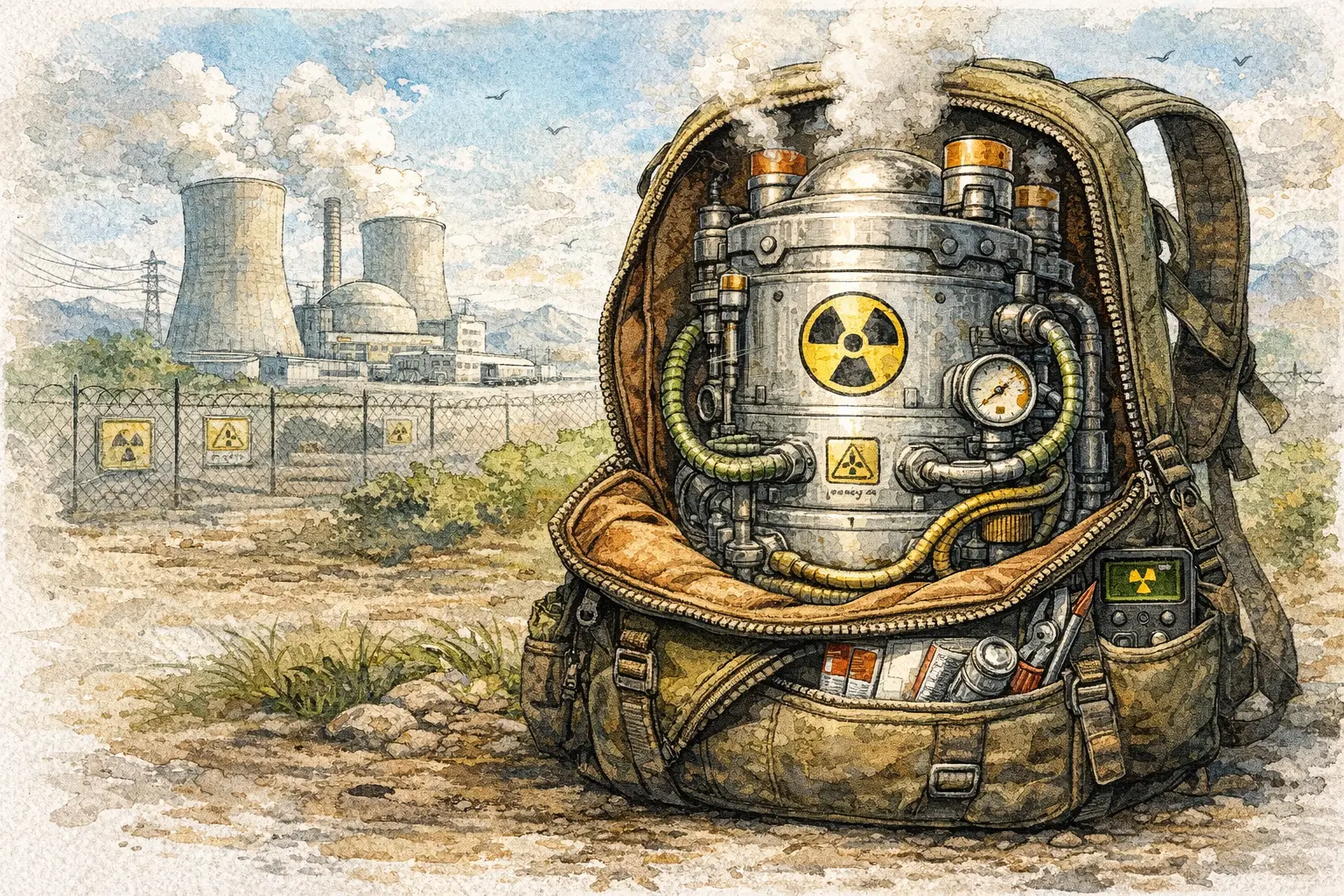
At its core, an SMR is a nuclear fission reactor, but with a footprint drastically smaller than its predecessors. While traditional nuclear power plants are behemoths capable of generating 1,000 megawatts or more, requiring massive infrastructure and years of construction, SMRs typically generate up to 300 megawatts per unit. The most transformative aspect of this technology is that it does not need to be built on-site from the ground up. Instead, the entire reactor can be manufactured in a factory environment, ensuring high quality control, and then transported via truck, train, or ship to its final destination. It is the energy equivalent of moving from a mainframe computer that fills a room to a powerful laptop that fits in a backpack.
The term modular is key to understanding the flexibility of this system. Unlike traditional plants that require a massive upfront investment to build full capacity instantly, SMRs allow for a plug-and-play approach. A utility provider or a city can start with a single module to meet current demand and simply add more modules as the population grows or energy needs increase. This scalability dramatically lowers the financial barrier to entry, allowing smaller municipalities, remote communities, or even large industrial complexes to own and operate their own independent power sources without relying heavily on a distant national grid.
Safety is the paramount concern when discussing nuclear power, and SMRs address this with what is known as passive safety systems. Traditional reactors often rely on active systems, such as electric pumps, to keep the core cool during a shutdown; if the power fails, the cooling fails. SMRs, conversely, utilize natural laws of physics like gravity and convection to circulate cooling fluids. In the event of an emergency, the system shuts down and cools itself without human intervention or external power. Furthermore, their compact size allows them to be installed underground or even underwater, providing a robust physical shield against natural disasters or external attacks.
From an economic perspective, the shift to SMRs represents a transition from construction projects to manufacturing products. Building a traditional nuclear plant is a bespoke civil engineering challenge that is often plagued by cost overruns and delays. SMRs, being factory-built, benefit from economies of scale. As production lines churn out identical units, the cost per unit drops significantly. This commoditization of nuclear reactors could democratize access to nuclear energy, making it a viable option for developing nations that previously could not afford the multi-billion dollar price tag of conventional plants.
For a rapidly developing nation like India, SMRs offer a strategic pathway to energy security and decarbonization. India faces the dual challenge of lifting millions out of energy poverty while simultaneously committing to Net Zero targets. SMRs are uniquely serendipitous for India because they can potentially be deployed at the sites of decommissioning thermal power plants. These sites already possess the necessary grid connectivity and water resources, allowing for a seamless transition from coal to nuclear without the need for entirely new land acquisition or transmission infrastructure.
The role of SMRs in the context of renewable energy is that of a stabilizer. While solar and wind energy are pivotal to the green transition, they suffer from intermittency; the sun does not always shine, and the wind does not always blow. Batteries can store energy, but they are currently expensive and limited in capacity. SMRs provide reliable baseload power that operates 24/7, 365 days a year. They can be designed to load-follow, meaning they can ramp their output up or down to fill the gaps left by renewables, ensuring the grid remains stable without reverting to fossil fuels for backup.
Beyond electricity generation, SMRs unlock vast potential for industrial decarbonization. A significant portion of global emissions comes not from electricity, but from industrial heat used in steel manufacturing, chemical processing, and cement production. SMRs can provide this high-grade heat directly. Additionally, the excess heat can be utilized for district heating systems in colder climates or for powering desalination plants to turn seawater into potable water. They also show immense promise in the efficient production of green hydrogen, which is widely considered the fuel of the future for heavy transport.
The global landscape for SMR development is becoming increasingly competitive, with major powers like Russia, China, and the United States vying for leadership. Companies like NuScale Power, Rolls-Royce, and TerraPower are pushing the boundaries of design and licensing. Russia has already demonstrated the viability of the concept with floating nuclear power plants that service remote Arctic regions. These floating units act as mobile batteries, bringing immense power to areas that are geographically isolated, proving that nuclear energy can now go where no power lines have gone before.
Despite the optimism, significant challenges remain, particularly regarding high-level radioactive waste. While SMRs may produce less waste per unit of energy compared to some older designs, the waste they do generate is still hazardous and requires secure, long-term storage solutions. As these reactors become more distributed geographically, the logistics of managing and transporting spent fuel will become more complex. A decentralized network of nuclear reactors necessitates a rigorous and fail-proof waste management protocol that is accepted by the public.
Security is another critical dimension that evolves with the SMR model. A centralized nuclear plant is a fortress that is relatively easy to guard. Scattering hundreds of smaller reactors across a country introduces new variables regarding physical security and non-proliferation. Protecting these assets from cyber threats, theft, or sabotage requires a modernized security architecture. Regulatory bodies worldwide are currently working to update their frameworks to accommodate these risks without stifling the deployment of the technology.
Public perception remains the final and perhaps most difficult hurdle. The legacy of fear associated with radiation is difficult to dismantle. For SMRs to succeed, the nuclear industry must engage in radical transparency. Communities need to understand the fundamental differences between 1970s reactor designs and modern passive safety systems. Education campaigns that explain the physics of safety, rather than just asserting it, will be crucial in winning the social license to operate these facilities in proximity to populated areas.
Regulatory harmonization is also essential for the global success of SMRs. Currently, a design approved in one country often faces a completely new and lengthy certification process in another. For SMRs to truly become a global commodity, international cooperation is needed to standardize safety certifications. If a reactor is deemed safe by a rigorous regulator in one nation, there should be mechanisms to fast-track its approval in allied nations, thereby accelerating the global transition away from fossil fuels.
Ultimately, the Small Modular Reactor represents more than just a technological upgrade; it is a paradigm shift in how we conceive of energy infrastructure. It moves us away from the era of gigantism toward a future of distributed, resilient, and adaptable power. As the technology matures, it is not inconceivable that industrial parks or large data centers will host their own micro-reactors. This granularity of power generation aligns perfectly with the needs of a modern, digital economy that demands unfailing reliability.
The SMR revolution is poised to turn nuclear energy from a fearsome giant into a versatile tool for planetary healing. By combining the emission-free benefits of nuclear fission with the manufacturing efficiencies of the modern age, SMRs offer a pragmatic solution to the climate crisis. They represent a synthesis of human ingenuity and environmental necessity, promising a future where clean energy is not just a luxury for the wealthy, but a standard utility available to all. The "pocket-sized" nuclear era is not just coming; it is the necessary next step for a power-hungry civilization on a warming planet.
Small Modular Reactors (SMRs) signify a transformative leap in nuclear energy technology, moving away from massive, site-built infrastructures to compact, factory-assembled units. These reactors offer enhanced safety through passive cooling systems, economic benefits via mass production, and the flexibility to scale power generation according to need. Particularly vital for nations like India, SMRs provide a reliable clean energy alternative to coal, capable of supporting intermittent renewables and decarbonizing heavy industries. By addressing the limitations of traditional nuclear power, SMRs are positioned to be a cornerstone of the global transition to a Net Zero future.

Read this too..
❤eSIM Explained: Why You Should Ditch Physical SIMs for International Travel in 2026
❤ Inter-Agency Conflict Stalls AI Trade Progress: Why Chinese Tech Giants Are Hesitating to Order
❤ ByteDance and the Great Silicon Pivot: Why SeedChip Matters for Global AI
❤No License Required: The Best Low-Speed Electric Scooters for Seniors in the USA

No Comment Yet.
Stay informed with breaking news, trending stories, and in-depth analysis.