
| EnVee
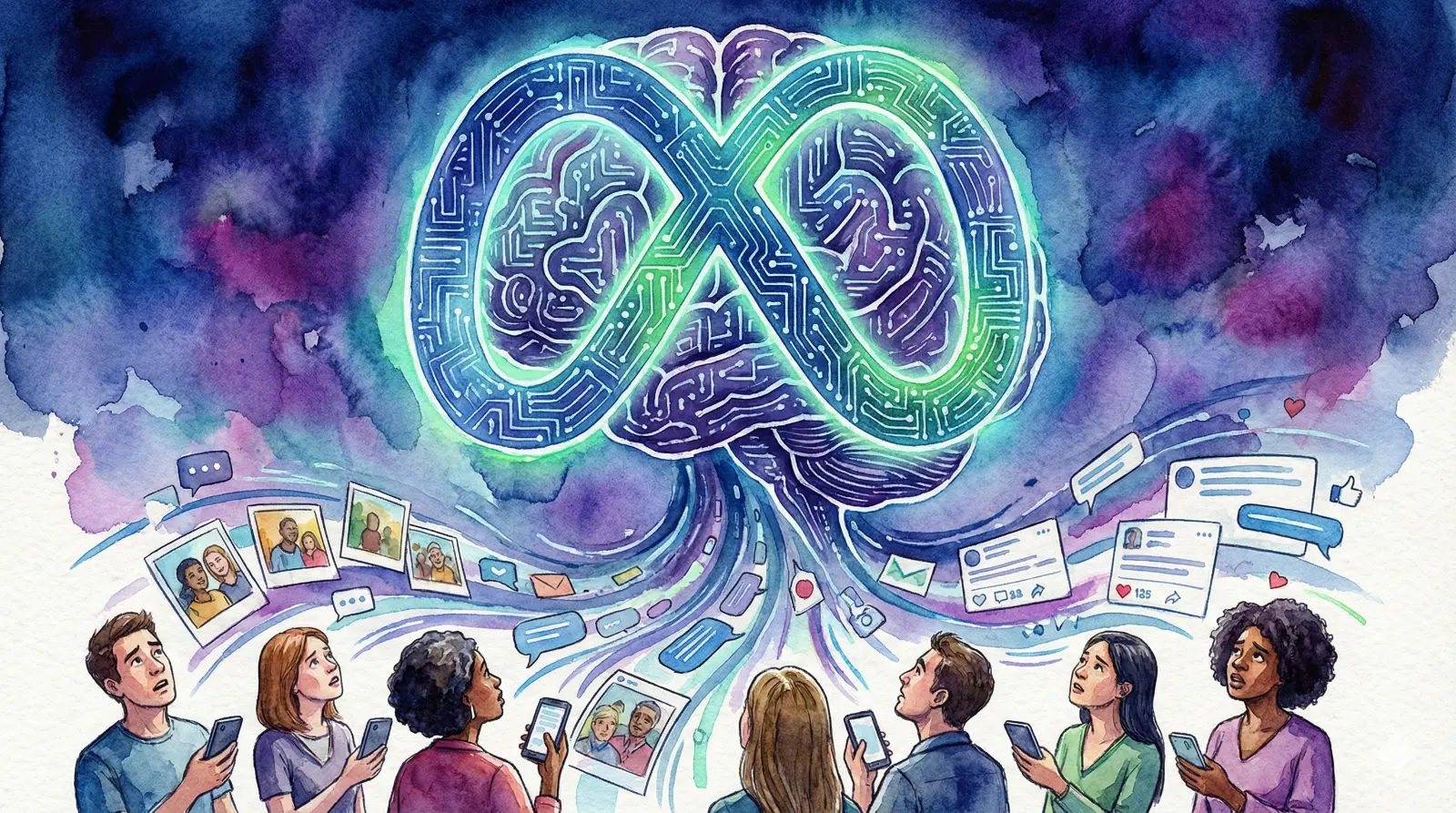
Think about the last photo you posted on Instagram. Maybe it was a picture of your child’s first birthday, a selfie with your partner, or just a snapshot of your morning coffee with a caption about how tired you felt. You posted it for your friends, your family, or maybe a few followers. But in reality, you were feeding a beast. That photo, along with your captions, comments, and interactions, was likely scraped, processed, and fed into Meta’s massive artificial intelligence models. And the terrifying part? You probably never explicitly said "Yes" to this. This is the new frontier of the privacy war in 2026, and it is built on a foundation of dark patterns that make it incredibly difficult for you to say "No."
For years, we operated under the assumption that our social media data was used to show us ads. That was the deal: free service in exchange for targeted advertising. But the rise of Generative AI has changed the contract without changing the signature. Meta, which owns Facebook, Instagram, and WhatsApp, needs massive amounts of human data to train its Llama models to think, speak, and create like humans. Synthetic data isn't enough; they need the messiness of real human lives. So, starting around mid-2024 and escalating through 2025, they began pivoting their policy. They claimed a "legitimate interest" in using your public data for AI training.
Here is where the dark pattern kicks in. It is a classic case of "Privacy Zuckering" mixed with a "Roach Motel." If you want to stop Meta from using your data, you wont find a simple "Off" switch next to the "Post" button. Instead, you have to embark on a digital treasure hunt. You have to dig into Settings, navigate through the Privacy Center, find a vaguely worded section about "Generative AI," and then—this is the kicker—fill out a form. Yes, a form. You have to provide your email, your country, and write a reason why you object to your data being used. It puts the burden of privacy entirely on you. Imagine if you had to fill out a written application every time you wanted to lock your front door. That is essentially what this interface demands.
Privacy advocacy groups like NOYB (None of Your Business) in Europe have been fighting this tooth and nail, filing complaints across 11 countries. They argue that this opt-out process is intentionally deceptive. In many cases, users reported that the form was buggy, required email verification codes that never arrived, or simply rejected their "objection" without a clear reason. This friction is designed to exhaust you. Most people, upon seeing a form requiring a written explanation, will simply give up and close the tab. That moment of resignation is exactly what the company is banking on. It allows them to harvest data from millions of users who actually care about privacy but are too tired to fight the interface.
The distinction between "public" and "private" is also getting blurrier. Meta claims they only use "public" posts. But let's be honest: how many users actually audit their privacy settings regularly? Default settings on these platforms often push you toward "Public" visibility. If you posted something in 2015 when you were a naive teenager and your account was public, that data is now fair game for the AI, even if you are a private person today. Your past digital footprint is being mined to create a synthetic future.
So, is there a way out? Yes, but you have to be persistent. If you are in the EU, the UK, or huge markets like India where data protection laws (like the DPDP Act) are tightening, you have the "Right to Object." You need to find that "Right to Object" form in your privacy settings. When asked for a reason, you don't need to write a legal essay; a simple statement like "I do not consent to my personal data being used for AI training due to privacy concerns" is usually legally sufficient. Once you submit it, keep an eye on your email. Don't let the friction stop you. In an era where data is the new oil, your personal memories are the most valuable resource. Don't let them drill for it without a fight.

No Comment Yet.
Stay informed with breaking news, trending stories, and in-depth analysis.