Data Privacy is Non-Negotiable: SC Warns Meta | "Leave India if You Can't Follow Rules"
the court has listed the matter for the next hearing on February 9. It has directed Meta and WhatsApp to file a written affidavit explicitly stating that they are not sharing user data and will not do so in the future. By demanding a written commitment over verbal assurances, the court is ensuring accountability. This legal development is a wake-up call not just for Meta, but for all digital platforms operating in India, signaling that the era of unchecked data usage is coming to an end.
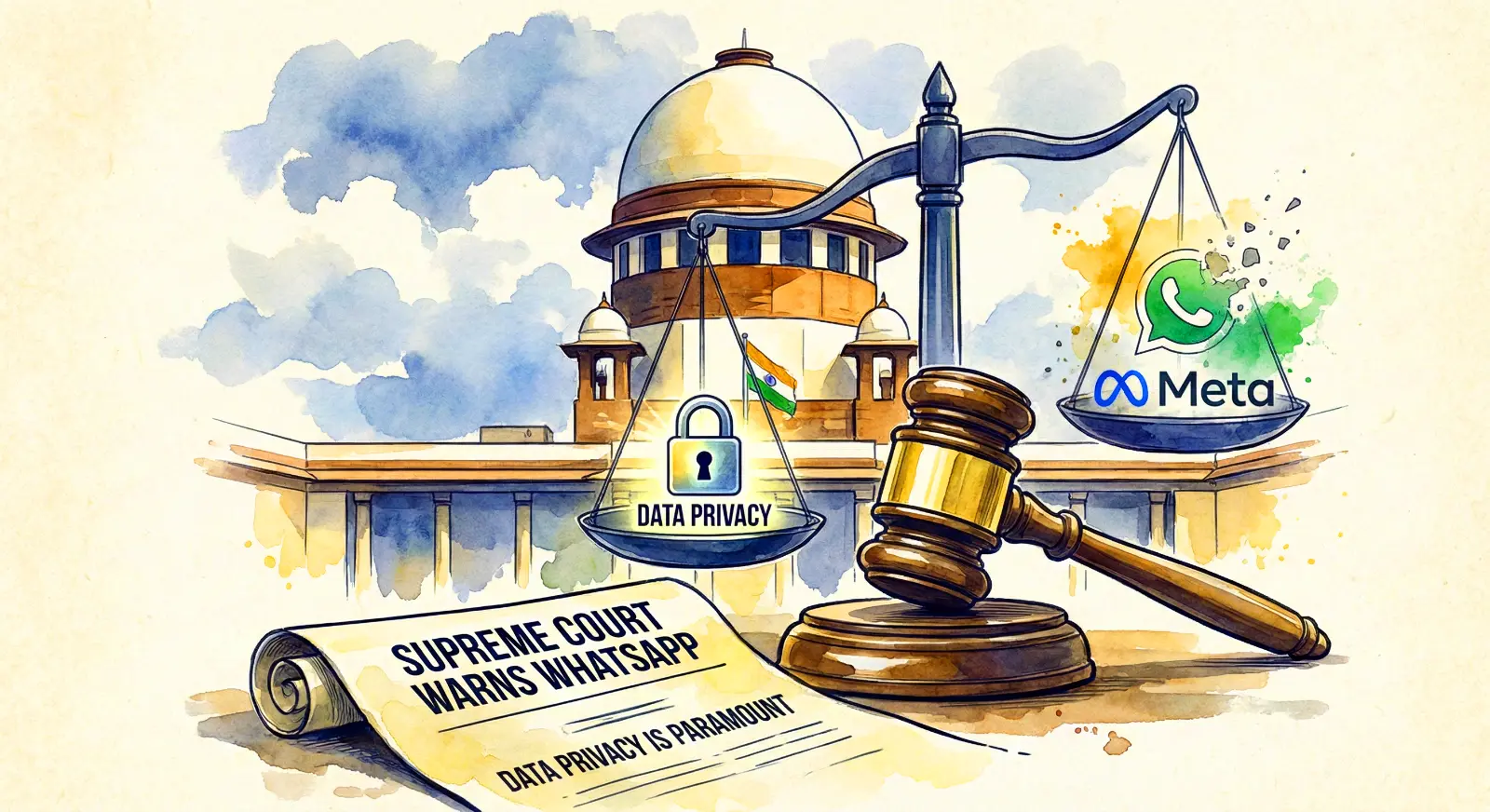
February 3, 2026, marks a significant turning point in India's battle for digital privacy. The Supreme Court of India has taken a formidable stance against WhatsApp and Meta, delivering one of the sternest warnings in the history of tech regulation in the country. The apex court made it unequivocally clear that the privacy of Indian citizens is paramount and cannot be treated as a tradable commodity by global tech giants. The controversy centers around WhatsApp's 2021 privacy policy, which mandated users to share their data with Meta (formerly Facebook) for advertising purposes, a move the court has now heavily scrutinized.
During the hearing, the bench led by Justice Surya Kant did not mince words while addressing the counsel for WhatsApp. The court emphasized that the value of privacy in India cannot be undermined by corporate interests. The judges explicitly stated that they would not permit the sharing of even a "single digit" or a miserable amount of data with third parties or the parent company without explicit user consent. This observation strikes at the heart of the business model of many "free" apps that monetize user metadata—such as location, device details, and activity logs—despite offering end-to-end encryption for messages.
Perhaps the most resonant statement from the hearing was the Court's assertion regarding compliance with the law. The bench remarked that if a company finds it difficult to adhere to the statutes and the Constitution of India, they are free to cease operations and leave the country. This "comply or leave" message serves as a stark reminder to multinational corporations that the Indian market, despite its size and lucrative potential, operates under the sovereignty of Indian law. The court criticized the disparity in how these companies operate in Europe, where strict GDPR laws are respected, versus their approach in India.

The Supreme Court also took strong exception to the "Take it or Leave it" nature of the 2021 privacy policy update. WhatsApp had previously notified users that they must accept the new terms to continue using the app, a tactic the court viewed as coercive. The bench noted that lengthy, complex agreements filled with technical jargon are designed to confuse the common man, effectively stripping them of informed consent. This approach was likened to an infringement of rights, with the court terming the unauthorized transfer of data as akin to the theft of private information.
As an immediate measure, the Supreme Court has passed an interim order restraining WhatsApp from sharing any user data with Meta or other third-party companies until the next hearing. This order applies retrospectively to users who may have already inadvertently accepted the 2021 policy. Essentially, the data pipeline that Meta hoped to utilize for targeted advertising has been temporarily shut down by the judiciary, offering a significant, albeit interim, relief to privacy-conscious users across the nation.

No Comment Yet.
Stay informed with breaking news, trending stories, and in-depth analysis.